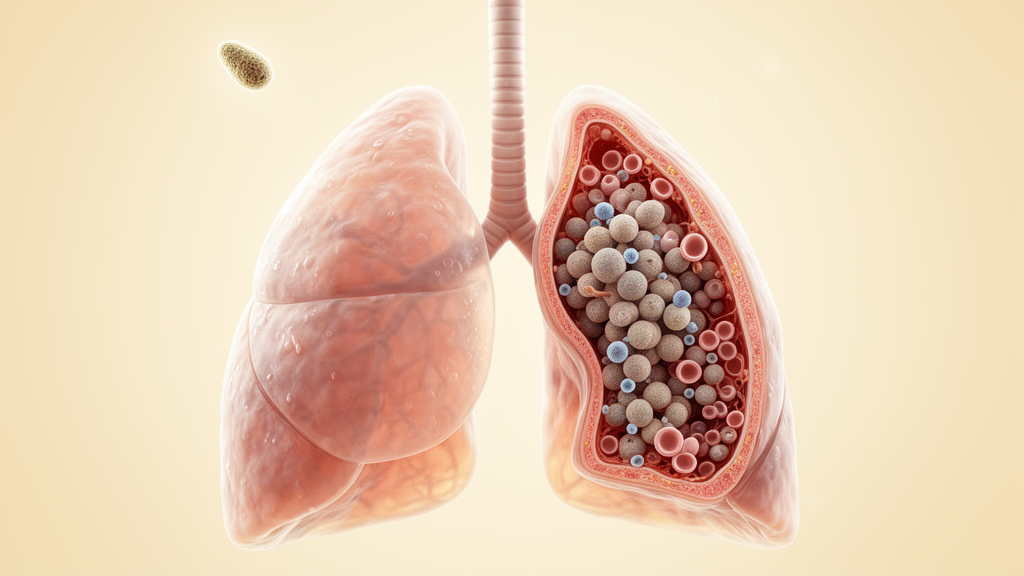
In a cohort study of 454 patients with pulmonary cryptococcosis, Pneumocystis jirovecii pneumonia was independently associated with mortality over 52 weeks, while the estimated increase associated with bacterial co-infection was not statistically significant. The study included 239 people living with HIV and 215 HIV-negative patients, who were compared according to co-infection status, clinical characteristics, computed tomography findings and prognostic factors. Among people living with HIV, 20% had two co-infections, most commonly tuberculosis, whereas no HIV-negative patient had multiple co-infections. All one-year deaths in the HIV-negative group occurred among patients with bacterial co-infection, although the overall analysis did not find a statistically significant independent association between bacterial co-infection and mortality.
Co-infection patterns and disease severity differed between the two HIV-status groups. Among HIV-negative patients, those with co-infections were older than those without them, with mean ages of 53.42 and 45.46 years, respectively, while no age difference was observed among people living with HIV. People living with HIV more frequently presented with fever and central nervous system symptoms. Among co-infected patients, those living with HIV also had greater physiological disease severity, reflected by higher Sequential Organ Failure Assessment, CURB-65 and Acute Physiology and Chronic Health Evaluation II scores. Across the full cohort, a high-risk APACHE II score was associated with more than a 15-fold increase in mortality. Among people living with HIV, a SOFA score of at least 2 was likewise associated with poorer survival.
Imaging findings were also associated with outcomes. Patients with nodular-plus-patchy computed tomography lesions had more than a fivefold increase in mortality risk relative to the reference pattern used in the analysis. The mortality estimates in the cohort also differed by HIV status: people living with HIV had an 11.3-fold higher mortality risk than HIV-negative patients. In addition, high-risk APACHE II scores, a SOFA score of at least 2 and the absence of standard antifungal therapy were associated with poorer survival among people living with HIV. These findings are associations within the analyzed cohort and do not establish that the clinical features or treatment differences directly caused the observed deaths.
Among co-infected patients, 52-week median survival was comparable across HIV status and according to whether pulmonary cryptococcosis had disseminated beyond the lungs. Diagnostic timing nevertheless differed markedly: HIV-negative patients had a median diagnostic delay of 13.5 days, compared with 2.0 days among people living with HIV, a difference reported as highly significant. Within the co-infected group, Pneumocystis jirovecii pneumonia, which was identified only in people living with HIV, was associated with a hazard ratio of 3.81 for death over 52 weeks. By comparison, bacterial co-infection had a hazard ratio of 1.51, with p=0.44 indicating that the association was not statistically significant. The results therefore distinguish between the measured prognostic associations of particular co-infections rather than treating all accompanying infections as having the same relationship with mortality.
Subject of Research: Co-infection patterns and mortality associations in a pulmonary cryptococcosis cohort
Article Title: Uncovering the impact of co-infections on disease severity and mortality in pulmonary cryptococcosis
Article References: Wu, L., Fu, X., Weng, L., Pütz, B., Zhang, R., Liu, L., Shao, Y., Zheng, Z., Xun, J., Han, X., Wang, T., Shen, Y., Lu, H., Müller-Myhsok, B., & Chen, J. (2026). Uncovering the impact of co-infections on disease severity and mortality in pulmonary cryptococcosis. BMC Infectious Diseases, 26(1), Article 1651. https://doi.org/10.1186/s12879-026-14444-7
Image Credits: AI Generated
DOI: 10.1186/s12879-026-14444-7
Keywords: pulmonary cryptococcosis, co-infections, HIV, mortality, Pneumocystis jirovecii pneumonia, tuberculosis, bacterial co-infection, APACHE II, SOFA score, CT imaging, Uncovering, impact
News Source: Kristina Jarvis. (October 20, 2026). PCP, not bacterial co-infection, linked to pulmonary cryptococcosis mortality. Scienmag.