



• HOME
  • NEWS
  • EXPLORE
    • CAREER
      • Companies
      • Jobs
    • EVENTS
    • iGEM
      • News
      • Team
    • PHOTOS
    • VIDEO
    • WIKI
  • BLOG
  • COMMUNITY
    • FACEBOOK
    • INSTAGRAM
    • TWITTER
Saturday, February 7, 2026
BIOENGINEER.ORG
No Result
View All Result
  • Login
  • HOME
  • NEWS
  • EXPLORE
    • CAREER
      • Companies
      • Jobs
        • Lecturer
        • PhD Studentship
        • Postdoc
        • Research Assistant
    • EVENTS
    • iGEM
      • News
      • Team
    • PHOTOS
    • VIDEO
    • WIKI
  • BLOG
  • COMMUNITY
    • FACEBOOK
    • INSTAGRAM
    • TWITTER
  • HOME
  • NEWS
  • EXPLORE
    • CAREER
      • Companies
      • Jobs
        • Lecturer
        • PhD Studentship
        • Postdoc
        • Research Assistant
    • EVENTS
    • iGEM
      • News
      • Team
    • PHOTOS
    • VIDEO
    • WIKI
  • BLOG
  • COMMUNITY
    • FACEBOOK
    • INSTAGRAM
    • TWITTER
No Result
View All Result
Bioengineer.org
No Result
View All Result
Home NEWS Science News Biology

Virus hijacks cell’s transportation system

Bioengineer by Bioengineer
September 1, 2017
in Biology
Reading Time: 2 mins read
0
Share on FacebookShare on TwitterShare on LinkedinShare on RedditShare on Telegram
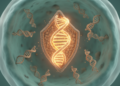
IMAGE

Credit: Hirano M. et al., Proceedings of the National Academy of Sciences of the United States of America, Aug. 28, 2017

Flaviviruses are a significant threat to public health worldwide, and some infected patients develop severe — potentially fatal — neurological diseases. Tick-borne encephalitis virus (TBEV), a member of the genus Flavivirus, causes encephalic diseases resulting in photophobia, irritability and sleep disorders. However, little is known about their pathogenic mechanisms and no effective treatment is available at present.

A research team at Hokkaido University has previously showed that, in mouse neurons, genomic RNAs of TBEV are transported from the cell body to dendrites, the neuron's wire-like protrusions. Viral RNAs then reproduce viruses locally in dendrites disturbing normal neuronal activities.

In the new study published in PNAS, the team looked into the transportation mechanism of viral RNAs in neurons, and discovered they make use of the cell's transportation system, which is normally used to move neuronal RNAs in dendrites. A specific non-coding sequence near the terminal of viral RNAs was found pivotal in interacting with the transportation system. When the sequence was mutated, the infected mouse showed reduced neurological symptoms. In their biochemical experiments, viral RNAs could bind to a protein that forms a neuronal granule, which is part of the neuron's transportation system.

Furthermore, their data shows that normal transportation of neuronal RNAs become affected by viral RNAs as a result of competition to use the transportation network.

Associate Professor Kentaro Yoshii, who led the research team, commented "It is unprecedented for a neuropathogenic virus to hijack the neuronal granule system to transport their genomic RNA, which results in severe neurological diseases. The disruption of the neuronal granule system is also known to be involved in non-viral diseases such as Alzheimer's disease. So the unique virus-host interaction we revealed should help us understand their pathogenesis and develop treatments in the future."

###

Media Contact

Naoki Namba
[email protected]
81-117-062-185
@hokkaido_uni

https://www.global.hokudai.ac.jp/

Original Source

https://www.global.hokudai.ac.jp/blog/virus-hijacks-cells-transportation-system/ http://dx.doi.org/10.1073/pnas.1704454114

Share12Tweet8Share2ShareShareShare2

Related Posts

Florida Cane Toad: Complex Spread and Selective Evolution

Florida Cane Toad: Complex Spread and Selective Evolution

February 7, 2026
New Study Uncovers Mechanism Behind Burn Pit Particulate Matter–Induced Lung Inflammation

New Study Uncovers Mechanism Behind Burn Pit Particulate Matter–Induced Lung Inflammation

February 6, 2026

DeepBlastoid: Advancing Automated and Efficient Evaluation of Human Blastoids with Deep Learning

February 6, 2026

Navigating the Gut: The Role of Formic Acid in the Microbiome

February 6, 2026
Please login to join discussion

POPULAR NEWS

  • Robotic Ureteral Reconstruction: A Novel Approach

    Robotic Ureteral Reconstruction: A Novel Approach

    82 shares
    Share 33 Tweet 21
  • Digital Privacy: Health Data Control in Incarceration

    63 shares
    Share 25 Tweet 16
  • Study Reveals Lipid Accumulation in ME/CFS Cells

    57 shares
    Share 23 Tweet 14
  • Breakthrough in RNA Research Accelerates Medical Innovations Timeline

    53 shares
    Share 21 Tweet 13

About

We bring you the latest biotechnology news from best research centers and universities around the world. Check our website.

Follow us

Recent News

Evaluating Pediatric Emergency Care Quality in Ethiopia

TPMT Expression Predictions Linked to Azathioprine Side Effects

Improving Dementia Care with Enhanced Activity Kits

Subscribe to Blog via Email

Success! An email was just sent to confirm your subscription. Please find the email now and click 'Confirm' to start subscribing.

Join 73 other subscribers
  • Contact Us

Bioengineer.org © Copyright 2023 All Rights Reserved.

Welcome Back!

Login to your account below

Forgotten Password?

Retrieve your password

Please enter your username or email address to reset your password.

Log In
No Result
View All Result
  • Homepages
    • Home Page 1
    • Home Page 2
  • News
  • National
  • Business
  • Health
  • Lifestyle
  • Science

Bioengineer.org © Copyright 2023 All Rights Reserved.
