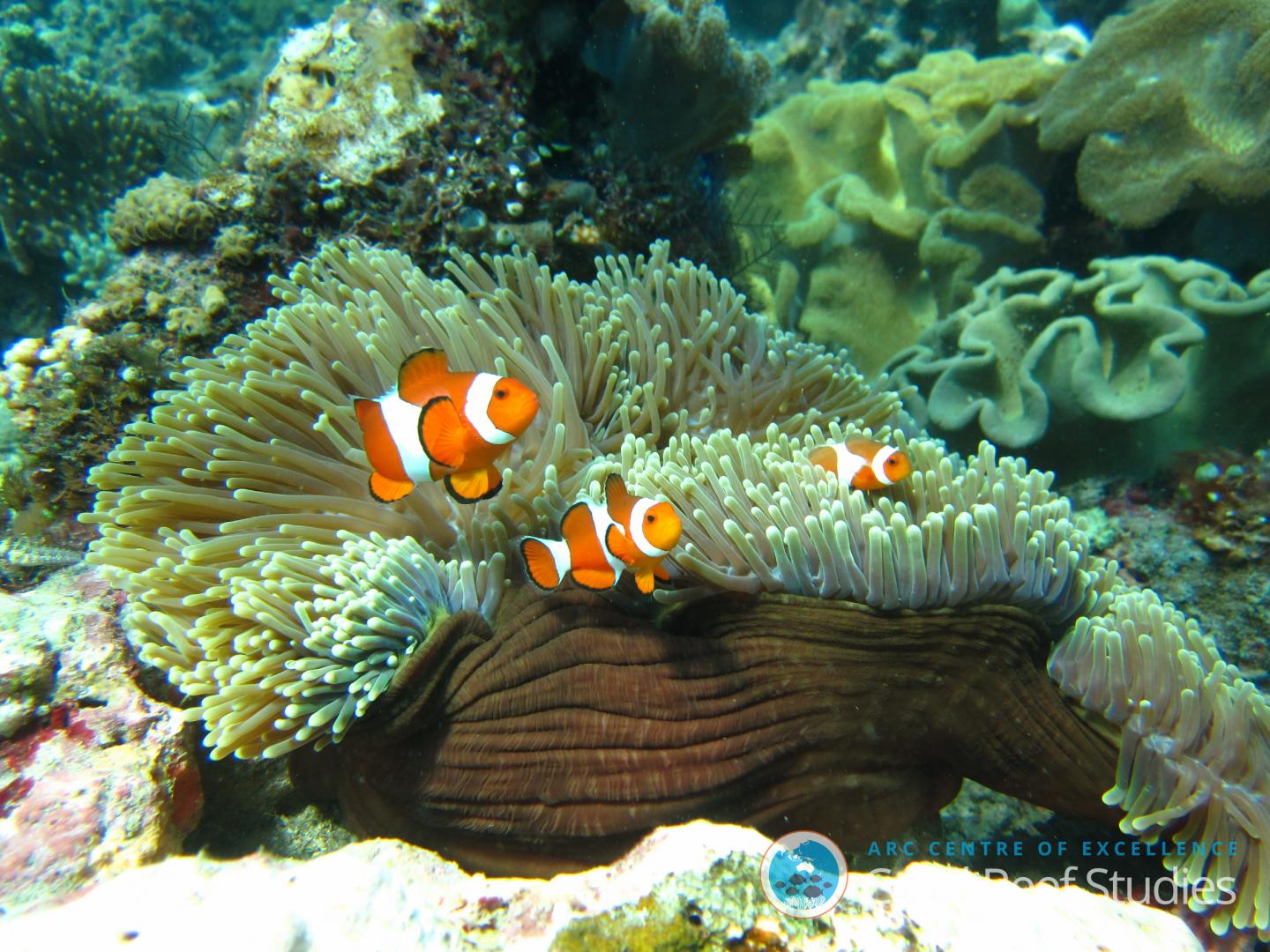
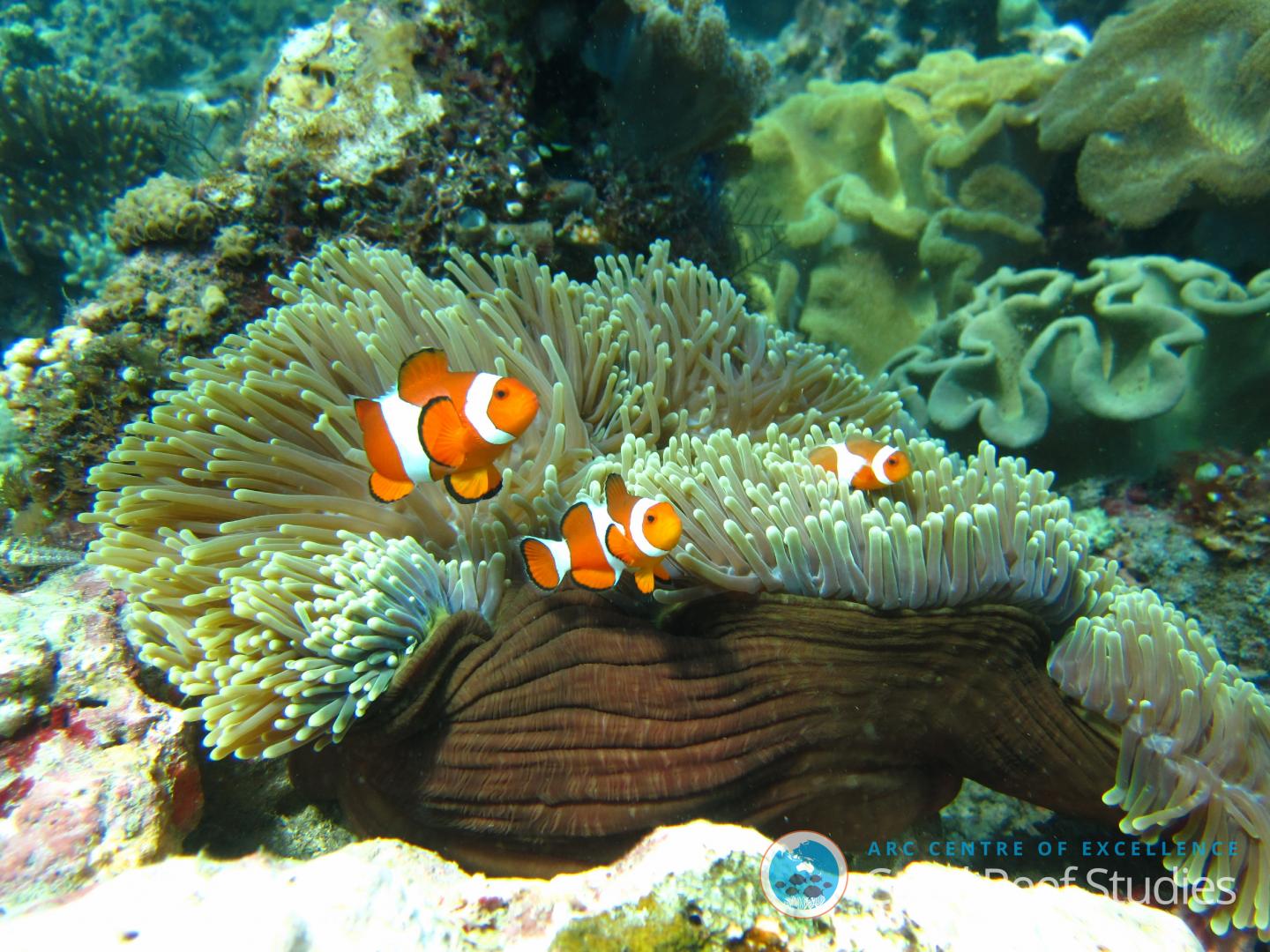
Credit: Alejandro Usobiaga
Just as when a camera lens comes into focus, the latest research published today sharpens understanding of the implications of ocean acidification on reef fish behaviour, yielding promising results for their current and near-future survival.
Chemical changes in the ocean, as a result of climate change, are leading to a more acidic environment, referred to as 'ocean acidification' (OA). In a laboratory setting, these changes have been shown to lead to a range of risky behaviours in the affected fish, with some fish unable to flee from their finned foes effectively.
But, when researchers recalibrated experiments to adjust for natural daily changes in concentrations of dissolved carbon dioxide (CO2), the primary chemical driver of OA, they found that the fish were less affected than previously thought.
"Shallow water habitats where reef fish live can experience substantial natural fluctuations in water chemistry throughout the day," explained senior author Professor Philip Munday, of the ARC Centre of Excellence for Coral Reef Studies (CoralCoE) at James Cook University.
"For example, carbon dioxide levels on coral reefs are often much lower during the day than they are at night."
"Our data suggests that these natural daily changes in water chemistry are enough to provide fish with a recovery period, reducing their sensitivity to higher carbon dioxide levels," said Michael D. Jarrold, lead author of the study and PhD student at James Cook University.
The study published today in Scientific Reports, utilised state-of-the-art facilities at James Cook University and at the Australian Institute of Marine Science's National Sea Simulator (SeaSim) to mimic the natural conditions of a coral reef environment.
"It's the first time these dynamic natural conditions have been reproduced in a laboratory setting to test their potential influence on the behaviour of coral reef fish," explained Mr. Jarrold.
"We are thrilled about what we've found," he added. "Our results provide a greater level of optimism for reef fish populations in the future."
Previous OA research has largely used stable, open ocean conditions to guide the experimental design.
"Broadly speaking, such studies reported reduced anti-predator responses, as compared with the control group," said Prof Munday.
"Such abnormal behaviours were feared to pose significant ecological consequences for fish populations," he explained.
The researchers' ability to precisely control the complex combinations of environmental variables required to accurately simulate both naturally occurring and human-influenced water conditions was crucial to achieving this breakthrough.
"With the world's most advanced experimental marine technology at our finger tips, and the considerable efforts of our specially skilled team, the SeaSim was able to recreate the natural daily CO2 cycles found on the reef," said Craig Humphrey, co-author and SeaSim precinct manager at the Australian Institute of Marine Science.
"We're excited to play a part in such fantastic and novel research."
###
The paper titled: "Diel CO2 cycles reduce severity of behavioural abnormalities in coral reef fish under ocean acidification" is available online at: http://www.nature.com/articles/s41598-017-10378-y
Media Contact
Catherine Naum
[email protected]
61-042-845-1475
@CoralCoE
http://www.coralcoe.org.au/
Related Journal Article
http://dx.doi.org/10.1038/s41598-017-10378-y