• HOME
  • NEWS
  • EXPLORE
    • CAREER
      • Companies
      • Jobs
    • EVENTS
    • iGEM
      • News
      • Team
    • PHOTOS
    • VIDEO
    • WIKI
  • BLOG
  • COMMUNITY
    • FACEBOOK
    • INSTAGRAM
    • TWITTER
Tuesday, October 20, 2026
BIOENGINEER.ORG
No Result
View All Result
  • Login
  • HOME
  • NEWS
  • EXPLORE
    • CAREER
      • Companies
      • Jobs
        • Lecturer
        • PhD Studentship
        • Postdoc
        • Research Assistant
    • EVENTS
    • iGEM
      • News
      • Team
    • PHOTOS
    • VIDEO
    • WIKI
  • BLOG
  • COMMUNITY
    • FACEBOOK
    • INSTAGRAM
    • TWITTER
No Result
View All Result
Bioengineer.org
No Result
View All Result
Home NEWS Science News Technology

Review links critical inclusions to fatigue in high-strength steels

by
October 20, 2026
in Technology
Reading Time: 2 mins read
0
Review links critical inclusions to fatigue in high-strength steels

Review links critical inclusions to fatigue in high-strength steels

Share on FacebookShare on TwitterShare on LinkedinShare on RedditShare on Telegram

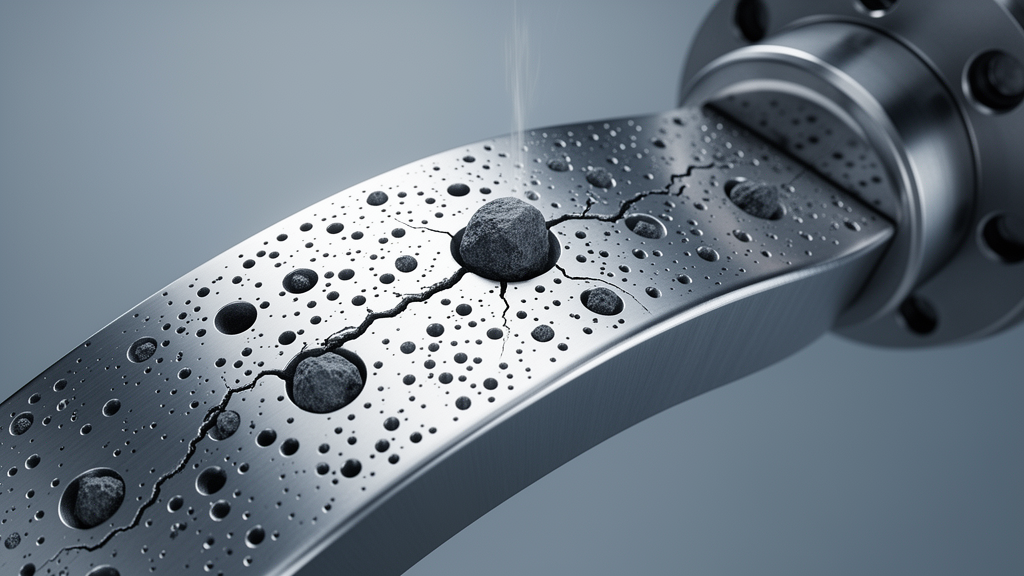
A review of inclusion-controlled fatigue concludes that the fatigue limit of high-strength steels is often governed by the maximum dangerous defect or another high-risk defect within a highly stressed volume, rather than by average cleanliness. The findings explain why nominal strength alone cannot fully characterize fatigue performance: inclusions form a statistical population that varies in size, spatial distribution and type, and their potential to initiate fatigue failure depends on more than their average abundance.

Extreme-value statistics provides the framework for examining this problem. Rather than characterizing inclusions only through average size or average cleanliness, the statistical approach focuses on the upper tail of the defect population and the occurrence of unusually harmful features. This matters because a single large or otherwise high-risk inclusion may control fatigue behavior even when the overall inclusion population appears relatively clean. The review identifies three-dimensional statistical characterization of inclusions and classification-based evaluation of critical defects as important directions for future research.

The review also finds that a defect’s harmfulness is determined by several interacting characteristics. Relevant factors include inclusion type, morphological sharpness, interfacial bonding state and local stress concentration. Size remains important, but it does not provide a complete description of danger. A material with fewer inclusions may not necessarily outperform one with more inclusions if the defects differ in type, shape or bonding conditions. The available evidence therefore supports assessing dangerous defects as classified, three-dimensional features rather than reducing risk to a single average cleanliness measure.

Strength, toughness and fatigue resistance must be considered together. Increasing strength can improve the load-bearing capacity of the steel matrix, but excessive strengthening can increase sensitivity to defects. Toughness, by contrast, can improve defect tolerance through crack-tip plastic dissipation, crack deflection and crack closure. The review therefore proposes a shift from strength-dominated fatigue design toward coordinated consideration of strength, toughness and defect tolerance, supported by multifactorial fatigue-life models and damage-tolerant design methods. These conclusions are a synthesis of the reviewed evidence rather than results from a new experimental or clinical study, and the review identifies the need for further work on critical-defect evaluation, coupled life models and engineering design methods.

Subject of Research: Inclusion-controlled fatigue in high-strength steels

Article Title: Inclusion-controlled fatigue in high-strength steels: extreme value statistics to the interplay among strength, toughness and fatigue

Article References: Li, M., Cui, B., Wei, G., Xiu, W., & Sarman, A. M. (2026). Inclusion-controlled fatigue in high-strength steels: extreme value statistics to the interplay among strength, toughness and fatigue. Journal of Materials Science, 61(41), 31472-31500. https://doi.org/10.1007/s10853-026-13600-3

Image Credits: AI Generated

DOI: 10.1007/s10853-026-13600-3

Keywords: high-strength steels, fatigue failure, non-metallic inclusions, extreme-value statistics, steel cleanliness, toughness, defect tolerance, fatigue life, Inclusion-controlled, fatigue, high-strength, steels

News Source: Denise Maddox. (October 20, 2026). Review links critical inclusions to fatigue in high-strength steels. Scienmag.


Tags: defect toleranceextreme-value statisticsfatiguefatigue failurefatigue lifehigh strengthhigh-strength steelsInclusion-controllednon-metallic inclusionssteel cleanlinesssteelstoughness
Share12Tweet7Share2ShareShareShare1

Related Posts

Research report: KAIST develops AI that reconstructs cloud-covered ground in satellite images with photo-like clarity

Research report: KAIST develops AI that reconstructs cloud-covered ground in satellite images with photo-like clarity

October 20, 2026
Captive ducks break species barriers with surprising hybrids

Captive ducks break species barriers with surprising hybrids

October 20, 2026

Hot-Working Window Identified for Crack-Prone Al-20Sc Alloy

October 20, 2026

IKKε deficiency reduces osteoarthritis pain and synovitis in mice

October 20, 2026

POPULAR NEWS

  • Pine-associated fungi yield three new genera and nine species

    Pine-associated fungi yield three new genera and nine species

    29 shares
    Share 12 Tweet 7
  • Review links critical inclusions to fatigue in high-strength steels

    29 shares
    Share 12 Tweet 7
  • Resveratrol pretreatment accompanies fewer DBDPE-associated changes in female mice

    29 shares
    Share 12 Tweet 7
  • Validated Questionnaire Measures Nephrology Nursing Competencies

    29 shares
    Share 12 Tweet 7

About

We bring you the latest biotechnology news from best research centers and universities around the world. Check our website.

Follow us

Recent News

Pine-associated fungi yield three new genera and nine species

Review links critical inclusions to fatigue in high-strength steels

Resveratrol pretreatment accompanies fewer DBDPE-associated changes in female mice

Subscribe to Blog via Email

Enter your email address to subscribe to this blog and receive notifications of new posts by email.

Join 85 other subscribers
  • Contact Us

Bioengineer.org © Copyright 2023 All Rights Reserved.

Welcome Back!

Login to your account below

Forgotten Password?

Retrieve your password

Please enter your username or email address to reset your password.

Log In
No Result
View All Result
  • Homepages
    • Home Page 1
    • Home Page 2
  • News
  • National
  • Business
  • Health
  • Lifestyle
  • Science

Bioengineer.org © Copyright 2023 All Rights Reserved.