Four urban cenotes in Cancun, Mexico, contained distinct communities of phytoplankton and protists, according to a field survey that recorded 17 identified species and added 11 taxa to the documented biota of the Yucatán Peninsula. Samples collected from September 2017 through July 2018 showed greater diversity during the rainy season than during the dry season, while comparisons among the four sites indicated relatively low similarity in their species compositions. The study provides a city-specific baseline for microscopic life in freshwater openings surrounded by residential development, roads and other urban pressures.
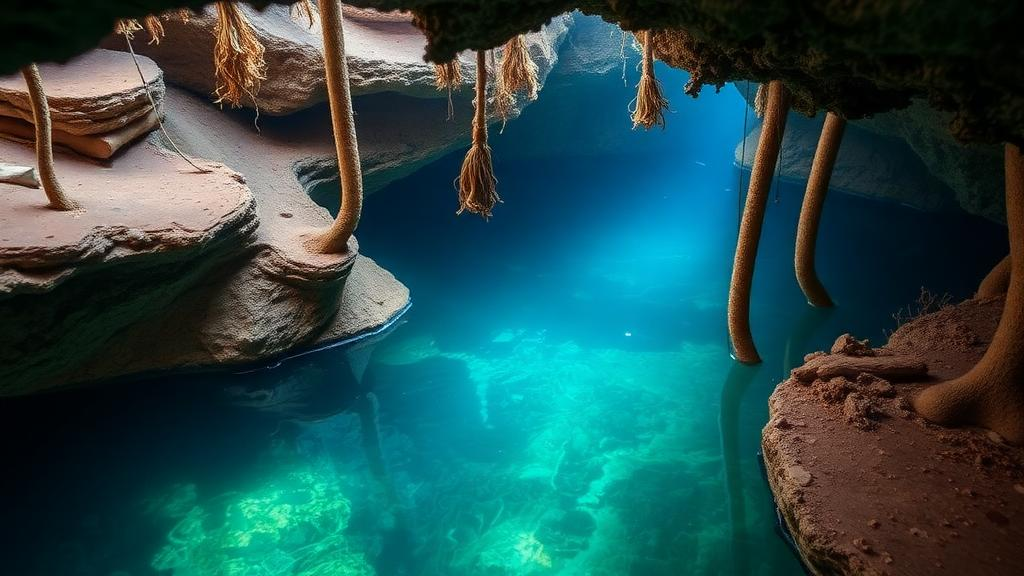
The investigated sites were Parque de los Cenotes, Cenote Cauich, La Hondada and a fourth aguada-type cenote in Cancun, in the northern part of the Yucatán Peninsula. Parque de los Cenotes was classified as a mixture of cavern and aguada types, Cenote Cauich as a grotto or pitcher-type cenote, and the other two sites as aguada-type cenotes. These water bodies occupy an ecological context that has received less attention than cenotes associated with tourism, rural areas or dense jungle.
Some urban cenotes lie in public parks, between busy avenues or on private property, and the article notes that some contain litter, discarded tires and electrical waste. The researchers selected four sites to examine species richness, community structure and composition, with a particular focus on phytoplankton and protists. These groups had remained incompletely characterized in cenotes in the Mexican Caribbean, where the broader freshwater and marine biodiversity of the region is also poorly studied.
The design was observational rather than experimental: it described what was present at four locations across two seasonal periods, without manipulating environmental conditions or testing the effects of specific pollutants. The authors described microbial diversity as a potentially useful indicator of ecosystem condition, while also emphasizing that identifying organisms suitable as indicators of eutrophication or environmental impact remains difficult without more comprehensive data. At each sampling station, researchers collected two 10-liter water samples.
Material larger than 150 micrometres was removed with a plankton net, and the retained material was suspended in 300 milliliters of water collected from the same cenote and stored in sterile 500-milliliter screw-cap bottles. One sample was fixed with 4% Lugol solution, while the other was analyzed fresh, using a modified method. Samples were kept at room temperature for no more than 24 hours, passed through a 45-micrometre membrane, and the material retained by each membrane was resuspended in 1 milliliter of distilled water for observation as soon as possible.
Optical microscopes equipped with 10-, 40- and 100-fold objectives were used to identify and document organisms, and photographs were recorded with a camera. Taxonomic assignments were based on established identification keys and reference resources. Abundance was calculated from the organisms counted in the concentrated preparation and the volumes used for concentration, counting and sampling, with results expressed as organisms per liter or milliliter.
Inventory completeness was assessed with species-accumulation curves and the ACE Mean and Chao 1 Mean estimators, which use singleton and doubleton records to estimate how thoroughly the samples represent the communities. Rank-abundance curves were used to examine community structure, including the relative representation of dominant and rare taxa. Within-site diversity was summarized with the exponential Shannon-Wiener index, which expresses the effective number of species.
Ward’s method was used to construct a cluster analysis for assessing similarity among the four communities. The researchers also calculated the percentage dissimilarity in diversity between pairs of sites. Together, these methods assessed not only which organisms were detected, but also how evenly the records were distributed and how much the four aquatic communities differed from one another.
Across the four cenotes, the survey registered six phyla, four subphyla, 10 classes, eight subclasses, 15 orders, 15 families and 18 genera. The inventory contained 17 identified species and four forms that could not be determined beyond the species level. Eight of the 17 identified species were phytoplankton, approximately 47% of the identified total, while nine were protists, approximately 53%.
The named organisms belonged to Euglenophyta, Heterokontophyta, Bacillariophyta, Cyanobacteriota, Ciliophora and Amoebozoa, including euglenoids, diatoms, cyanobacteria, ciliates and amoeboid protists. The study contributed 11 new records for the Yucatán Peninsula. These included the named species Euglena mutabilis, Lepocinclis acus, Phacus orbicularis, Coscinodiscus radiatus, Oscillatoria limosa, Arcella gibbosa, Amoeba radiosa and Mayorella vespertilioides, together with genus-level records for Vorticella, Aspidisca and Coleps.
The authors noted that most of the protist records except Paramecium aurelia were also reported for the first time in the Mexican Caribbean. Species-accumulation estimates indicated relatively high completeness, with values generally near 85% and an estimated 100% for La Hondada. That estimate does not mean every microscopic organism in the water was captured, because completeness is influenced by sampling design, timing, environmental conditions and habitat complexity.
During the rainy season, researchers identified 12 species in Parque de los Cenotes, eight in La Hondada and seven in the fourth cenote, but no species at Cenote Cauich during that period. In the dry season, four species were recorded at Parque de los Cenotes, two each at Cenote Cauich and La Hondada, and one at the fourth site. The seasonal contrast was consistent with the observation of greater protist abundance during the rainy season, especially at Parque de los Cenotes.
Diversity was highest at Parque de los Cenotes, with a reported Shannon-based value of 2.3, followed by La Hondada at 1.7, the fourth cenote at 1.6 and Cenote Cauich at 0.6. Across the sites, the value was 3.2 during the rainy season and 2.5 during the dry season. Rank-abundance curves indicated moderate evenness at La Hondada and Cenote Cauich, high evenness at Parque de los Cenotes and relatively low evenness at the fourth cenote.
No organism dominated all four communities, although Euglena mutabilis, Radiocystis geminata and Aspidisca sp. were prominent at Parque de los Cenotes and Cenote Cauich. Cluster analysis revealed low species similarity among the cenotes, suggesting that each contained a substantial share of taxa not shared with the other sampled sites. The authors related this pattern partly to the broad range of food requirements among protists, while noting that differences in nutrient concentrations, temperature and other physical parameters may also be relevant; however, the study did not directly test which environmental variables produced the community differences.
The scale of the investigation remains a major limitation. It covered four urban cenotes, sampled during two seasonal periods and relied on microscopy and taxonomic keys for identification, so the results should be treated as a snapshot rather than a comprehensive account of all cenotes in Cancun or the wider peninsula. The authors called for systematic monitoring, effective management and conservation, public policies supported by technical and hydrological expertise, and participation by society in protecting these vulnerable freshwater ecosystems.
Subject of Research: Phytoplankton and protist diversity in four urban cenotes in Cancun, Mexico
Article Title: Aquatic microdiversity from urban cenotes in Cancun, Quintana Roo, Mexico
Article References: Díaz-Hernández, J. A., Ugalde-Silva, P., Berriozabal-Islas, C., Novelo, A., Hernández-Uc, J., Arana-May, A., Pech-Patrón, S. D., Nava-Jiménez, I. A., & Borbolla-Vázquez, J. (2023). Aquatic microdiversity from urban cenotes in Cancun, Quintana Roo, Mexico. Subterranean Biology, 46, 129-145. https://doi.org/10.3897/subtbiol.46.108082
Image Credits: AI Generated
DOI: 10.3897/subtbiol.46.108082
Keywords: urban cenotes, Cancun, Yucatán Peninsula, phytoplankton, protist diversity, microbial communities, karst aquifers, seasonal diversity, aquatic microdiversity, water ecosystems, Aquatic, microdiversity
News Source: Morgan Morrow. (October 20, 2026). Urban Cancun cenotes harbor 17 recorded microbial species. Scienmag.