A sweeping review published in Plant Biosystems by Aditi Mishra, Upma Bhatt and Vineet Soni of Mohanlal Sukhadia University in Udaipur, India, argues that one of the most underappreciated tools in the fight for climate-resilient farming has been growing in fields, forests and coastal waters all along: plants and seaweeds themselves. The work synthesizes decades of evidence showing that crude and refined extracts derived from land plants and macroalgae act as multifunctional biostimulants, boosting crop growth, productivity and resilience under drought, salinity, heat, cold and pathogen attack. What makes the review notable is not the claim that these extracts work, which agronomists have observed for years, but the depth of mechanistic detail now available to explain how they work at the level of hormones, genes, membranes and even the soil microbiome.
Biostimulants occupy a curious regulatory and scientific niche. Unlike fertilizers, they are not defined primarily by the nutrients they deliver, and unlike pesticides, they do not kill pests directly. Instead, as the review emphasizes, they regulate plant metabolism. The authors stress that plant-derived extracts almost never act through a single active constituent. A typical extract is a dense biochemical cocktail containing phytohormone-like compounds, antioxidants, osmoprotectants, phenolics, oligosaccharides, fatty acids, proteins and peptides. This compositional complexity is not a nuisance to be purified away; it is the point. Multiple molecules converge on multiple signaling pathways simultaneously, producing effects that no isolated compound could replicate.
The mechanistic core of the review centers on hormone signaling. Extracts modulate the major stress hormones of plants, including abscisic acid, salicylic acid, jasmonic acid and ethylene, which together orchestrate everything from stomatal closure during drought to the activation of pathogen defenses. Transcriptomic studies cited in the review show that treatment with extracts such as those from Ascophyllum nodosum, a brown seaweed long used in commercial biostimulant products, upregulates stress-responsive genes in crops ranging from Arabidopsis to soybean and tomato. In effect, the extracts behave like a training signal, priming the plant’s own defense machinery so that when real stress arrives, the response is faster and stronger.
Beyond hormones, the review catalogues a suite of physiological adjustments that extracts induce. Treated plants accumulate more osmolytes, small compatible solutes such as proline and glycinebetaine that help cells retain water and maintain turgor under drought or salt stress. Antioxidant defenses are strengthened, allowing plants to neutralize the reactive oxygen species that spike when photosynthesis is disrupted. Ionic homeostasis is restored, helping roots exclude sodium or compartmentalize it away from sensitive metabolic machinery. Perhaps most intriguingly, the review highlights evidence that extracts regulate water transport through aquaporins, the membrane channels that control the flow of water across plant cells, offering a direct physical route to improved drought tolerance.
The review also draws attention to the rhizosphere, the teeming microbial zone around plant roots. Extracts influence rhizosphere interactions and microbiome dynamics, according to the authors, thereby improving nutrient acquisition and systemic resilience. Studies combining seaweed extracts with plant growth-promoting rhizobacteria in wheat, rice, onion and cucumber report synergistic effects on growth and yield that neither partner achieves alone. This reframes biostimulants not merely as foliar tonics but as ecosystem engineers that reshape the underground communities on which crop nutrition depends, a perspective increasingly central to soil health science.
Case studies across stress types give the review its agronomic weight. Under drought, moringa leaf extract has improved rice yield and grain quality through enhanced antioxidant activity, while seaweed extract has bolstered sugarcane drought resistance by modulating root architecture and soil properties. Under salinity, extracts from Ascophyllum, willow, licorice root and grape seed have each improved photosynthetic stability and ion balance in crops such as tomato, maize, pea and faba bean. Heat stress studies in wheat and maize report that moringa and sorghum water extracts preserve photosynthetic pigments, while cold stress trials in barley and tomato show brown seaweed extracts triggering cold-acclimation gene expression. Biotic stress studies add another layer, with laminarin from brown algae eliciting grapevine defenses against downy mildew and botrytis, and seaweed extracts reducing fungal disease on carrot foliage.
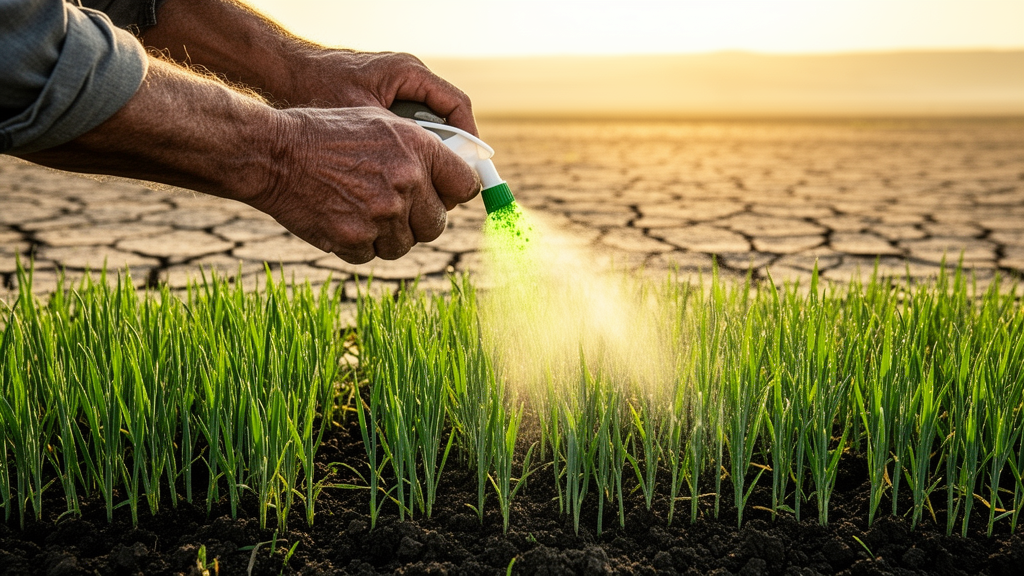
Application strategy emerges as a critical variable. The review distinguishes between foliar sprays, seed priming and soil drenching, noting that dose, timing and method can determine whether an extract helps or does nothing at all. Seed priming with moringa leaf extract has reduced chilling injury in spring maize and improved rice seedling establishment under water deficit, while foliar application has induced terminal heat tolerance in quinoa. Processing matters too: the review notes that extraction methods, from mechanical disruption to enzyme-assisted techniques, shape which phytochemicals survive into the final product, and that even storage temperature can alter cytokinin and auxin concentrations in seaweed concentrates.
The most forward-looking section concerns nanotechnology. Plant-mediated nanoparticles and nano-formulations, the authors report, improve the stability, delivery efficiency and bioavailability of bioactive phytochemicals. Examples span the emerging literature: Sargassum-synthesized zinc oxide nanoparticles inducing salt tolerance in maize, neem-mediated silver nanoparticles improving drought-stressed soybean growth, Spirulina-derived carbon dots used for seed nanopriming in rice, and nano-encapsulated biostimulants enhancing photosynthetic efficiency in heat-stressed peppers. Nano-encapsulation can also protect volatile or easily degraded compounds, such as essential oils, from rapid environmental loss. The authors caution, implicitly, that nanoparticle-plant interactions, including uptake, transport and potential toxicity, remain active areas of investigation, and that environmental implications must be weighed alongside agronomic gains.
What emerges from the synthesis is a picture of plant-derived biostimulants as systems-level interventions rather than simple inputs. A single seaweed extract may simultaneously adjust hormone signaling, boost antioxidant capacity, alter root growth, feed beneficial microbes and prime defense genes, all without introducing novel genetic material or synthetic chemistry. For farmers facing increasingly erratic rainfall, salinizing soils and heat waves, this profile is attractive precisely because it works with the plant’s existing physiology rather than overriding it. The review’s case studies consistently report improvements in photosynthetic stability, stress tolerance and yield under optimized application strategies, suggesting that the gap between laboratory promise and field performance is narrowing.
The authors close with a research agenda that reads like a roadmap for the next decade of the field. Future progress, they argue, will require integrating multi-omics approaches, combining transcriptomics, metabolomics and proteomics to resolve exactly which molecules in a complex extract drive which responses, alongside microbiome profiling to track how extracts reshape root communities over time, and precision nanotechnology to deliver the right bioactive to the right tissue at the right moment. If that integration succeeds, the humble plant extract, long dismissed as folk agronomy, could become a cornerstone of sustainable agriculture, helping crops weather a climate that is growing less forgiving by the season.
Subject of Research: Mechanisms of plant-derived biostimulants in enhancing crop stress tolerance and sustainable agriculture
Article Title: Mechanistic insights into plant-derived biostimulants for sustainable agriculture and stress tolerance
Article References: Mishra, A., Bhatt, U., & Soni, V. (2026). Mechanistic insights into plant-derived biostimulants for sustainable agriculture and stress tolerance. Plant Biosystems, 160(6), Article 295. https://doi.org/10.1007/s44473-026-00314-2
Image Credits: AI Generated
DOI: 10.1007/s44473-026-00314-2
Keywords: biostimulants, plant extracts, seaweed extracts, abiotic stress, drought tolerance, salinity stress, phytohormones, antioxidants, nanotechnology, soil microbiome, sustainable agriculture, moringa oleifera
News Source: Alan Morgan. (October 19, 2026). How Plant Extracts Prime Crops to Survive Drought, Salt and Heat. Scienmag.