A five-day-old infant girl in Sichuan, China, survived a bloodstream infection caused by one of the most unlikely bacterial suspects in neonatal medicine: Edwardsiella tarda, a microorganism better known for killing fish than for sickening human newborns. The case, reported by physicians at Jiangyou People’s Hospital in the journal BMC Pediatrics, describes how the baby arrived with jaundice and a sudden refusal to feed, and how a blood culture ultimately revealed an infection so rare in this age group that clinicians had to reach back through the medical literature to guide her treatment. She recovered fully after intensive antibiotic therapy and immune-supportive care, and she left the hospital without long-term complications.
The clinical story began with what seemed, at first, to be a routine neonatal complaint. According to the case report, the infant had shown skin jaundice for two days before admission, and in the three hours before she was brought to the hospital she had decreased her milk intake and cried persistently. These are among the most common reasons newborns are evaluated by pediatricians, and none of them points specifically toward sepsis. That ambiguity is precisely what makes the case instructive, the authors argue: neonatal Edwardsiella tarda septicemia presents with non-specific clinical manifestations, which makes early diagnosis exceptionally challenging. A delayed or missed diagnosis of bacterial sepsis in a newborn can be fatal, so the stakes of recognizing unusual pathogens are high.
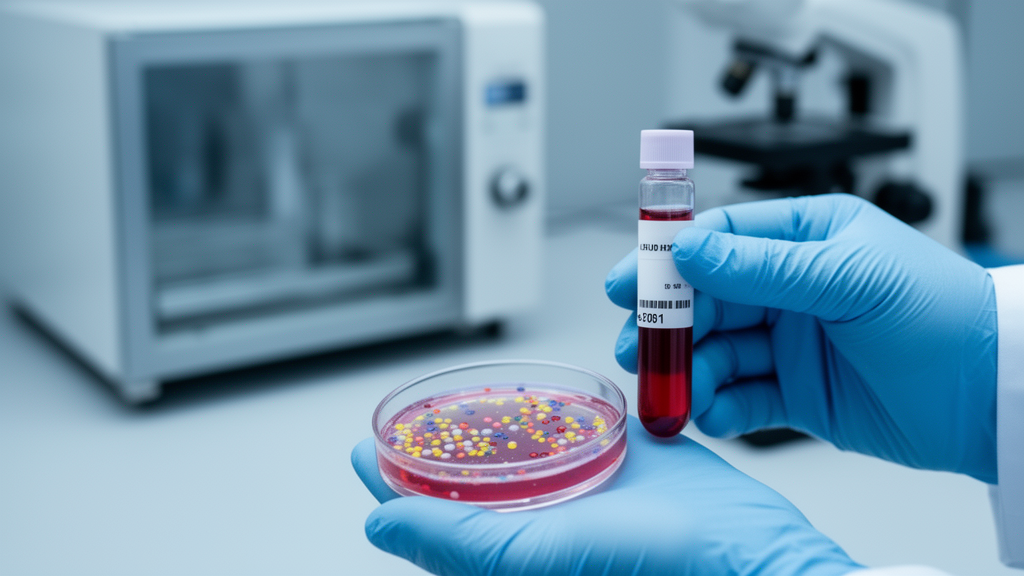
Blood culture provided the decisive answer. Culturing the infant’s blood allowed the laboratory to identify Edwardsiella tarda as the organism circulating in her bloodstream, confirming the diagnosis of neonatal septicemia. Blood culture remains the diagnostic gold standard for neonatal sepsis, because the clinical signs of infection in newborns, from temperature instability to poor feeding and lethargy, overlap so heavily with other neonatal illnesses that laboratory confirmation is essential before targeted therapy can be chosen. In this case, the identification of an organism that most pediatricians will never encounter in a newborn blood culture immediately placed the infant’s care in uncommon territory.
Edwardsiella tarda is a Gram-negative bacterium in the family Enterobacteriaceae, and its natural history is dominated by aquatic environments and cold-blooded animals. It is a well-documented pathogen of fish, causing disease in farmed and wild species, and it can also colonize reptiles and amphibians. Human infections are uncommon and typically occur through exposure to contaminated water or aquatic food sources, most often producing gastrointestinal illness. When the bacterium does invade the bloodstream, the consequences can be severe; the authors note that Edwardsiella tarda bacteremia can be a fatal disease in humans. Its appearance in the blood of a five-day-old infant is an event rare enough that the Jiangyou team combined their case with a review of the published literature to map what is known about this infection in newborns.
One of the most striking elements of the case involved a finding that extended beyond the bloodstream infection itself. During hospitalization, the infant was found to have a subgaleal hematoma over the left parietal region of her skull, a collection of blood between the scalp and the skull covering that had been present on imaging. That hematoma progressed to abscess rupture during her hospital stay, meaning the blood collection became infected and broke down. A subgaleal abscess in a newborn represents a serious complication, because the potential space between the galea aponeurotica and the skull can allow blood and pus to spread widely across the scalp, and infection in this compartment can seed the underlying structures. The progression of a sterile hematoma into an abscess in the setting of bacteremia illustrates how a circulating infection and a local collection of blood can reinforce one another, with bacteria seeding the hematoma and the hematoma providing a protected environment in which the bacteria can proliferate beyond the reach of circulating antibiotics.
Treatment combined two complementary strategies. The infant received meropenem, a broad-spectrum carbapenem antibiotic active against many Gram-negative organisms, including Enterobacteriaceae such as Edwardsiella tarda. Carbapenems are typically reserved for severe infections or for situations in which resistance to narrower agents is a concern, and their use here reflects the gravity of neonatal septicemia and the need to achieve rapid, reliable bacterial killing. Alongside the antibiotic, the clinicians administered adjunctive intravenous immunoglobulin, or IVIG, a blood-derived product concentrated with antibodies that can support the immature immune system of a newborn. Neonates have limited capacity to produce their own antibodies and to opsonize encapsulated and Gram-negative bacteria effectively, and IVIG is sometimes used as adjunctive therapy in severe neonatal sepsis to supplement the infant’s antibody repertoire while antibiotics address the underlying infection.
Supportive care completed the therapeutic picture. Newborns with septicemia require meticulous management of fluid balance, nutrition, temperature, and organ function, because the physiological reserves of a five-day-old are minimal and the systemic inflammatory response to bacterial sepsis can rapidly destabilize multiple organ systems. In this infant, the combination of meropenem, IVIG, and supportive measures succeeded in clearing the infection and resolving the local complication. The subgaleal abscess, despite its rupture during hospitalization, did not prevent a full recovery, and the authors report that the infant was discharged without long-term complications, an outcome that stands in welcome contrast to the potentially fatal trajectory of untreated Edwardsiella tarda bacteremia.
The rarity of this infection in newborns is what gives the case report its scientific value. By pairing their single case with a literature review, the authors have assembled a reference point for clinicians who may encounter similar presentations. The published record of Edwardsiella tarda infections in neonates is sparse, and each documented case contributes to a collective understanding of how the infection is acquired, how it manifests, and how it responds to treatment. The authors emphasize that awareness of potential environmental or aquatic exposures may be helpful when considering Edwardsiella tarda infection in neonates, a recommendation that reflects the bacterium’s ecology. In practice, this means that when a newborn presents with sepsis and cultures yield an unexpected aquatic-associated organism, clinicians should think to ask about the environments the mother and infant have contacted, from household water sources to contact with fish or aquatic animals.
The case also highlights the role of maternal exposure in the chain of transmission. The article’s keywords include maternal exposure, underscoring the authors’ interest in how a newborn so young, with no independent contact with the outside world beyond the delivery environment, could acquire a bacterium associated with water and aquatic animals. Possible routes in such cases include contamination during labor and delivery, contact in the home environment after discharge, or transmission from a colonized mother. The report does not resolve this question definitively for this infant, but by flagging maternal and environmental exposure as a consideration, it gives pediatricians a concrete line of inquiry when the unusual diagnosis arises.
For the wider medical community, the takeaways are practical. First, neonatal sepsis remains a diagnosis in which the clinical picture can deceive: jaundice and poor feeding, two of the most ordinary findings in a newborn, were the opening signs of a life-threatening bloodstream infection. Second, blood cultures must be obtained promptly whenever sepsis is suspected, because identifying the organism is the only way to move from empiric coverage to targeted therapy, particularly when the pathogen involved is as unusual as Edwardsiella tarda. Third, unusual organisms demand unusual histories, and asking about aquatic and environmental exposures can illuminate infections that would otherwise remain unexplained. Finally, the case demonstrates that even a rare and potentially fatal neonatal infection can have a good outcome when it is diagnosed by culture, treated with appropriate broad-spectrum antibiotics and adjunctive immunotherapy, and monitored closely for local complications such as the infected subgaleal hematoma that complicated this infant’s course. The authors, Qinnan Shao, Haixia Xie, Haixia Liu, and Hong Lin, all of the Department of Pediatrics at Jiangyou People’s Hospital, published the case as an open-access report so that clinicians elsewhere can draw on the experience when the same rare pathogen next appears in a newborn’s blood culture.
Subject of Research: Neonatal septicemia caused by Edwardsiella tarda
Article Title: Neonatal septicemia caused by Edwardsiella tarda: a case report and literature review
Article References: Shao, Q., Xie, H., Liu, H., & Lin, H. (2026). Neonatal septicemia caused by Edwardsiella tarda: a case report and literature review. BMC Pediatrics. https://doi.org/10.1186/s12887-026-07819-x
Image Credits: AI Generated
DOI: 10.1186/s12887-026-07819-x
Keywords: Edwardsiella tarda, neonatal sepsis, bloodstream infection, blood culture, meropenem, intravenous immunoglobulin, subgaleal hematoma, abscess, aquatic exposure, maternal exposure, neonatology, bacterial infection
News Source: Harold Sullivan. (October 19, 2026). Rare Fish-Linked Bacterium Blamed in Newborn Bloodstream Infection Case. Scienmag.