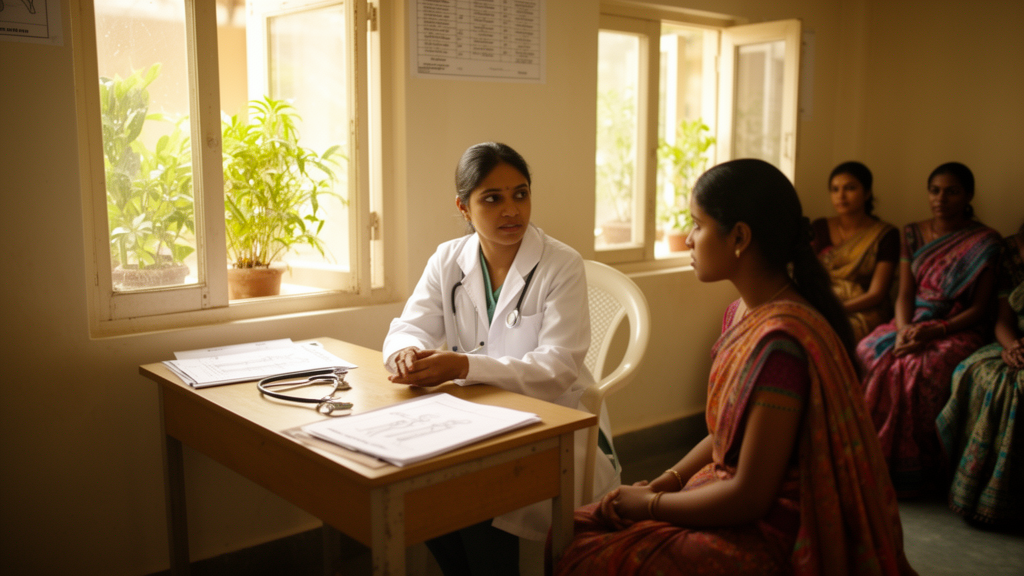
Domestic violence remains one of the most pervasive yet under-addressed public health crises of our time, and a new large-scale trial in India is testing whether the health system itself can become a powerful engine for both responding to and preventing abuse. Researchers led by the Mumbai-based Centre for Enquiry into Health and Allied Themes (CEHAT), working with partners in India, the United States and the World Health Organization, have unveiled the protocol for a cluster randomised controlled trial known as Udaan, a name that means flight or soaring in Hindi. The study, published in BMC Health Services Research, will determine whether a package of health system strengthening interventions in the western state of Maharashtra can measurably reduce domestic violence against women, while also generating crucial evidence on what it actually takes to embed violence response into everyday primary healthcare.
The scientific rationale for the trial rests on a well-documented gap between international guidance and frontline practice. The World Health Organization’s 2013 Clinical and Policy Guidelines on Responding to Intimate Partner Violence and Sexual Violence Against Women recommend integrating violence response into primary healthcare services, yet the mechanics of achieving this integration in low- and middle-income country settings remain poorly understood. Health facilities in such settings often lack trained staff, clear protocols, private consultation spaces and reliable referral pathways, all of which are prerequisites for a survivor to safely disclose abuse and receive meaningful help. Udaan is designed to close this evidence gap by rigorously evaluating not just whether an integrated response works, but how it can be implemented and sustained within the constraints of a real public health system.
Methodologically, the trial adopts a cluster randomised controlled design with a randomized block structure, a choice that reflects the reality that health interventions operate at the level of facilities and communities rather than individuals. Two randomly selected blocks in the Chhatrapati Sambhajinagar district of Maharashtra will serve as the intervention area, while comparable areas will act as controls. Randomising at the cluster level helps prevent contamination between groups, since it would be nearly impossible to train health workers in one facility while keeping neighbouring facilities untouched. The trial is registered with the Clinical Trial Registry of India under number CTRI/2024/07/071367, having been registered on 26 July 2024, with enrolment beginning on 1 October 2024 and recruitment ongoing.
The intervention itself is a multi-layered package targeting several pillars of the health system simultaneously. At its core is capacity building: training health workers and community health workers to recognise the signs of violence, respond with empathy and confidentiality, and connect survivors to appropriate support. Alongside training, the intervention addresses structural barriers by improving patient flow to protect privacy and confidentiality, establishing clear clinical protocols for handling disclosures, documenting cases systematically, and strengthening referral mechanisms that link health facilities to police, legal aid and shelter services. This systems-level approach reflects a growing consensus in global health that one-off training sessions rarely change practice unless the surrounding infrastructure supports and rewards the new behaviours.
To measure effectiveness, the researchers will conduct cross-sectional surveys among women visiting health facilities in both the intervention and control arms, at baseline and again at end line, eighteen months after the intervention begins. This before-and-after, two-arm comparison will allow the team to estimate whether the integrated response is associated with a reduction in domestic violence in the communities served by the intervention facilities. Measuring violence reduction through a health system intervention is ambitious, and the survey design acknowledges that any observed change must be interpreted against the backdrop of secular trends, seasonal variation and the inherent sensitivity of asking women about experiences of abuse in clinical settings.
Because the intervention depends heavily on the people delivering it, the trial includes dedicated measurement of workforce change. A knowledge, attitude and practice survey will assess whether capacity building actually shifts what health workers know, how they think about violence, and what they do when survivors present. In parallel, a facility readiness assessment will evaluate whether the systems strengthening components, from private consultation rooms to functioning referral directories, have been put in place and are being used. Together these two instruments provide a mechanistic picture: if violence outcomes change, the researchers will be able to trace whether that change travelled through improved provider competence, improved facility structures, or both.
Qualitative methods round out the evaluation design. In-depth interviews and focus group discussions with health workers will explore their perceptions of the intervention’s relevance and their lived experience of implementing it, capturing the friction points that quantitative surveys inevitably miss. The study will also employ dedicated methodology to establish the cost of the health system response to domestic violence, an element that is critical for policy makers weighing whether such programmes can be scaled across India’s vast public health infrastructure. Cost data from rigorously evaluated trials are scarce in this field, and their absence has long hampered advocacy for budget allocations to violence response services.
The stakes of the trial are considerable in the Indian context, where national data sources such as the National Family Health Survey and the National Crime Records Bureau document high and persistent levels of violence against women, while healthcare providers operate under a legal and policy mandate to respond to domestic violence that is frequently unfulfilled in practice. The authors argue that the findings will help operationalise this mandate, clarifying what is required at the level of the health system, including the distinctive role that community health workers can play in prevention. Community health workers occupy a trusted, door-to-door position in Indian villages and urban settlements, and their involvement represents an innovative extension of violence response beyond clinic walls into the spaces where abuse often first unfolds.
The trial has passed a demanding gauntlet of ethical oversight, with approvals from CEHAT’s Program Development Committee, the independent Anusandhan Trust Ethics Committee registered with India’s Ministry of Health, a technical review panel of the WHO’s Human Reproduction Programme, the WHO Ethics Review Committee, and the Institutional Review Boards of the George Washington University. All respondents will provide informed consent before participating in interviews, focus groups or surveys, a safeguard of particular importance in research where disclosure of violence carries real risks. The work is funded by the United Kingdom’s Foreign, Commonwealth and Development Office through the Global Women’s Institute at the George Washington University, with additional support for several authors from the UNDP/UNFPA, UNICEF, World Bank and WHO Special Programme of Research on Human Reproduction.
If Udaan demonstrates that a strengthened primary health system can reduce domestic violence, the implications will ripple far beyond one district in Maharashtra. Governments across South Asia and other low- and middle-income regions would gain a tested, costed blueprint for converting their own clinics and community health networks into first lines of defence against abuse, fulfilling obligations that international guidelines have long articulated but rarely resourced. Conversely, if the trial shows null or mixed results, the detailed process measures, qualitative findings and cost data will still illuminate precisely where the health system model falls short, steering the field toward more promising strategies. Either way, the study promises to move the conversation about violence against women from rhetorical commitment to empirical evidence, and its progress will be watched closely by researchers, advocates and policy makers around the world.
Subject of Research: Health system response to and prevention of domestic violence in primary healthcare in India
Article Title: Udaan: scaling up health system response to and prevention of domestic violence: Protocol of a cluster randomised trial
Article References: Arora, S., Rege, S., Jain, K., Ellsberg, M., Meyer, S. R., Thwin, S. S., Meinhart, M., & Amin, A. (2026). Udaan: scaling up health system response to and prevention of domestic violence: Protocol of a cluster randomised trial. BMC Health Services Research. https://doi.org/10.1186/s12913-026-15586-9
Image Credits: AI Generated
DOI: 10.1186/s12913-026-15586-9
Keywords: domestic violence, violence against women, cluster randomised trial, primary healthcare, health system strengthening, community health workers, India, Maharashtra, WHO guidelines, public health, study protocol, trial registration
News Source: Phoebe Ingram. (October 19, 2026). Can Clinics Help Stop Domestic Violence? A Landmark Trial in India Aims to Find Out. Scienmag.