Engineers in China have reworked one of the most familiar shapes in mechanical metamaterials and, with a change that is almost invisible from the outside, made it dramatically stronger and better at absorbing energy. A team at the Henan Institute of Science and Technology, working with Henan Zhongyuan Mining Equipment, replaced the solid rectangular cross-sections of the inclined walls in a re-entrant auxetic honeycomb with I-beam profiles — the same H-shaped section that carries skyscraper frames and bridge girders. The swap left the honeycomb’s outward appearance untouched, yet it nearly quadrupled the structure’s compressive stiffness and nearly doubled its strength, according to a study published in Frontiers in Materials.
Re-entrant auxetic honeycombs belong to the family of auxetic materials, which behave in a counterintuitive way: when you squeeze them, they contract sideways rather than bulging out. That negative Poisson’s ratio comes directly from the geometry of the cells, whose angled walls rotate and fold inward under load. Because the macroscopic response is governed by cell geometry rather than by the base material alone, designers can tune stiffness, strength and collapse behavior by reshaping the cells — a property that has made auxetic honeycombs attractive for crash protection, cushioning, indentation resistance and recoverable structures.
Most previous attempts to improve these structures have changed the topology itself: adding ribs, introducing hierarchical sub-cells, grading the architecture or hybridizing different unit types. The new study takes a different route. Instead of altering the two-dimensional outline of the honeycomb, the researchers redesigned the cross-section of the load-bearing inclined walls. The reasoning comes straight from classical beam mechanics: in a bending-dominated member, material placed far from the neutral axis contributes far more to the second moment of area — and therefore to bending stiffness — than material near it. An I-beam is the canonical expression of that principle.
The team built two versions of a 100 by 100 by 80 millimeter honeycomb from a toughened polylactic acid filament using fused-filament fabrication, with identical printing conditions, filament batch and build orientation for both. In the conventional version, every wall had a solid 2 by 2 millimeter square section. In the new version, the horizontal walls stayed the same, but each inclined wall became an I-beam with a 0.8 millimeter web and two 0.6 millimeter flanges, dimensioned so that the total cross-sectional area matched the square section exactly. Because the in-plane silhouettes are identical, the difference is undetectable in a front view; only an enlarged cross-section reveals it.
Before any honeycomb was compressed, the researchers derived a theoretical model. Treating the horizontal members as essentially undeformed, they attributed the global response to bending of the inclined struts, deriving expressions for the equivalent compressive modulus from beam deflection and for the nominal compressive strength from a plastic-hinge collapse mechanism, using the fully plastic moment of each cross-section. The model predicts that the I-beam section should outperform the square section purely because of its larger second moment of area and plastic moment resistance — with no extra material.
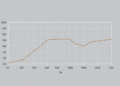
Then came the tests. Two independently printed specimens of each configuration were crushed quasi-statically between platens, and the results were cross-checked against finite element simulations in Abaqus, with the polymer represented by an elastic-plastic model calibrated from tensile tests on coupons printed under identical conditions. The agreement was tight: across both configurations, the theoretical and simulated values of modulus and strength deviated from the experimental means by less than 8 percent. The experiments showed the familiar three-stage compression sequence — an initial elastic rise, a plateau of wall bending, contact and folding, and finally densification as the cells pack solid.
The numbers are striking. The equivalent compressive modulus jumped from 0.186 megapascals for the square-section honeycomb to 0.718 megapascals for the I-beam version, an increase of 286 percent. Compressive strength rose from 0.0311 to 0.0618 megapascals, up 98.7 percent. All of that came from redistributing the same amount of material within the wall cross-section; the measured mass increased by only 5.52 percent, a difference the authors attribute to the geometry of the printed flanges rather than to added material.
Energy absorption improved in step. Volumetric energy absorption — the area under the stress-strain curve up to the densification strain, identified with the energy-absorption-efficiency method — rose by 67.90 percent, from 24.3 to 40.8 kilojoules per cubic meter. Specific energy absorption, which normalizes by mass, climbed from 0.454 to 0.723 joules per gram, roughly a 59 percent gain. Mean plateau stress increased by 78.36 percent. In other words, the I-beam honeycomb soaks up substantially more crushing energy per unit volume and per unit weight while sustaining a higher, more useful load during progressive collapse — exactly the combination a cushioning or protective component needs.
The deformation mechanisms tell an interesting story. Both structures retained the same global X-shaped folding path characteristic of the re-entrant topology, but the I-beam version deformed in a more complex way locally. Post-test photographs showed deformation concentrated near the re-entrant vertices, with local flange buckling, cross-sectional warping and slight out-of-plane movement, along with minor filament pull-out at contact zones. The square-section specimen, by contrast, folded more smoothly. The I-beam walls are stiffer, but their non-uniform sections introduce local instabilities at large strains — a trade-off the authors note does not disturb the overall auxetic collapse mechanism.
A bounded sensitivity study over thirteen finite element cases explored how flange thickness, web thickness and re-entrant angle shape the performance. Flange thickness emerged as the dominant lever: pushing material farther from the neutral axis raises plateau stress and volumetric energy absorption, though specific energy absorption does not improve monotonically, because excessive flange thickening adds mass and shortens the effective crushing stroke. Web thickness mainly stabilizes folding and load transfer, with a weaker effect. The re-entrant angle chiefly controls densification strain and the available deformation stroke, and the best specific energy absorption appeared at an intermediate angle rather than an extreme. The practical design rule that emerges: use flange thickness to tune bending resistance, web thickness to stabilize folding, and re-entrant angle to regulate densification.
The authors are careful to scope their claims. The conclusions hold for the tested print orientation, material batch, geometric range and quasi-static loading conditions; dynamic impact performance was not measured and should not be inferred. With only two specimens per configuration, the reported standard deviations quantify repeatability rather than a full uncertainty budget, and the finite element model treats the printed polymer as isotropic, an approximation that does not resolve the layer-by-layer anisotropy inherent to fused-filament fabrication. The team flags future work with more replicates, multiple orientations and batches, strain-rate-dependent material characterization and dynamic impact testing.
Even within those limits, the result is a clean demonstration of a principle that could ripple through metamaterial design. Data-driven and machine-learning approaches to metamaterial discovery are advancing rapidly, but they work best when the design variables carry clear mechanical meaning. Cross-sectional redesign of the load-bearing ligaments — without touching the topology that produces the auxetic behavior — offers exactly that kind of interpretable knob. It is also fabrication-compatible: no multi-material printing, no exotic geometry, just a smarter distribution of the same polymer. For lightweight cushioning, packaging, protective gear and any application where a structure must fold predictably while soaking up energy, the humble I-beam may now have a new job at the scale of millimeters.
Subject of Research: Improving re-entrant auxetic honeycomb stiffness and energy absorption through I-beam cross-section redesign of inclined cell walls
Article Title: Mechanical performance and energy absorption of novel re-entrant auxetic honeycomb with I-beam inclined wall cross-section
Article References: Sun, J., Liu, Y., & Zhao, J. (2026). Mechanical performance and energy absorption of novel re-entrant auxetic honeycomb with I-beam inclined wall cross-section. Frontiers in Materials, 13, Article 1968513. https://doi.org/10.3389/fmats.2026.1968513
Image Credits: AI Generated
DOI: 10.3389/fmats.2026.1968513
Keywords: auxetic honeycomb, mechanical metamaterials, negative Poisson's ratio, energy absorption, I-beam cross-section, quasi-static compression, 3D printing, finite element analysis, cellular solids, re-entrant geometry, PLA, crashworthiness
News Source: Denise Maddox. (October 19, 2026). I-Beam Cell Walls Make Auxetic Honeycombs Nearly Four Times Stiffer. Scienmag.