On the ropes that collect mussel and oyster spat at Greek aquaculture farms, researchers scraping samples in 2021 found something deceptively familiar: tiny amphipod crustaceans belonging to a group that has haunted taxonomists for more than a century. The specimens, recovered from farms in the Saronikos Gulf and off the island of Rhodes, belong to the Stenothoe gallensis species complex, a cluster of morphologically near-identical shrimp-like animals whose true diversity has been debated since the original species was described from Sri Lanka in 1904. A new study published in the Biodiversity Data Journal now reports these Greek records in detail and, in doing so, exposes a problem that stretches far beyond the Mediterranean: some of the most trusted characters used to tell these species apart may not be trustworthy at all.
Stenothoe gallensis Walker, 1904 is one of the most widely reported amphipods on Earth, with hundreds of occurrence records spanning the Indian, Pacific and Atlantic Oceans. That cosmopolitan reputation, however, has increasingly been questioned. In recent years the taxon has been reinterpreted as a species complex, currently encompassing eleven nominal species, several of which are recognised for their invasion potential. Even the Mediterranean status of the nominal species is murky: material once identified as S. gallensis in the Mediterranean was later shown by Krapp-Schickel to belong instead to S. cattai, another member of the complex, casting doubt on decades of distributional records.
The Greek specimens added a fresh twist. Under the stereoscope, they closely matched the original description of Stenothoe irakiensis, a species erected by Salman in 1985 from the Arabian Gulf and currently treated as a junior synonym of S. gallensis. Salman had distinguished his species by a sharp ventral spur on the peduncle of the first uropod, a feature that Krapp-Schickel herself reported in her 2015 re-description of S. gallensis, which is why she sank S. irakiensis into synonymy. Yet the type locality of S. irakiensis lies in the Arabian Gulf, while S. gallensis was described from Sri Lanka, and the Greek animals had never before been reported from the Mediterranean under either name.
To probe the problem quantitatively, the team measured 81 specimens, 50 males and 31 females, across a battery of linear and meristic characters: body length and width, the length and width of the propodus and dactylus of the second gnathopod, seta lengths, the number of robust setae on the telson and on the peduncle and articles of the third uropod, and the ratios among those uropod articles. Males were separated into younger individuals and hyperadults, the latter recognisable by larger body size, a more robust second gnathopod with a longer dactylus, a row of distinct setae on the dactylus inner margin and crenulations on the merus. Spearman rank correlations, Mann-Whitney U tests and a principal components analysis were then used to test how much of the observed variation tracked sex and maturity rather than species identity.
The results were striking. Nearly all morphometric variables were significantly positively correlated with one another and with body size, meaning that characters routinely used in species diagnoses, such as the relative length of the gnathopod 2 dactylus or the armature of the telson and uropod 3, scale with the size of the animal. The Mann-Whitney tests found significant differences between hyperadult and younger males for every variable examined, and the principal components analysis, with the first axis explaining 68.7 percent of total variation, separated hyperadult males, younger males and females into distinct clusters along a gradient of developing secondary sexual traits. In plain terms, a single population contains animals that look, in key diagnostic features, like different species depending on their sex and stage of maturity.
This matters because species descriptions within the complex have often been built on a holotype and a handful of paratypes, sometimes immature ones. The study points to Stenothoe dentirama, described from Fukushima, Japan, whose type material likely represents an immature male, and to S. himyara from the Red Sea, whose small body size and reduced gnathopod serration may likewise reflect an ontogenetic stage rather than genuine species-level differences. Even among fully mature hyperadult males in the Greek material, characters such as the relative length of the gnathopod 2 dactylus, the number of marginal robust setae on the uropods, the armature of the telson and the shape of the palmar margin varied considerably. The authors also suggest that moulting may play a role, having occasionally observed discrepancies in seta counts between the old and new cuticle of the same appendage.
Comparing the Greek specimens with the historical literature deepens the uncertainty. Walker’s original 1904 account of S. gallensis is brief, omits the mouthparts entirely and leaves key features undescribed, while Salman’s 1985 description of S. irakiensis shows uropod 3 armature that matches the Greek animals more closely. Krapp-Schickel’s 2015 re-description, based on material from Dar es Salaam, Tanzania, rather than the Sri Lankan type locality, differs from the Greek material in the number of distal robust setae on the first article of uropod 3 and in the sculpturing of the second article. Records from the Suez Canal, Madras Harbour, West Africa, the Yellow Sea, Florida and Tunisia each show partial agreements and discrepancies, and several appear to have been based on the wrong life stage or even on members of other species complexes. The authors conclude that historical use of the name S. gallensis has probably encompassed more than one morphotype.
The implications ripple outward to the closely related S. valida complex, itself suspected of hiding cryptic diversity. Stenothoe ogumi, described from Brazil in 2020, exhibits characters traditionally assigned to both complexes, blurring a boundary that morphological characters alone seem unable to hold. Within the Greek farms themselves, the S. gallensis animals coexisted with a suite of fouling-associated amphipods, including the non-indigenous and rapidly spreading S. georgiana, found at the northern Evoikos Gulf site, along with Ericthonius brasiliensis, Jassa cf. slatteryi, Laticorophium baconi, Elasmopus rapax and several caprellids. The compiled Mediterranean record map shows a concentration of post-2015 records in the Levantine Sea and the Suez Canal, hinting, though not proving, at a Lessepsian introduction pathway that only genetic evidence could confirm.
The way forward, the authors argue, is integrative taxonomy. They recommend that descriptions within the complex be based explicitly on hyperadult males, that intraspecific variation across sexes and ontogenetic stages be documented as ranges rather than single values, that both mandibles and the full suite of mouthparts be illustrated, and that synonymies and re-descriptions based on non-type material be treated with caution. Most urgently, fresh material from the type locality in Sri Lanka is needed: only six nucleotide sequences of S. gallensis exist in GenBank, none from where the species was originally described. Topotypic DNA would provide the reference framework against which extra-type populations, including the Greek aquaculture animals, could finally be tested, determining whether the morphological characters taxonomists have relied on for 120 years actually delimit species, or whether the S. gallensis complex conceals far more diversity, and far more invaders, than anyone has yet counted.
Subject of Research: Taxonomic re-appraisal of the Stenothoe gallensis amphipod species complex using new Greek records and morphometric analysis of intraspecific variation
Article Title: Current status of Stenothoe gallensis ( Amphipoda , Stenothoidae ): Towards the re-appraisal of the species complex with new records from Greece and challenges arising from intraspecific morphological variation
Article References: Lampa, M., Papageorgiou, N., Chatzivasileiou, D., Dimitriou, P., Manolaki, S., Karakassis, I., Chatzigeorgiou, G., & Plaiti, W. (2026). Current status of Stenothoe gallensis (Amphipoda, Stenothoidae): Towards the re-appraisal of the species complex with new records from Greece and challenges arising from intraspecific morphological variation. Biodiversity Data Journal, 14, Article e199461. https://doi.org/10.3897/bdj.14.e199461
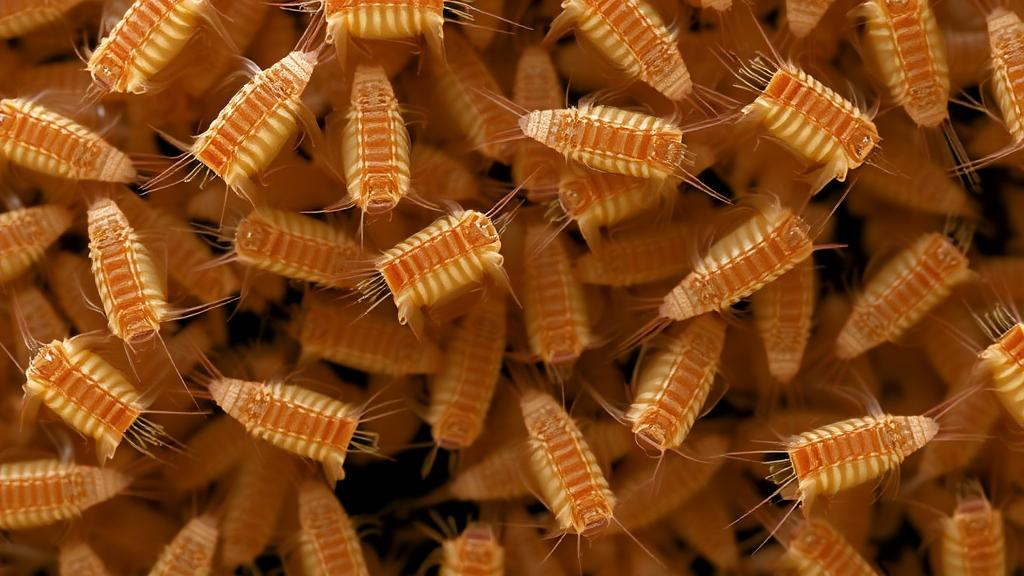
Image Credits: AI Generated
Keywords: Stenothoe gallensis, Amphipoda, species complex, taxonomy, aquaculture, Mediterranean Sea, invasive species, morphometrics, sexual dimorphism, integrative taxonomy, Greece, Stenothoidae
News Source: Drew Townsend. (October 19, 2026). Tiny Invading Amphipods Reveal a Taxonomic Puzzle Hidden in Greek Fish Farms. Scienmag.