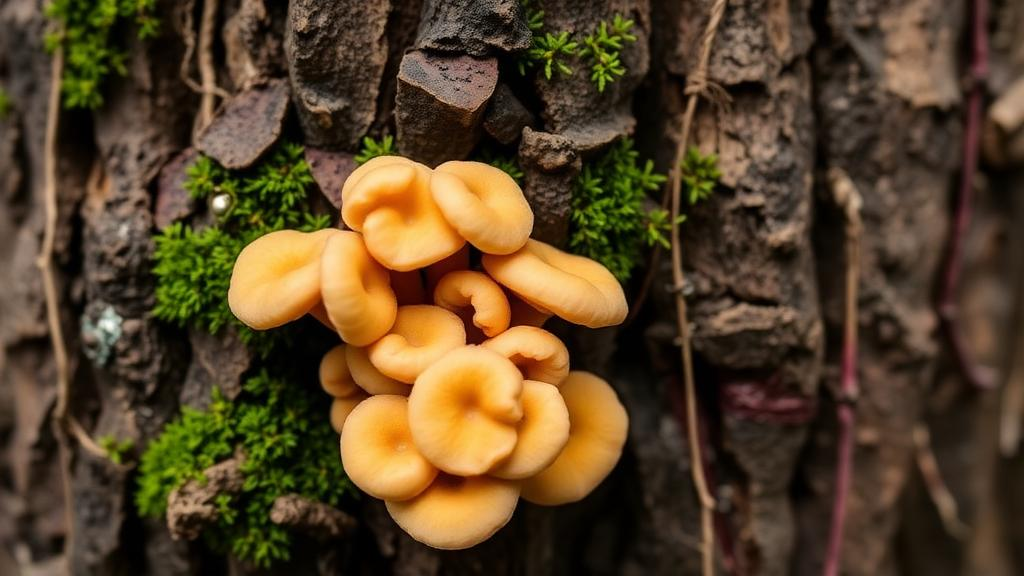
Deep in the high-altitude forests of Xizang, China, researchers have uncovered two previously unknown species of fungi living quietly inside the tissues of seemingly healthy trees. The newly described species, Parafenestella cupressicola and Parafenestella xizangensis, were isolated from asymptomatic tissues of the giant cypress Cupressus gigantea and the shrub Rosa sericea, and their discovery marks the first time this fungal genus has been documented as an endophyte in woody plants. The finding, published in MycoKeys, not only adds two names to the fungal catalogue but also redraws the known ecological and geographic boundaries of an entire genus.
The fungi belong to the family Cucurbitariaceae, a species-rich group within the order Pleosporales that was established as far back as 1885. Members of this family are typically recognized by their clustered, immersed fruiting bodies and the production of brown, muriform ascospores within bitunicate asci. Their asexual forms are usually coelomycetous, appearing as Phoma- or Pyrenochaeta-like pycnidia that release hyaline spores. Ecologically, the family is remarkably versatile: most species are saprobes living on the wood and bark of trees and shrubs, but others act as plant pathogens, fungal parasites, or even opportunistic pathogens of humans and animals. Recent work has also confirmed that some members can live as endophytes, tucked away inside healthy plant tissue without causing any visible disease.
The genus Parafenestella itself has a tangled history. The fenestelloid clades within Cucurbitariaceae have long posed taxonomic headaches because of their complex structures and convergent morphology, meaning unrelated species can look strikingly similar. A comprehensive multi-gene reassessment in 2018 redefined the family and established Parafenestella, with P. pseudoplatani as its type species. Species of the genus typically form small clusters of fewer than ten fruiting bodies and were initially known for a specialized fungicolous habit, growing on the fruiting bodies of other fungi, particularly members of Diaporthales such as Cytospora and Diaporthe.
Since then, global surveys have steadily stretched the genus’s known range. A species was described from leaf spots on oak in the Zagrosian forests of Iran, three saprobic species were recovered from woody litter in northeast China, and another was found as a saprobe on box elder in North America. These discoveries painted a picture of a genus capable of adapting to a striking variety of hosts across different continental climates. The new Xizang species now add a third lifestyle to that repertoire: latent endophytism inside living, healthy woody plants.
The road to discovery began with field expeditions into the alpine forests of Xizang, a region known for unique ecosystems and high levels of endemism but poorly explored for its fungal diversity. Researchers collected healthy, asymptomatic cones of the giant cypress and branch bark of Rosa sericea at elevations above 3,000 meters. Back at the Chinese Academy of Forestry in Beijing, the samples underwent a strict surface-sterilization protocol: a one-minute immersion in 70 percent ethanol, two minutes in 2 percent sodium hypochlorite, and three rinses in sterile distilled water. This treatment kills any fungi sitting on the surface, ensuring that anything growing out of the tissue afterwards was genuinely living inside the plant.
The sterilized tissues were cut into small segments and plated onto potato dextrose agar supplemented with streptomycin to suppress bacteria. Incubated at 25 degrees Celsius in darkness, the plates were monitored daily until fungal hyphae emerged, at which point hyphal tips were transferred to fresh medium to establish pure cultures. Four strains were ultimately isolated, two from each host plant. Specimens were deposited in the herbarium of the Chinese Academy of Forestry, and living cultures were preserved in the China Forestry Culture Collection Center.
To determine whether these isolates represented anything new, the team combined classical microscopy with molecular systematics. Cultures were grown on different media to record colony characteristics and to induce sporulation, with pycnidia coaxed into developing on nutrient-poor agar supplemented with sterile pine needles. Under differential interference contrast microscopy, the researchers measured taxonomically informative structures such as conidiogenous cells and conidia, taking at least 50 measurements per feature to calculate reliable size ranges. The two species differ subtly but consistently: P. cupressicola produces phialidic, subglobose conidiogenous cells and conidia averaging 3.8 by 1.6 micrometers, while P. xizangensis has lageniform, flask-shaped conidiogenous cells and similarly sized but proportionally different conidia.
Morphology alone, however, was never going to settle the question. Species delimitation in this group based on asexual structures is notoriously difficult because those forms are highly convergent and often lack sufficient distinguishing traits. So the team extracted DNA and amplified five nuclear loci: the ITS region and LSU of the ribosomal DNA, plus the protein-coding genes rpb2, tef1, and tub2. Sequences were aligned, concatenated into a supermatrix of 4,177 characters covering 34 strains, and analyzed with both Maximum Likelihood and Bayesian Inference. The resulting trees placed the four new strains into two distinct, highly supported lineages within Parafenestella, each with maximum statistical support.
The phylogeny told a clear story. The two P. cupressicola strains form a sister lineage to P. ulmi and P. ulmicola, species described from elm litter in northeast China, but differ from them in measurable ways: P. cupressicola has far shorter conidiogenous cells than P. ulmi and larger conidia than P. ulmicola, along with consistent nucleotide differences across multiple genes. P. xizangensis, meanwhile, is closely related to P. salicis and shares nearly identical conidial dimensions with it, yet the two are separated by 31 nucleotide differences in the ITS region alone, plus additional differences in tef1 and tub2. Notably, the study reinforces earlier findings that the beta-tubulin gene tub2 is the most informative DNA barcode for delimiting Parafenestella species, outperforming the ribosomal markers that traditionally anchor fungal identification.
Beyond the taxonomy, the discovery carries broader ecological significance. Xizang has emerged as a biodiversity hotspot for forest microfungi, with recent surveys documenting a wealth of novel pathogens such as Cytospora, Diaporthe, and Sporocadus from symptomatic tissues. Finding Parafenestella inside healthy tissues alongside those pathogens suggests the Tibetan Plateau hosts a highly specialized mycobiota that has evolved a spectrum of ecological strategies, from aggressive pathogenicity to latent endophytism, to survive extreme alpine conditions. The researchers suggest that comparative genomics and extensive sampling of alpine endophytes will be crucial to fully unravel the mechanisms underlying geographic divergence, host co-evolution, and ecological adaptability of these fungi. For now, the message is clear: even in well-studied fungal families, entire hidden branches of the tree of life are waiting inside the healthy wood of the world’s mountain forests.
Subject of Research: Discovery and multi-locus phylogenetic description of two new endophytic Parafenestella fungal species from high-altitude forests in Xizang, China
Article Title: Two new endophytic species of Parafenestella ( Pleosporales , Cucurbitariaceae ) from Xizang, China, revealed by morphology and multi-locus phylogeny
Article References: Pang, K., Wu, Y., Liang, Y., & Jiang, N. (2026). Two new endophytic species of Parafenestella (Pleosporales, Cucurbitariaceae) from Xizang, China, revealed by morphology and multi-locus phylogeny. MycoKeys, 137, 69-80. https://doi.org/10.3897/mycokeys.137.197730
Image Credits: AI Generated
DOI: 10.3897/mycokeys.137.197730
Keywords: Parafenestella, Cucurbitariaceae, endophytic fungi, Xizang, Tibet, multi-locus phylogeny, fungal taxonomy, Cupressus gigantea, Rosa sericea, alpine forests, DNA barcoding, new species
News Source: Roger Howard. (October 19, 2026). Two New Fungal Species Hidden in Tibetan Trees Expand Alpine Endophyte Map. Scienmag.