Deep in the limestone hills of Laos, some of the smallest land snails on Earth are turning out to be far more diverse than anyone expected. A new study published in the journal ZooKeys reports eight species of operculate micro land snails from the subfamily Alycaeinae collected during recent biodiversity surveys in Vientiane and Houaphanh provinces, and four of them are entirely new to science. The discoveries, made by researchers affiliated with Chulalongkorn University in Thailand and the National University of Laos, add fresh weight to the idea that Southeast Asia’s limestone karsts are among the most underexplored hotspots of endemism on the planet.
The newly described species are Dioryx feuangensis, Dicharax feuangensis, Dicharax pallgergelyi and Pincerna panhai, all named by Jirapatrasilp and Inkhavilay on the basis of distinctive shell morphology. In addition to these four, the team recorded Dioryx dongiensis from Laos for the first time, extending the known range of a species previously documented only from its type locality in Vietnam’s Cuc Phuong by more than 400 kilometres. The remaining species in the survey were identified as Metalycaeus heudei, Dicharax cristatus and Pincerna vanbuensis, each of which is now better mapped across the borderlands of China, Vietnam and Laos.
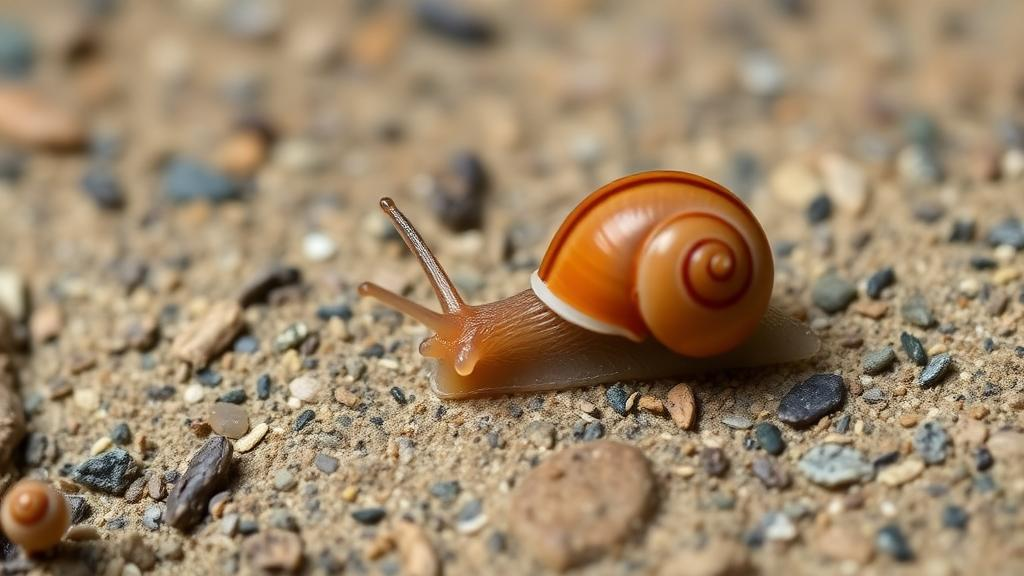
Alycaeine snails are remarkable pieces of biological engineering. These tiny, conical snails possess a hard, calcareous ‘operculum’, a trapdoor that seals the shell opening when the animal retreats inside. Their most distinctive feature, however, is a unique breathing apparatus: a sutural tube running along the shell’s whorl seam that connects to dozens of perpendicular microscopic tunnels opening near the umbilicus, the shell’s central axis. This system allows the animal to breathe air while its operculum remains firmly sealed, an adaptation thought to protect against desiccation in the seasonally dry leaf litter of tropical limestone forests. The subfamily contains more than 300 species across nine genera, concentrated in mainland Southeast Asia.
Telling such small look-alike species apart demands painstaking technical work. The team hand-collected empty shells from the forest floor around limestone outcrops, caves and rock crevices in Viengxay District, Houaphanh Province in 2022 and Feuang District, Vientiane Province in 2024. They photographed and measured the shells under a Leica M205C fusion-optics stereo microscope and imaged the finest surface details with a JEOL JSM-6610 LV scanning electron microscope. Shell whorls were counted to the nearest quarter turn, and the shell surface was divided into three diagnostic regions, designated R1, R2 and R3, running from the early whorls to the aperture. The number, shape and spacing of radial ribs in each region, together with the form of the doubled peristome or shell lip, and the shape of the umbilicus, form the characters that separate one species from another.
Each new species has its own signature. Dioryx feuangensis, at 8.5 to 9.5 millimetres tall, is a giant by alycaein standards: a solid, matt, yellowish to pale crimson shell with a globular profile, no spiral striation anywhere, and a prominent, expanding outer peristome with an irregular perimeter. Dicharax pallgergelyi, by contrast, measures a mere 1.4 to 1.5 millimetres across barely two millimetres of width, and can be distinguished from its closest relatives by the roughly 25 to 28 relatively low ribs on region R2 and a blunt, thick, protruding inner peristome. Dicharax feuangensis is smaller still, at around one millimetre high and nearly two millimetres wide, with sharply ribbed whorls and a longer final region R3 carrying about 21 ribs. Pincerna panhai, 3.8 to 4.0 millimetres tall, carries strong sharp radial ribs, a distinctive R2 of around 25 thickened blunt ribs, only about three ribs on R3, and an umbilicus completely closed off by the expanded columellar extension of the outer lip.
The names themselves carry stories. Dicharax pallgergelyi honours Dr Barna Páll-Gergely, the Hungarian malacologist who has done more than anyone to untangle alycaein taxonomy and who first recognised the species as new. Pincerna panhai is dedicated to Professor Somsak Panha of Chulalongkorn University, who has supervised decades of research on land snails and other terrestrial invertebrates across Laos and mainland Southeast Asia. The two species named feuangensis both take their name from Feuang District, the limestone-rich corner of Vientiane Province where the specimens were found, sometimes at exactly the same sites.
Indeed, one of the study’s most intriguing findings is how many of these snails live side by side. At a single unnamed limestone hill in Feuang District, three Dicharax species, including two of the new ones, co-occur with Pincerna panhai. Another site, Pha Reung, yielded three species from three different genera. Similar patterns are known elsewhere: four Dicharax species share Doi Chiang Dao in northern Thailand, sites in Bhutan host up to four species in two genera, and a single hill in Peninsular Malaysia supports five species across three genera. Such crowding raises a classic ecological question, and the authors lay out three competing explanations: communities may be packed together simply because habitat resources are not limiting; or because niche partitioning is weak, with species sharing leaf litter and rock crevices without excluding one another; or because morphological overdispersion driven by interspecific competition has pushed each species into a slightly different shell design. Alternatively, co-occurrence may be a transient stage following recent or repeated colonisation, with competitive exclusion still to come.
The karst connection runs through everything. Limestone karsts cover roughly 30,000 square kilometres of Laos, about 12.6 per cent of the country, concentrated in the north and centre. These jagged, ancient seabed formations act as evolutionary islands, isolating snail populations on individual hills where they diverge into species found nowhere else. Laos has seen an extraordinary wave of malacological discovery: more than 240 land snail species are now recorded, and over 120 new species have been described in recent decades, from the pinhead-sized Angustopila snails of Khammouane to cave-dwelling Laoennea snails named after a coffee-scented carychiid form. The 79-entry list compiled in this paper, spanning families from Cyclophoridae to Camaenidae, shows how much of this diversity has surfaced only in the last decade as Lao-Thai survey teams extended their work beyond the classic sites of Khammouane and Vang Vieng into Houaphanh, Luang Prabang, Luang Namtha and Xiangkhouang provinces.
That momentum makes the conservation picture all the more striking. The two districts explored in this study, Feuang in Vientiane Province and Viengxay in Houaphanh Province, are not included within any of Laos’ designated Key Biodiversity Areas, the international standard for identifying sites of global conservation significance. Limestone karsts are recognised as one of the unique centres of biodiversity and endemism in mainland Southeast Asia, yet many remain outside formal protection even as quarrying, agriculture and logging press in. The authors argue that significant conservation efforts are urgently needed for these overlooked, pristine karstic ecosystems, and the discovery of four species that each appear to be restricted to a single district underscores what could be lost before it is ever catalogued.
The study also points the way forward. Because species like Dioryx dongiensis turn up far from their nearest known population, the authors suggest that soil sieving and floatation methods, which recover minute shells from leaf litter, could reveal these snails at many intervening localities. And because current species boundaries in taxa such as Dicharax cristatus are drawn widely, with shells varying greatly in size, sculpture and form, future molecular studies may well split nominal species into multiple hidden lineages. For now, the message from the hills of Laos is clear: beneath the feet of hikers and farmers, in the damp litter of a few square kilometres of rock and forest, a miniature fauna is still being written into the scientific record, one millimetre-scale shell at a time.
Subject of Research: Taxonomy and diversity of operculate micro land snails (Alycaeinae) on limestone karsts in Laos, including four newly described species
Article Title: The operculate micro land snails from the Alycaeinae ( Caenogastropoda , Cyclophoridae ) in Laos, with description of new species
Article References: Jirapatrasilp, P., Inkhavilay, K., Somvongsa, C., Malavong, B., Janjai, T., Jeratthitikul, E., Likhitrakarn, N., Srisonchai, R., & Sutcharit, C. (2026). The operculate micro land snails from the Alycaeinae (Caenogastropoda, Cyclophoridae) in Laos, with description of new species. ZooKeys, 1290, 257-291. https://doi.org/10.3897/zookeys.1290.198096
Image Credits: AI Generated
DOI: 10.3897/zookeys.1290.198096
Keywords: Alycaeinae, land snails, Laos, limestone karst, new species, ZooKeys, malacology, biodiversity, Cyclophoridae, endemism, Southeast Asia, taxonomy
News Source: Margaret Porter. (October 19, 2026). Four Tiny Snail Species New to Science Found on Limestone Karsts of Laos. Scienmag.