• HOME
  • NEWS
  • EXPLORE
    • CAREER
      • Companies
      • Jobs
    • EVENTS
    • iGEM
      • News
      • Team
    • PHOTOS
    • VIDEO
    • WIKI
  • BLOG
  • COMMUNITY
    • FACEBOOK
    • INSTAGRAM
    • TWITTER
Wednesday, April 1, 2026
BIOENGINEER.ORG
No Result
View All Result
  • Login
  • HOME
  • NEWS
  • EXPLORE
    • CAREER
      • Companies
      • Jobs
        • Lecturer
        • PhD Studentship
        • Postdoc
        • Research Assistant
    • EVENTS
    • iGEM
      • News
      • Team
    • PHOTOS
    • VIDEO
    • WIKI
  • BLOG
  • COMMUNITY
    • FACEBOOK
    • INSTAGRAM
    • TWITTER
  • HOME
  • NEWS
  • EXPLORE
    • CAREER
      • Companies
      • Jobs
        • Lecturer
        • PhD Studentship
        • Postdoc
        • Research Assistant
    • EVENTS
    • iGEM
      • News
      • Team
    • PHOTOS
    • VIDEO
    • WIKI
  • BLOG
  • COMMUNITY
    • FACEBOOK
    • INSTAGRAM
    • TWITTER
No Result
View All Result
Bioengineer.org
No Result
View All Result
Home NEWS Science News Biology

Rapid diagnostic test helps distinguish between severe and uncomplicated malaria in Africa

Bioengineer by Bioengineer
August 24, 2017
in Biology
Reading Time: 2 mins read
0
Share on FacebookShare on TwitterShare on LinkedinShare on RedditShare on Telegram
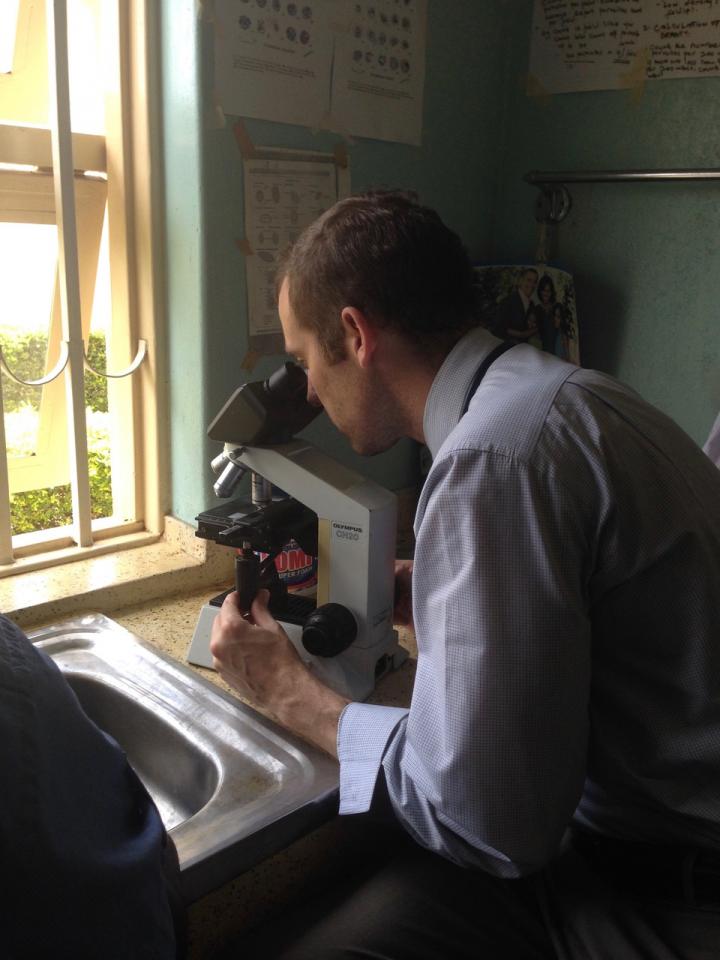
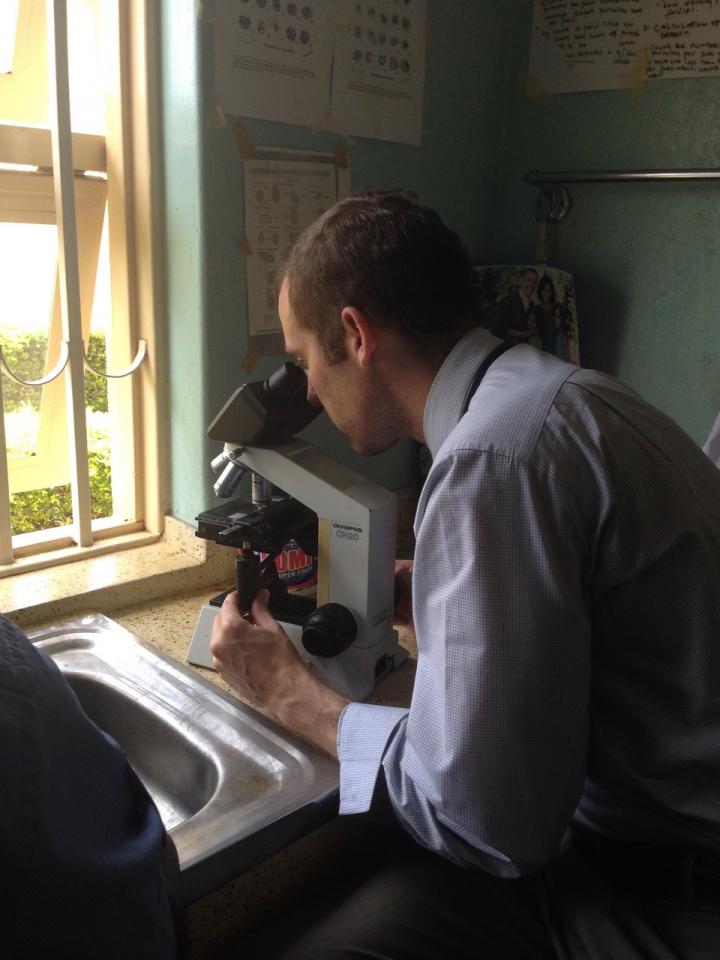
IMAGE

Credit: Ross Boyce

Chapel Hill, NC – Malaria is a leading cause of death for children living in Sub-Saharan Africa. Many children in rural areas seek care at local community health clinics, but these clinics lack reliable tests to distinguish severe and uncomplicated malaria. Working at a health center in rural Uganda, researchers from the University of North Carolina at Chapel Hill demonstrated for the first time the potential of using a low-cost, routinely available rapid diagnostic test to detect severe malaria in children.

These findings were published in the journal Clinical Infectious Diseases.

"In many areas of rural areas of sub-Saharan Africa, malaria is inevitable. Children will be infected," said Ross Boyce, M.D., MS.c., study author and a fellow in the UNC Division of Infectious Diseases. "Ensuring that those with the most severe form of the disease are quickly identified and treated, even when hours from the nearest hospital, is critically important to reducing the number of deaths."

Over a period of six months, a total of 2,678 children with fever underwent testing for malaria using a rapid diagnostic test at the Bugoye Level III Health Center in the Kasese District of Western Uganda. Nearly half tested positive for malaria and 83 satisfied criteria for severe malaria. The sensitivity and specificity of the rapid diagnostic test for detecting severe malaria was 97.6 percent. The test was especially sensitive for children less than 5 years of age. Knowing when a child is suffering from severe malaria allows for a referral to a health center better equipped to handle the disease's grave manifestations.

"Rapid diagnostic tests have been around for awhile, and are generally considered standard of care in most malaria-endemic settings," said Boyce. "However, what we've done is show that these relatively simple tests can be used in new ways to provide important information beyond just a positive or negative result. While it's not perfect, the approach could help first-line healthcare workers – many of who have no formal medical training – make potentially lifesaving triage decisions."

Boyce said further work is needed to validate and operationalize diagnostic and treatment algorithms so as not to overwhelm fragile referral networks.

###

Investigators from the UNC School of Medicine collaborated with colleagues at Mbarara University of Science and Technology in Uganda and Harvard Medical School in Boston. This research was funded by the Harvard Global Health Initiative, the Thrasher Research Fund, Standard Diagnostics and Abbott Point of Care.

The mission of UNC's Institute for Global Health & Infectious Diseases is to harness the full resources of the University and its partners to solve global health problems, reduce the burden of disease, and cultivate the next generation of global health leaders. Learn more at http://www.globalhealth.unc.edu.

Media Contact

Morag MacLachlan
[email protected]
919-843-5719
@UNC_Health_Care

UNC School of Medicine

Original Source

http://globalhealth.unc.edu/2017/08/rapid-diagnostic-test-malaria/

Share12Tweet8Share2ShareShareShare2

Related Posts

New Study Reveals Respiratory Evolution as Key Driver of Body Size Variation in Early Terrestrial Vertebrates

New Study Reveals Respiratory Evolution as Key Driver of Body Size Variation in Early Terrestrial Vertebrates

April 1, 2026
Survey Reveals Many Dog Owners Overlook Subtle Pain Signs Like Nighttime Restlessness and Clinginess

Survey Reveals Many Dog Owners Overlook Subtle Pain Signs Like Nighttime Restlessness and Clinginess

April 1, 2026

Ancient 500-Million-Year-Old Clawed Predator Redefines the Evolution of Spiders and Horseshoe Crabs

April 1, 2026

Chikungunya Virus Lingers in Joint Macrophages, Causes Chronic Disease

April 1, 2026
Please login to join discussion

POPULAR NEWS

  • blank

    Revolutionary AI Model Enhances Precision in Detecting Food Contamination

    96 shares
    Share 38 Tweet 24
  • Imagine a Social Media Feed That Challenges Your Views Instead of Reinforcing Them

    1006 shares
    Share 398 Tweet 249
  • Promising Outcomes from First Clinical Trials of Gene Regulation in Epilepsy

    51 shares
    Share 20 Tweet 13
  • Popular Anti-Aging Compound Linked to Damage in Corpus Callosum, Study Finds

    43 shares
    Share 17 Tweet 11

About

We bring you the latest biotechnology news from best research centers and universities around the world. Check our website.

Follow us

Recent News

Protein Language Model Accuracy Test Sheds Light on AI’s ‘Black Box’

Lehigh University College of Health Launches HEAL Service Center: A Cutting-Edge Shared High-Resolution Mass Spectrometry Facility

Scientists Unveil Innovative Method to Identify Breakthroughs in Science

Subscribe to Blog via Email

Enter your email address to subscribe to this blog and receive notifications of new posts by email.

Join 78 other subscribers
  • Contact Us

Bioengineer.org © Copyright 2023 All Rights Reserved.

Welcome Back!

Login to your account below

Forgotten Password?

Retrieve your password

Please enter your username or email address to reset your password.

Log In
No Result
View All Result
  • Homepages
    • Home Page 1
    • Home Page 2
  • News
  • National
  • Business
  • Health
  • Lifestyle
  • Science

Bioengineer.org © Copyright 2023 All Rights Reserved.