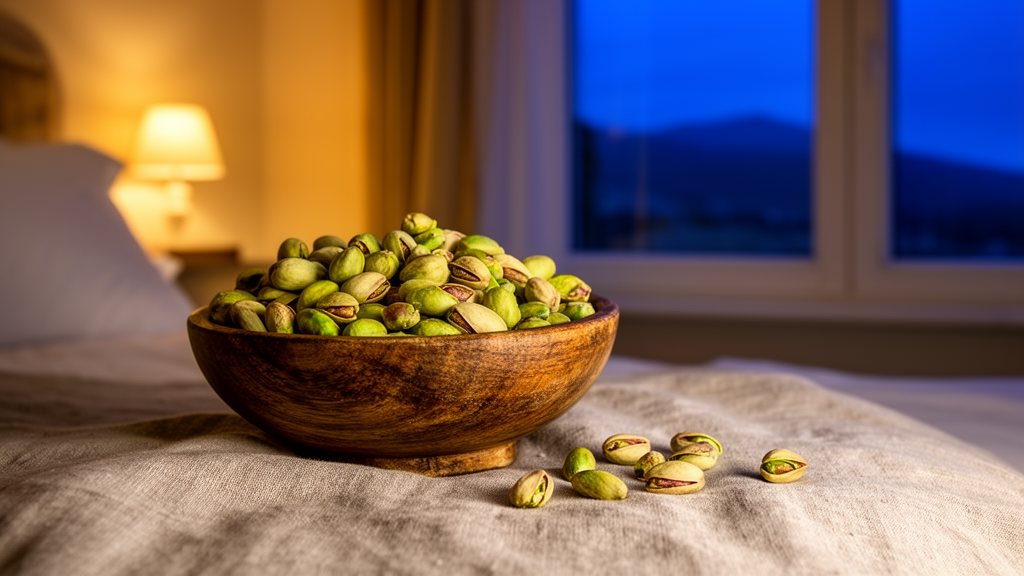
Sleep has become one of the most common health complaints of modern life. Nearly one-third of adults in the United States report sleeping less than seven hours a night, below the minimum amount recommended for most adults, and almost one in five says they have trouble staying asleep most days or every day. At the same time, a striking share of consumers are looking to their diets for help: nearly one-third of Americans say they are seeking improved sleep from foods, beverages or nutrients. Against that backdrop, a new scientific review has turned its attention to an unlikely candidate, the pistachio, a nut that naturally packs together an unusual constellation of compounds linked to the biology of sleep.
The review, published in the journal Nutrition Research Reviews, is a narrative assessment of existing evidence rather than a single clinical trial. Its authors conclude that pistachios represent a promising whole food for sleep research and map out how the nut’s nutrient profile may influence processes related to sleep quality, falling asleep, staying asleep and regulation of the sleep-wake cycle. Rather than claiming that pistachios are proven to improve sleep, the paper builds a biological rationale for why the nut deserves systematic study, and it lays out the randomized controlled trials that researchers say must come next before any health claims can be made.
The core of the argument rests on chemistry. Pistachios provide tryptophan, an essential amino acid the body uses to manufacture serotonin, a brain chemical involved in sleep regulation, and melatonin, the hormone that helps govern the sleep-wake cycle. A one-ounce serving of pistachios delivers about 71 milligrams of tryptophan, roughly 20 percent of the daily amount recommended for a 70-kilogram, or 154-pound, adult, based on an intake guideline of 5 milligrams per kilogram of body weight. Crucially, pistachios also supply vitamin B6 and magnesium, cofactors that help the body convert tryptophan along the metabolic pathway toward serotonin and melatonin, meaning the nut contains both the raw material and some of the enzymatic machinery associated with its processing.
Melatonin itself is a second thread in the review. In addition to supporting the body’s own synthesis of the hormone through the tryptophan pathway, pistachios contain phytomelatonin, the form of melatonin produced by plants. The review notes, however, that the absorption and effects of phytomelatonin from eating pistachios have not been established in people, a key caveat that separates the current evidence from any practical recommendation. Laboratory work described in the review suggests that the food matrix of the nut, the natural structure in which its nutrients and plant compounds are packaged and interact, may contribute to a longer release of phytomelatonin during digestion, but whether that translates into measurable changes in circulating melatonin remains an open question for human studies.
Beyond the melatonin pathway, the review highlights a neurological angle. Vitamin B6 and magnesium are involved in the production and function of gamma-aminobutyric acid, or GABA, the brain’s principal inhibitory neurotransmitter. GABA helps quiet nerve activity and plays a well-documented role in regulating sleep, which is why compounds that enhance GABAergic signaling are frequent targets of hypnotic drugs. The idea that ordinary dietary components could support the same calming signaling system, without pharmacological intervention, is one reason clinicians and sleep researchers find the pistachio profile intriguing.
A third proposed mechanism runs through the gut. Pistachios provide fiber and polyphenols that gut microbes can ferment and transform into other compounds, some of which may influence communication between the gut and the brain, including signaling involved in sleep regulation. As part of the review, researchers assessed laboratory studies that simulated digestion and fermentation of pistachios to explore how the food matrix may affect when and how the nut’s components become available to the body. Those findings showed that gut microbes can ferment pistachio fiber, transform its polyphenols and contribute to a longer release of phytomelatonin, supporting the plausibility of a gut-brain axis route by which the nut might affect sleep physiology.
What distinguishes this review from much of the existing nutrition-and-sleep literature is its emphasis on the whole food. Most research to date has examined individual nutrients, extracts or supplements in isolation. Pistachios bring several sleep-related components together naturally in a single food, creating an opportunity to study how they may act in combination. This packaged structure is known as the food matrix, and the review argues that nutrients may behave differently when consumed as part of it than they do when taken as isolated compounds. Studying whole pistachios, the authors contend, is therefore the scientifically appropriate next step.
That perspective comes through clearly from the review’s senior and corresponding author, Marie-Pierre St-Onge, PhD, director of the Center of Excellence for Sleep and Circadian Research at Columbia University Irving Medical Center. “Pistachios are compelling for sleep research because they bring together several nutrients and plant compounds connected to sleep physiology within one whole food,” she said. “Rather than focusing on a single ‘sleep nutrient,’ this review provides a rationale for studying how the complete pistachio food matrix may affect sleep-related pathways.” Her framing underscores that the paper is a call for research design, not a dietary prescription.
The path forward the authors describe is specific. They call for randomized controlled trials examining whole-pistachio consumption, dose-response relationships, melatonin levels, sleep outcomes and the bioavailability of key compounds. They also recommend investigating whether pistachio variety, growing conditions and processing influence the nutrient and bioactive content of the nuts, variables that could matter enormously if the food matrix is indeed the active factor. “Well-designed human trials can help us determine whether the unique combination of nutrients and bioactive compounds in the pistachio food matrix produces measurable changes in melatonin, sleep quality, sleep duration or other sleep outcomes,” St-Onge explained. That next phase is already underway: several university-led human clinical studies examining pistachios and sleep are in progress with support from American Pistachio Growers, although results are not yet available.
For now, the honest summary is that pistachios are a scientifically promising, biologically plausible candidate for sleep research, but not a demonstrated sleep aid. The review was funded in part by American Pistachio Growers and the National Institutes of Health, and the funding relationship is disclosed in the paper’s conflict of interest statement. Consumers hoping a bedtime handful of nuts will transform their sleep should temper expectations until trial data arrive. Yet the broader takeaway may be the most interesting part: the review makes a case that how nutrients are packaged inside whole foods could be as important as the nutrients themselves, and that this packaging, the food matrix, deserves the same scientific scrutiny that single compounds have long received. If future trials confirm the mechanisms mapped here, the lowly pistachio could become a model for how food-based interventions approach one of public health’s most stubborn problems.
Subject of Research: The role of pistachio nutrients and bioactive compounds in sleep health
Article Title: Can pistachios support sleep? Here’s what a new scientific review found
Article References: Can pistachios support sleep? Here’s what a new scientific review found. (n.d.). Original publication
Image Credits: AI Generated
DOI: Not provided
Keywords: pistachios, sleep, melatonin, tryptophan, nutrition research, food matrix, gut-brain axis, vitamin B6, magnesium, phytomelatonin, GABA, polyphenols
News Source: Daisy Hatcher. (October 18, 2026). Pistachios May Hold Clues to Better Sleep, New Scientific Review Suggests. Scienmag.