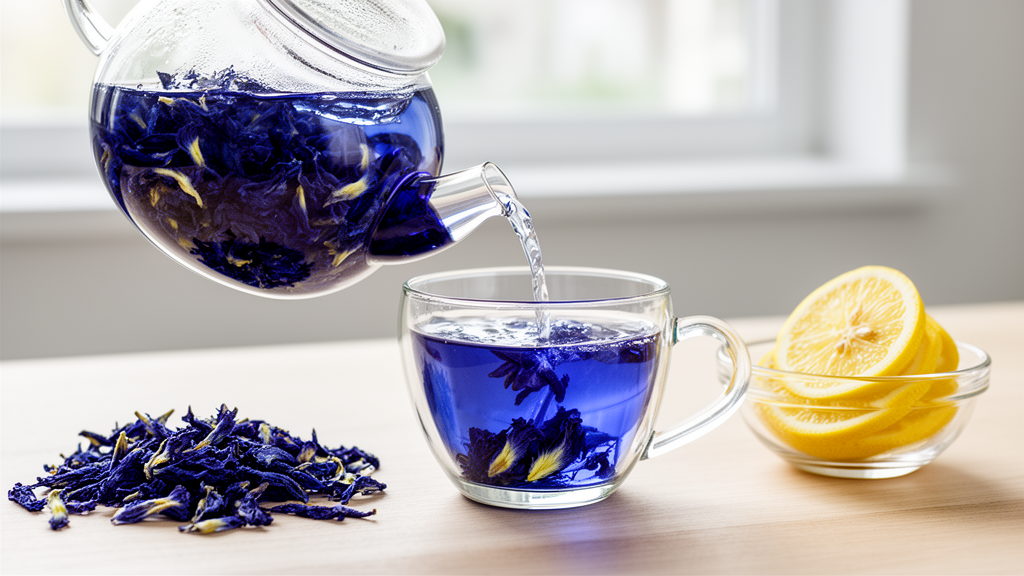
The butterfly pea flower, the vivid blue bloom that colors teas and drinks across Southeast Asia, has become one of the most talked-about botanicals on the wellness market. Now a comprehensive critical review published in Frontiers in Pharmacology has taken a hard, evidence-based look at Clitoria ternatea, the climbing legume behind the blue pigment, and its conclusion is both encouraging and sobering: the plant is chemically remarkable and biotechnologically valuable, but its therapeutic reputation currently runs far ahead of its clinical evidence.
The review, led by Dharmasoth Rama Devi of the Vignan Institute of Pharmaceutical Technology with colleagues in India, systematically integrated literature through August 2026, stratifying evidence into chemical, computational, cell-based, animal, and human levels. Unlike earlier reviews that focused separately on ethnomedicine, anthocyanins, or cyclotides, the team explicitly linked preparation identity, study design, bioavailability, and safety, asking a deceptively simple question at each step: which exact product was tested, and at what exposure?
Chemically, the species is genuinely distinctive. Its blue petals owe their color to ternatins, a family of polyacylated delphinidin anthocyanins whose acylation stabilizes the pigment far better than many common anthocyanins, making the flower attractive as a natural, pH-responsive food colorant. The plant also delivers flavonol glycosides such as kaempferol and quercetin derivatives, phenolic acids, root triterpenoids like taraxerol, seed sterols, and, most unusually, a rich repertoire of cyclotides: head-to-tail cyclic peptides locked by a cystine-knot motif that resists digestion and shows membrane-active antimicrobial and cytotoxic properties. A separate enzyme from the plant, butelase-1, is a powerful peptide ligase now used to stitch engineered peptides together in the laboratory.
Yet the reviewers draw a sharp line between these biotechnology assets and what a cup of flower tea actually delivers. Recent genomic work showing that cyclotides arise from hijacked nitrogen-fixation-related albumin genes, and a 2026 petal study expanding the cyclotide inventory, say nothing about whether a crude infusion delivers a pharmacologically meaningful peptide dose. The same logic applies across the metabolite classes: roots, seeds, leaves, and petals have different chemical profiles, so evidence from one preparation cannot be transferred to another.
That preparation-specific logic also undercuts a familiar shortcut in botanical literature. Tests such as DPPH and ABTS measure chemical radical-scavenging in a test tube; the review insists these are analytical redox characterizations, not pharmacology, and that half-maximal values from them should never be presented as clinical potency figures. In one illustrative cell study, ternatin-rich and quercetin-glycoside-rich petal fractions modulated inflammation in LPS-stimulated macrophages through different, partly ROS-independent mechanisms, demonstrating that total phenolic content cannot serve as a universal explanatory mechanism.
The preclinical record is broad but uneven. Rodent studies report memory and cholinergic benefits from root extracts, including a chemically standardized bio-enhanced fraction tested in chronic cerebral hypoperfusion; flower extracts improved metabolic and inflammatory endpoints in obese and diabetic-dyslipidemic mice; root preparations eased edema, bronchospasm, cough, and allergy models; and leaf and root extracts attenuated acute toxin-induced liver and kidney injury in mice. The review rates these signals as biologically plausible but consistently limited by incomplete extract characterization, short durations, inconsistent blinding, and uncertain dose translation to humans.
Human evidence is the weakest link. It consists of small acute crossover trials in healthy or overweight men showing transient changes in postprandial glucose, insulin, triglycerides, and antioxidant status, plus two exploratory adjunctive studies: a retrospectively registered trial of flower decoction alongside tuberculosis therapy, and a 2026 study of flower tea with metformin in people with type 2 diabetes and diabetic distress. Neither established a treatment effect; both lacked placebo controls, adequate randomization and blinding, marker-standardized preparations, and pharmacokinetic monitoring of botanical-drug interactions.
Bioavailability data add further caution. Intact ternatins were detected in rat plasma within fifteen minutes of oral dosing, but peak concentrations reached only about 0.141 micromolar, and human pharmacokinetics remain entirely unknown. Anthocyanin tracer studies in other species suggest systemic exposure is dominated by degradation and conjugated metabolites rather than the parent pigments. Cyclotide proteolytic stability does not imply oral absorption, and their sequence-specific risks of hemolysis, cytotoxicity, and immunogenicity are uncharacterized for repeated human exposure. A 14-day mouse toxicity study found no mortality at 500 to 1,000 milligrams per kilogram but liver and kidney histopathological changes at 2,000 milligrams per kilogram, and no chronic safety threshold has been established.
Regulators have taken notice. In 2022, the European Food Safety Authority recorded safety objections to a traditional-food notification for dried butterfly pea flowers, citing the possibility of risk from cyclotides with reported hemolytic, cytotoxic, immune, and uterine effects, alongside gaps in the documented history of safe use. The reviewers stress that customary beverage consumption cannot be extrapolated to concentrated extracts, chronic medicinal dosing, or purified constituents, and that theoretical interactions with CYP enzymes, transporters such as P-glycoprotein, and co-administered antidiabetic or CNS drugs remain prospective testing priorities rather than established hazards.
The bottom line is a disciplined roadmap rather than a debunking. The authors argue that Clitoria ternatea should be treated as a family of distinct products: a validated natural food colorant and beverage with genuine near-term commercial prospects, a candidate standardized botanical extract requiring replicated dose-response, pharmacokinetic, interaction, and safety studies, and a peptide-discovery platform built on cyclotides and butelase-1 that should follow conventional peptide-drug development. Therapeutic claims, they conclude, will require authenticated materials, marker-based standardization, exposure-linked pharmacology, and adequately powered randomized trials, standards that today’s viral wellness narratives have not yet met.
Subject of Research: Phytopharmacology of Clitoria ternatea (butterfly pea), including its metabolites, bioavailability, clinical evidence, and safety
Article Title: Clitoria ternatea as a phytopharmacological resource: plant metabolites, mechanistic evidence, translational prospects, and safety considerations
Article References: Devi, D. R., Maheswari, S. N., Saranya, R. K., Aashritha, S., Sankar, N. G., Gurrala, N. A., Karak, P., & Das, S. K. (2026). Clitoria ternatea as a phytopharmacological resource: plant metabolites, mechanistic evidence, translational prospects, and safety considerations. Frontiers in Pharmacology, 17, Article 1922024. https://doi.org/10.3389/fphar.2026.1922024
Image Credits: AI Generated
DOI: 10.3389/fphar.2026.1922024
Keywords: Clitoria ternatea, butterfly pea, ternatins, anthocyanins, cyclotides, butelase-1, bioavailability, phytopharmacology, botanical standardization, clinical evidence, safety, food colorant
News Source: Bethany Barker. (October 18, 2026). Butterfly Pea Flower: Strong Chemistry, Weak Clinical Evidence, Review Warns. Scienmag.