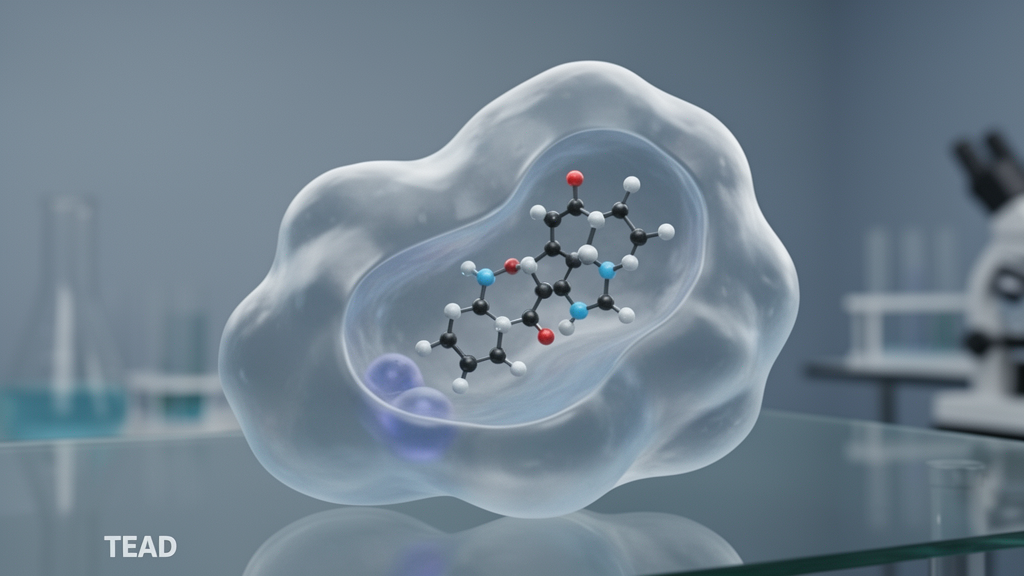
When Insilico Medicine’s generative chemistry platform first sketched the molecular scaffold that would become ISM6331, the compound existed only as a computational hypothesis. This October, that hypothesis will face its most important audience yet. The company has announced that the first clinical findings from its first-in-human study of ISM6331, an artificially designed inhibitor of the TEAD transcription factor family, will be presented in a Rapid Oral session at the European Society for Medical Oncology Congress 2026, running October 23 through 27 in Madrid. For a drug candidate conceived entirely by an AI-driven pipeline and nominated as a preclinical candidate barely three years ago, the moment marks a meaningful milestone in the ongoing effort to prove that machine-designed medicines can survive contact with human biology.
The presentation, scheduled for Sunday, October 25 at 8:30 in the morning Central European Summer Time in the Cordoba Auditorium of Hall 4, carries abstract number 997 and falls within the congress’s Developmental Therapeutic track. Melina E. Marmarelis, a physician in hematology and oncology at the Abramson Cancer Center of the University of Pennsylvania, will deliver the findings on behalf of the study investigators. The data will represent the first reported clinical results from a global, multicenter Phase I trial enrolling patients with mesothelioma and other advanced solid tumors, offering initial readings on safety, pharmacokinetics and early signals of antitumor activity.
ISM6331 belongs to a class of investigational drugs that target the Hippo signaling pathway, one of the most fundamental control systems in animal biology. In healthy tissue, the Hippo pathway governs organ size, cell proliferation and regeneration by regulating a pair of transcriptional co-activators known as YAP and TAZ. These proteins shuttle into the cell nucleus and bind to TEAD transcription factors, four related proteins that together switch on genes driving cell growth and survival. When the pathway’s normal brakes fail, a scenario that occurs frequently in cancers through mutations or silencing of regulators such as NF2, TEAD-mediated transcription can run unchecked, fueling tumor-cell proliferation, resistance to treatment and the ability of cancer cells to evade immune surveillance.
Because all four TEAD paralogs contribute to this oncogenic output, drug developers have pursued pan-TEAD inhibitors capable of blocking the entire family simultaneously. The challenge has been considerable. TEAD proteins possess lipidated binding sites and palmitoylation-dependent architecture that have historically complicated medicinal chemistry, and earlier generation inhibitors often relied on covalent chemistry that raised toxicity concerns. Insilico’s approach diverged from that path: ISM6331 is an orally available, non-covalent small molecule with a novel scaffold, designed to disrupt TEAD-dependent transcription downstream of the Hippo pathway while maintaining a drug-like profile suitable for chronic dosing in advanced cancer patients.
The compound’s origin story reflects the company’s end-to-end artificial intelligence infrastructure. Insilico nominated ISM6331 as a preclinical candidate in June 2023 after its generative chemistry platform, Chemistry42, produced the scaffold using structure-based design combined with multiparameter scoring. That process weighs potency, selectivity, physicochemical properties and developability simultaneously, allowing computational models to propose molecules that satisfy multiple constraints at once rather than optimizing one parameter at the expense of others. Preclinical studies subsequently demonstrated broad antitumor activity across models of Hippo pathway dysregulation, potent activity at low doses, potential for combination with other therapies and a favorable safety and ADMET profile, the battery of tests covering absorption, distribution, metabolism, excretion and toxicity.
The clinical program moved quickly from nomination to testing. ISM6331 entered a global multicenter Phase I trial in January 2025, and the study is registered under the identifier NCT06566079. Regulatory momentum followed. In June 2024, the United States Food and Drug Administration granted Orphan Drug Designation for mesothelioma, a rare and aggressive cancer of the lining of the lungs and chest cavity that is closely linked to asbestos exposure and notoriously resistant to standard therapies. In July 2026, the program received Fast Track Designation for adults with unresectable malignant pleural mesothelioma whose disease has progressed after treatment with anti-PD-1 immunotherapy, with or without anti-CTLA-4 therapy, and platinum-based chemotherapy. ISM6331 is the first program in Insilico’s AI-driven pipeline to earn Fast Track status, a designation intended to expedite review of therapies addressing serious conditions with unmet need.
Halle Zhang, Vice President of Clinical Development for Oncology at Insilico Medicine, framed the upcoming presentation as a pivotal opportunity for the program. She noted that patients with advanced mesothelioma and other Hippo pathway-dysregulated tumors face significant unmet medical need, and that the company looks forward to presenting the emerging safety, pharmacokinetic and antitumor findings from the first-in-human study while discussing the next stage of its development. Feng Ren, the company’s co-Chief Executive Officer and Chief Scientific Officer, described ISM6331 as evidence that the platform can carry a computationally designed molecule from concept through clinical testing against a biologically important and historically challenging target, combining a differentiated pan-TEAD design with biomarker-led development for tumors driven by Hippo pathway dysregulation.
The scientific significance of the target extends beyond oncology. The Hippo-YAP-TAZ-TEAD network participates in tissue maintenance, regeneration, cellular plasticity and the response to accumulated damage, processes that sit at the intersection of cancer and aging biology. Cancer incidence rises substantially with age, and Insilico has built its broader strategy around the biology of aging, using artificial intelligence to identify medicines for diseases that limit healthy lifespan. Within oncology, the company emphasizes that this does not mean treating aging itself, but rather pursuing the molecular mechanisms that drive serious age-associated cancers and translating those insights into precisely designed therapeutics. ISM6331 exemplifies that philosophy by targeting a pathway fundamental to tissue homeostasis that cancer can hijack for its own purposes.
The program also sits within a wider oncology portfolio organized around biologically informed target selection, generative molecular design, iterative design-make-test-analyze cycles, biomarker strategy and translational development. Insilico is advancing pipeline programs directed at transcriptional regulation, synthetic lethality, tumor metabolism and immune suppression, among other mechanisms underlying difficult-to-treat cancers. The company, which listed on the Main Board of the Hong Kong Stock Exchange on December 30, 2025 under stock code 03696.HK, has positioned its integrated AI and automation capabilities across therapeutic areas including fibrosis, immunology, pain and obesity, while also extending its Pharma.AI platform into advanced materials, agriculture and veterinary applications.
For the field of AI-accelerated drug discovery, the ESMO presentation will offer a rare public test of whether machine-designed molecules can deliver clinically meaningful results. ISM6331 remains investigational: it has not been approved for commercial use in any jurisdiction, and its safety and efficacy have not been established. Yet the fact that a compound generated by generative chemistry has progressed from computational design to first-in-human data, earning both Orphan Drug and Fast Track designations along the way, underscores how quickly the boundary between algorithmic hypothesis and clinical reality is narrowing. As oncologists gather in Madrid this October, the data presented in that Rapid Oral session will be scrutinized not only for what they reveal about mesothelioma and Hippo pathway-driven cancers, but for what they suggest about the future trajectory of artificially intelligent drug development itself.
Subject of Research: First-in-human Phase I clinical data for the AI-designed pan-TEAD inhibitor ISM6331 in advanced solid tumors
Article Title: Insilico Medicine to present first-in-human data for AI-designed pan-TEAD inhibitor ISM6331 at ESMO 2026
Article References: Insilico Medicine to present first-in-human data for AI-designed pan-TEAD inhibitor ISM6331 at ESMO 2026. (n.d.). Original publication
Image Credits: AI Generated
DOI: Not provided
Keywords: ISM6331, Insilico Medicine, pan-TEAD inhibitor, Hippo pathway, ESMO 2026, mesothelioma, Phase I trial, AI drug discovery, generative chemistry, FDA Fast Track, Orphan Drug Designation, oncology
News Source: Bethany Barker. (October 17, 2026). AI-Designed Pan-TEAD Inhibitor ISM6331 to Show First Human Data at ESMO 2026. Scienmag.