When researchers asked 600 pregnant women attending a tertiary care hospital in South India about microplastics, the answers revealed a striking disconnect between one of the most talked-about pollution issues of our time and the people arguably most vulnerable to it. According to a cross-sectional questionnaire-based survey published in BMC Public Health, 486 of the 600 participants — 81.0 percent — were unfamiliar with the term microplastics, and only 114 women, or 19.0 percent, reported having ever heard of them. The findings, published on 17 October 2026 by Deboral Panneerselvam and Anuradha Murugesan of the Department of Obstetrics and Gynaecology at SRM Medical College Hospital and Research Centre in Tamil Nadu, offer one of the first systematic looks at what pregnant women in India actually know about the plastic particles now being detected in human tissues.
The technical definition matters here, and most participants missed it. Microplastics are plastic particles smaller than 5 millimeters in diameter, a threshold adopted in much of the environmental health literature to distinguish them from larger macroplastic debris. Yet when the researchers asked participants to identify microplastics correctly, only 96 women — 16.0 percent of the total sample — could do so, correctly describing them as plastic particles smaller than 5 mm. The remaining women either offered incorrect definitions or could not answer at all. This gap between having heard of a term and understanding what it means is a recurring theme in environmental health communication, and the South Indian data suggest it applies forcefully to microplastics, a pollutant that has moved from obscure oceanographic literature to mainstream headlines in less than a decade.
What the survey also revealed was how little participants knew about where microplastics actually turn up in daily life. Awareness that microplastics may be present in drinking water was reported by 172 participants, or 28.66 percent, while awareness of their presence in seafood was reported by 164 participants, or 27.33 percent. In other words, roughly seven in ten pregnant women surveyed did not know that the water they drink and the fish they eat may carry microscopic plastic fragments. These are the two exposure routes most consistently documented in environmental monitoring studies worldwide, from bottled water analyses to shellfish surveys, and they are precisely the routes that a pregnant woman might reasonably want to know about when weighing dietary choices during pregnancy.
The most sobering numbers concerned the biological endpoints closest to pregnancy itself. Microplastics have been detected in the human placenta in laboratory studies, and researchers have also reported finding them in breast milk. Yet when the survey asked participants whether they knew about these findings, only 13 women — 2.16 percent — indicated awareness that microplastics had been detected in the placenta, and only 8 women — 1.33 percent — knew about their detection in breast milk. These are not obscure facts from a specialist journal; they are findings that have been widely reported in the popular press and that speak directly to the maternal-fetal interface. The near-total unawareness among the women surveyed suggests that even when microplastic research reaches the public sphere, it is not reaching the pregnant women who may be most affected by it.
Education emerged as the strongest predictor of awareness in the survey. When the researchers used chi-square tests to examine associations between educational status and awareness of microplastics, they found that higher educational attainment was significantly associated with greater awareness, with a p-value of 0.001. In practical terms, this means the knowledge deficit was not evenly distributed across the sample; women with less formal education were substantially less likely to have heard of microplastics at all. This pattern has implications for how environmental health information is designed and delivered. If awareness of a pollutant tracks educational level, then public health messaging that relies on written materials, social media campaigns, or general news coverage may systematically bypass the populations with the least formal schooling — the same populations that may face the highest cumulative exposures from environmental pollution.
Interestingly, awareness and concern did not translate into action. Although 228 participants — 38.0 percent — expressed concern about microplastic exposure, self-reported preventive behaviours were limited across the sample. The researchers noted that even among women who said they were worried, few reported taking concrete steps to reduce their exposure, such as changing water sources, altering seafood consumption, or reducing plastic use in the kitchen. This gap between concern and behaviour is a well-documented phenomenon in health psychology, sometimes described as the knowledge-behaviour gap, and it suggests that simply informing people about a risk is rarely enough to change what they do. Behaviour change typically requires a combination of awareness, perceived susceptibility, perceived severity, self-efficacy, and practical alternatives — and the survey suggests most of these ingredients were missing among the women studied.
The survey was conducted between January and May 2025 among 600 pregnant women attending a tertiary care centre in South India. Participants completed a structured, validated questionnaire assessing sociodemographic characteristics, awareness and knowledge of microplastics, perceived health risks, and self-reported preventive behaviours. The researchers analysed the data using descriptive statistics and chi-square tests to examine associations between educational status and awareness. The study protocol was reviewed and approved by the SRM-Institutional Ethics Committee, with participation entirely voluntary and informed consent obtained from all participants prior to enrolment. The study complied with the provisions of the Declaration of Helsinki, and confidentiality was strictly maintained throughout.
Why does this matter for maternal and fetal health? Microplastic pollution has emerged as a significant environmental and public health concern, with increasing detection in human tissues and growing concern about potential risks during pregnancy and early development. Researchers have reported finding microplastics in human blood, in lung tissue, in the placenta, and in breast milk, and animal studies have suggested possible effects on inflammation, oxidative stress, and reproductive outcomes. While the human health effects of microplastic exposure remain an active area of investigation and are not yet fully characterised, the very presence of these particles at the maternal-fetal interface has raised questions about whether exposure during pregnancy could affect fetal development. The South Indian survey does not measure exposure itself; it measures what women know about it. But the near-total unawareness it documents suggests that if microplastic exposure does pose risks during pregnancy, the women most likely to be exposed may have no idea the risk exists.
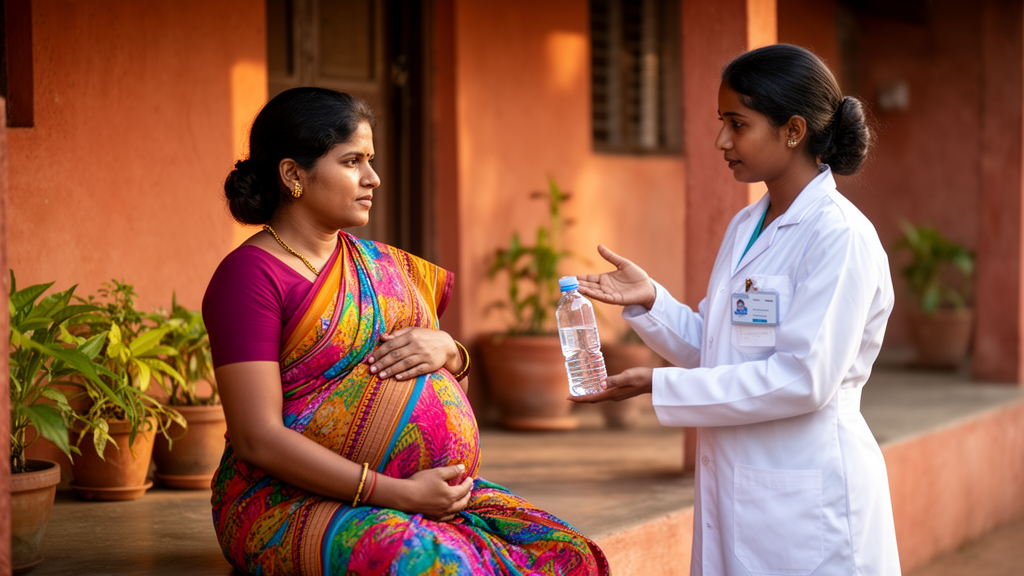
The researchers argue that the findings point toward a practical intervention: integrating targeted, culturally appropriate educational interventions into antenatal care. Antenatal visits are among the most frequent and trusted points of contact between pregnant women and the health system, and they offer a natural setting for discussing environmental exposures alongside nutrition, infection prevention, and other pregnancy-related topics. The authors suggest that such interventions may enhance awareness and encourage lower-plastic-use behaviours among pregnant women. At the same time, they are careful to note that the effects of these educational interventions on actual exposure and on maternal or fetal health outcomes require further study. In other words, the survey establishes a baseline of what women know, not what changing that knowledge would accomplish.
The study also highlights a broader challenge for environmental health communication in low- and middle-income countries. Microplastic research has largely been conducted in high-income settings, and much of the public awareness that exists has been shaped by coverage in English-language media and by campaigns aimed at consumers in wealthy countries. The South Indian data suggest that this awareness has not travelled to the populations that may face some of the highest cumulative exposures from plastic pollution, whether through drinking water, seafood, or airborne particles in rapidly urbanising environments. As microplastic detection methods improve and more human biomonitoring studies are conducted in diverse populations, the gap between what researchers know and what the public understands is likely to become an increasingly important target for public health action. The authors conclude that substantial knowledge deficits and limited self-reported preventive behaviours related to microplastic exposure exist among pregnant women in South India, and that addressing these deficits through antenatal care may be a practical first step toward reducing exposure during one of the most sensitive windows of human development.
Subject of Research: Gaps in knowledge and awareness of microplastic exposure among pregnant women in South India: implications for maternal and fetal health
Article Title: Gaps in knowledge and awareness of microplastic exposure among pregnant women in South India: implications for maternal and fetal health
Article References: Panneerselvam, D., & Murugesan, A. (2026). Gaps in knowledge and awareness of microplastic exposure among pregnant women in South India: implications for maternal and fetal health. BMC Public Health. https://doi.org/10.1186/s12889-026-29592-3
Image Credits: AI Generated
DOI: 10.1186/s12889-026-29592-3
Keywords: Gaps, knowledge, awareness, microplastic, exposure, pregnant, women, South, India, implications, maternal, fetal
News Source: Harold Sullivan. (October 17, 2026). Pregnant Women in South India Know Almost Nothing About Microplastics, Survey Finds. Scienmag.