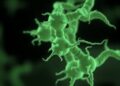
Credit: HOT Program, UHM SOEST
Microbes dominate the planet, especially the ocean, and help support the entire marine food web. In a recent report published in Nature Microbiology, University of Hawai'i at Mānoa (UHM) oceanography professor Ed DeLong and his team report the largest single-site microbiome gene catalog constructed to date. With this new information, the team discovered nutrient limitation is a central driver in the evolution of ocean microbe genomes.
As a group, marine microbes are extremely diverse and versatile with respect to their metabolic capabilities. All of this variability is encoded in their genes. Some marine microorganisms have genetic instructions that allow them to use the energy derived from sunlight to turn carbon dioxide into organic matter. Others use organic matter as a carbon and energy source and produce carbon dioxide as a respiration end-product. Other, more exotic pathways have also been discovered.
"But how do we characterize all these diverse traits and functions in virtually invisible organisms, whose numbers approach a million cells per teaspoon of seawater?" asked DeLong, senior author on the paper. "This newly constructed, comprehensive gene catalog of microbes inhabiting the ocean waters north of the Hawaiian Islands addresses this challenge."
Water samples were collected over two years, and modern genome sequencing technologies were used to decode the genes and genomes of the most abundant microbial species in the upper 3,000 feet of water at the Hawai'i Ocean Time-series (HOT) Program open ocean field site, Station ALOHA.
Just below the depth of sunlit layer, the team observed a sharp transition in the microbial communities present. They reported that the fundamental building blocks of microbes, their genomes and proteins, changed drastically between depths of about 250-650 feet.
"In surface waters, microbial genomes are much smaller, and their proteins contain less nitrogen–a logical adaptation in this nitrogen-starved environment," said Daniel Mende, post-doctoral researcher at the UHM School of Ocean and Earth Science and Technology (SOEST) and lead author on the paper. "In deeper waters, between 400-650 feet, microbial genomes become much larger, and their proteins contain more nitrogen, in tandem with increasing nitrogen availability with depth."
"These results suggest that the availability of nutrients in the environment may actually shape how microbial genomes and proteins evolve in the wild," said DeLong. "Another surprising finding of the study is that the microbial 'genomic transition zone' observed occurs over a very narrow depth range, just beneath the sunlit layer. Below about 650 feet deep, the fundamental properties of microbial genomes and proteins are relatively constant, all the way down to the seafloor."
In collaboration with a computer science group led by professor Bonnie Hurwitz at the University of Arizona, the new database is available to scientists worldwide who are seeking to describe the nature and function of microbes in the global oceans.
"These new data will provide an important tool for understanding the nature and function of the ocean's microbiome today, as well as help predict its trajectory into the future," said DeLong.
###
Media Contact
Marcie Grabowski
[email protected]
808-956-3151
@UHManoaNews
http://manoa.hawaii.edu
Related Journal Article
http://dx.doi.org/10.1038/s41564-017-0008-3