Beneath the farmland and spring-fed ponds of the Palù di Livenza basin in northeastern Italy lies a sediment archive that has just rewritten the history of one of Europe’s most delicate plants. Researchers drilling a six-metre core in this lowland wetland, barely 30 metres above sea level, recovered fossil pollen of Linnaea borealis, the twinflower, a cold-loving dwarf shrub that today survives in Italy only on remote mountain slopes between roughly 1,200 and 2,100 metres. The discovery, published in Italian Botanist, shows that this Ice Age relict was thriving in the Friuli Venezia Giulia plain during the Mid-Holocene, between about 8,600 and 4,200 calibrated years before present, long after the great post-glacial retreat should have pushed it uphill.
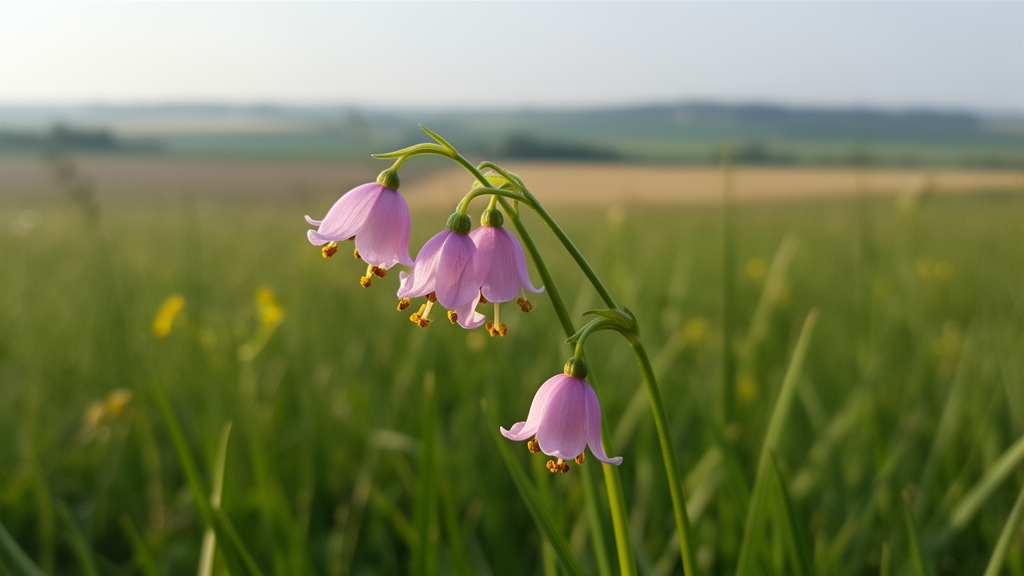
Linnaea borealis is a botanical celebrity with a pedigree stretching back to Carl Linnaeus himself, who took the plant as his personal emblem. It is an evergreen, stoloniferous dwarf shrub of the Caprifoliaceae family, named for its distinctive paired, bell-shaped flowers that hang from a Y-shaped forked stem. Blooming between June and August, each flower lasts about a week before developing into a small, dry, one-seeded capsule. The species is predominantly clonal, spreading through runners rather than seeds, produces little viable seed, and depends on insects to carry its heavy, sticky pollen. Seeds are dispersed mainly by birds and small mammals, aided by tiny bristles that hook onto fur. All of this makes the plant a poor long-distance traveller and, crucially for palaeoecologists, an unlikely candidate for pollen that has blown in from afar.
The twinflower’s ecological demands are equally strict. It favours shaded or semi-shaded coniferous and mixed forests, typically of Norway spruce, silver fir and pines, with a moss-rich understorey of species such as bilberry and rhododendron. It grows on acidic, moist podzolic soils rich in humic litter, and as a shallow-rooted plant it is acutely vulnerable to drought, declining in dry years and recovering in wet ones. These requirements have made it a classic glacial relict: a survivor of formerly widespread populations that were fragmented as the climate warmed after the last Ice Age, leaving isolated pockets in cool, stable microhabitats, in the twinflower’s case the circumboreal zones of the Northern Hemisphere.
In Italy today, the species clings to just four northern regions: Valle d’Aosta, Piemonte, Lombardia and Trentino-Alto Adige, where it occupies a handful of montane and subalpine sites such as the Val di Rhêmes, the Orobic Alps and the Renon Plateau. Recent genetic work comparing these small, isolated Alpine populations with core boreal populations confirmed their status as glacial relicts and highlighted the need for targeted conservation. Until now, however, no trace of the plant had ever been recorded in the Friulian lowland, either as a living population or in earlier fossil records from the same basin.
The new evidence comes from the PaluOFF1 core, drilled in February 2022 about 300 metres from the UNESCO-listed prehistoric pile-dwelling site of Palù di Livenza. The coring penetrated roughly six metres of sediment, ending at the Argille Azzurre formation deposited during the Last Glacial Maximum. After excluding a potentially reworked surface layer, researchers collected 54 palynological samples at 10-centimetre intervals under sterile conditions, processed them with standard laboratory protocols including acetolysis and heavy liquid separation, and analysed them at 1000× magnification under an optical microscope. The resulting record spans some 10,000 years of vegetation history and yielded a remarkably rich flora of 117 taxa, with pollen preservation good enough to allow precise identification.
Within this sequence, Linnaea borealis pollen appeared consistently across several pollen zones, from a first occurrence in zone PAL2a to a last in zone PAL4a, corresponding to the window between 8,600 and 4,200 calibrated years before present. The surrounding vegetation reconstructed from the pollen assemblage was a densely forested landscape of mixed deciduous and coniferous woodland: oaks, hornbeam and hazel dominated the lowland, while beech, birch, fir, spruce and pine marked the upland component. The earliest twinflower pollen coincided with a marked expansion of hygrophilous, water-loving taxa, including alder, poplar, willow, sedges and other wetland herbs, alongside a rise in conifers, indicating cool and moist conditions across the basin.
The research team tested the alternative explanation that the pollen had been transported from montane populations higher in the Prealps, and found the case for a local population compelling. Twinflower is insect-pollinated, so its heavy, sticky pollen is poorly suited to long-distance wind transport. The grains were exceptionally well preserved, with none of the folding and degradation that mechanical stress during transport typically causes, and the depositional context was undisturbed. Most tellingly, the signal was not a single stray occurrence but a continuous, repeated presence across the sequence, exactly what would be expected from a population growing within the basin itself.
The finding elevates the Palù basin to a candidate lowland refugium, a category of glacial refuge considered particularly important for cold-adapted mountain species because spring-fed wetlands can maintain microclimatic stability and ecological continuity even as regional climates shift. The basin, a roughly 100-hectare wetland formed in the late glacial period through fluvial and tectonic dynamics, preserves a sedimentary sequence from the Last Glacial Maximum to the present and is today protected as a Biotope. Between about 8,600 and 4,200 years ago its cool, humid microclimate apparently sustained suitable niches for the twinflower even as the species disappeared from other lowland areas, hinting that its local extinction came considerably later than the post-glacial retreat that shaped its modern range.
There is also an intriguing human dimension. The Palù di Livenza site, inscribed on the UNESCO World Heritage List in 2011 as part of the prehistoric pile-dwellings around the Alps, hosted a Neolithic village excavated between 2013 and 2021. Twinflower has a long ethnobotanical history in Europe and North America, used in folk medicine against shingles, rheumatism, fevers and menstrual pain, typically as decoctions, ointments or smoke inhalations, and it still features in cosmetics and pharmaceutical research. No macroremains or direct archaeobotanical evidence of the plant have been recovered from the Neolithic contexts at Palù, and the pollen came from an off-site core rather than the settlement itself, so any use by local communities remains speculative. The authors note, however, that because the whole plant rather than seeds or fruits was typically used, its absence from archaeological sediments cannot be taken as proof of non-use.
Beyond its local significance, the study is a showcase of why floristic surveys and palynology are stronger together. Modern occurrence records offer only a static snapshot of where a species survives now, while fossil pollen adds the temporal depth needed to reconstruct how distributions shifted over millennia. For Linnaea borealis, that combined lens has revealed a population where none was suspected, in a landscape now dominated by vineyards and farmland, and has sharpened the questions conservationists must answer about what microclimatic and habitat conditions allowed such relicts to persist. As the Holocene’s warm phases give way to a climate changing faster than any the twinflower has previously endured, understanding the refugia that once sheltered it may prove essential to keeping this Y-shaped blossom on the map.
Subject of Research: Mid-Holocene fossil pollen evidence of the glacial relict plant Linnaea borealis in the Friuli Venezia Giulia plain
Article Title: Palaeofloristic record of Linnaea borealis during the Mid-Holocene in the Friuli Venezia Giulia plain
Article References: Zappa, J., Mercuri, A. M., Astuti, G., Lastrucci, L., Torri, P., & Florenzano, A. (2025). Palaeofloristic record of Linnaea borealis during the Mid-Holocene in the Friuli Venezia Giulia plain. Italian Botanist, 20, 149-165. https://doi.org/10.3897/italianbotanist.20.170749
Image Credits: AI Generated
DOI: 10.3897/italianbotanist.20.170749
Keywords: Linnaea borealis, twinflower, palynology, glacial relict, Holocene, refugium, Friuli Venezia Giulia, Palù di Livenza, biogeography, pollen analysis, Neolithic, conservation
News Source: Drew Townsend. (October 17, 2026). Twinflower pollen reveals a lost lowland refuge in the Italian plain. Scienmag.