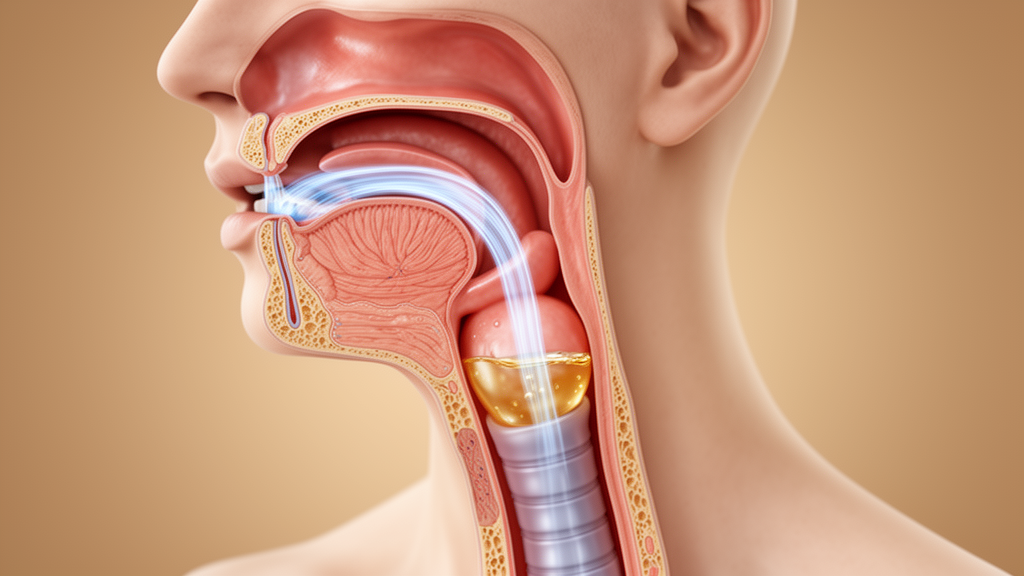
For thousands of patients each year, a tracheostomy is the intervention that keeps them alive through the worst phase of a severe stroke, traumatic brain injury, or another acquired neurological catastrophe. But once the acute crisis passes, many find themselves caught in a fragmented clinical limbo: the tube that stabilized their airway now sits at the center of a tangle of separate problems—dysphagia, secretion buildup, weak cough, impaired voice, and an uncertain path back to eating and breathing without it. A new mini review published in Frontiers in Neurology argues that these problems are not separate at all, and that the key to reconnecting them may be something surprisingly simple: restoring the flow of air through the larynx.
The review, led by Jiayi Xia and Song Pei with colleagues at Shanghai Second Rehabilitation Hospital, Renhe Hospital of Baoshan District, and Huashan Hospital of Fudan University, synthesizes peer-reviewed human studies on airflow-restoration strategies in tracheostomized adults with acquired neurological disease. Its central insight is physiological rather than technological. In a healthy person, swallowing is embedded in breathing: a bolus is transferred during a brief respiratory pause, typically followed by expiration that helps sweep residual material away from the airway. Subglottic pressure—the pressure below the vocal folds—provides both a mechanical force and a sensory signal during pharyngeal swallowing. An open tracheostomy circuit disrupts this loop entirely: expiration bypasses the upper airway, laryngopharyngeal airflow and subglottic pressure drop, and the sensory information that normally organizes swallowing and airway protection becomes blunted.
This matters particularly after stroke, where pharyngeal sensory impairment is itself strongly associated with dysphagia severity. The authors propose a four-part model of the aerodigestive sensorimotor loop: pressure generation, laryngopharyngeal sensation, respiratory-swallow coordination, and airway protection. Disruption at any one point amplifies problems elsewhere. Reduced airflow lessens sensory input; fewer spontaneous swallows allow secretions to accumulate; weak cough limits clearance; and repeated suctioning interrupts purposeful practice. In daily care, each failure appears under a different label—aspiration, wet voice, secretion burden, poor cough, or delayed tube removal—making the underlying loop easy to miss.
The review is careful to distinguish several overlapping but non-interchangeable airflow-restoration strategies. Cuff deflation, tube occlusion, and one-way speaking valves all redirect expiratory air through the larynx when the upper airway is patent and ventilation is stable. A small randomized study in patients with acquired brain injury found that two weeks of Passy-Muir valve use improved penetration-aspiration scores, velopharyngeal pressure, upper-esophageal sphincter relaxation duration, and modeled subglottic pressure compared with a control condition. But earlier physiological work showed that cuff deflation and valve placement did not produce uniform changes across all swallowing measures, and a speaking valve cannot compensate for severe pharyngeal weakness, absent laryngeal sensation, unstable respiratory status, or critical upper-airway obstruction.
For patients who cannot yet tolerate cuff deflation, above-cuff vocalization and related methods deliver gas through the subglottic suction port while the cuff remains inflated, directing flow upward across the vocal folds. A systematic review found signals of benefit for communication and, in four studies, swallowing, but the underlying evidence was low quality, dose was inadequately described in most reports, and adverse events were reported in nine studies. The swallowing evidence is small but increasingly relevant: in ten patients with severe brain injury, external subglottic airflow at 3 liters per minute increased spontaneous swallowing during a five-minute observation and reduced the volume of secretions collected above the cuff.
A 2026 randomized crossover study in 20 tracheotomized patients after stroke tested continuous subglottic oxygen at 3, 5, and 7 liters per minute during fiberoptic endoscopic evaluation of swallowing. Penetration-aspiration scores were lower at 5 and 7 liters per minute than during cuff deflation or capping, and pharyngeal residue improved at 5 liters per minute. A separate 2026 randomized clinical trial enrolled 47 patients with post-stroke dysphagia and tracheostomy, finding that a modified, endoscopy-mediated air-pulse program added to standard therapy improved secretion measures, swallowing safety, spontaneous swallowing frequency, pulmonary infection scores, and nutritional indicators more than a conventional air-pulse approach. But the trial was single-center and follow-up was short, and replication is needed.
An unresolved question is whether oxygen is the active ingredient. Earlier studies used medical air, whereas the crossover trial used oxygen. No direct comparison has isolated oxygen concentration from flow, pressure, humidity, temperature, or the sensory effect of gas moving through the larynx. Until such a trial is performed, the authors argue, the intervention is best described as subglottic airflow or gas-pulse stimulation, with oxygen specified only when it was actually delivered. Calling it oxygen therapy implies a mechanism that has not yet been demonstrated.
The review’s most distinctive proposal is that airflow should be used not as an isolated device intervention but as phenotype-guided sensory priming immediately before or during task-specific feeding. The goal is not merely to trigger more swallows but to reconnect sensation with bolus preparation, airway closure, respiratory timing, and clearance. In practice, the priming interval can be short: after airway clearance and a tolerance check, airflow is introduced under the selected condition; the clinician then observes secretion response and spontaneous swallows before moving to saliva management or small, endoscopy-guided bolus trials. Food texture, volume, posture, and cueing are adjusted to the instrumentally defined swallowing pattern. If airway protection deteriorates, the task is stepped back rather than forcing a predetermined dose.
To make this approach reproducible, the authors propose a five-stage pathway from stabilization to decannulation. The first stage establishes respiratory stability, airway patency, secretion burden, and the dominant dysphagia mechanism, using flexible endoscopic evaluation of swallowing (FEES) when feasible. The second stage restores afferent input through the safest tolerated route—cuff deflation and valve use for patients with a patent airway, or carefully controlled above-cuff airflow for those who remain cuff-dependent. The third stage couples the tolerated airflow condition with task-specific swallowing practice, progressing from saliva to measured boluses to meal components. The fourth stage addresses decannulation readiness as a multidimensional decision integrating airway anatomy, secretion burden, cough strength, and capping tolerance, with pragmatic reference values including suctioning no more than twice per eight hours, peak cough flow of at least 160 liters per minute, and maximum expiratory pressure of at least 40 centimeters of water when testing is reliable. The fifth stage maintains gains through the transition to real meals at ward, rehabilitation, and home levels.
The evidence remains promising rather than definitive. Samples are small, patient groups are mixed, device settings are poorly reported, and many outcomes are immediate physiological surrogates rather than clinical events. The authors call for future trials to report gas composition, flow, pressure, pulse timing, humidity, cuff condition, and concurrent feeding tasks, and to prioritize oral intake, pneumonia, and decannulation alongside physiological outcomes. They also suggest modest technology with a clear clinical purpose: neck-worn acoustic sensing has shown the feasibility of monitoring spontaneous swallows after tracheostomy, and future systems could combine airflow, neck sound, or surface electromyography to time a pulse to a respiratory phase or swallowing attempt. Such closed-loop dosing is not ready for routine care, but it offers a testable route from fixed stimulation to responsive rehabilitation. For now, the most defensible clinical approach is careful and staged: define the phenotype, restore airflow through the safest feasible route, pair it with task-specific swallowing, reassess under the condition used for eating, and follow the patient beyond decannulation. The endpoint is not airflow for its own sake; it is a safer return to eating, communication, and life without an unnecessary tube.
Subject of Research: Airflow-based swallowing rehabilitation and decannulation after tracheostomy in acquired neurological disease
Article Title: Airflow-enabled swallowing rehabilitation after tracheostomy in acquired neurological disease: mechanisms, current evidence, and a stage-based clinical pathway
Article References: Xia, J., Pei, S., Qin, H., Lu, Y., Zhou, S., & Bai, Y. (2026). Airflow-enabled swallowing rehabilitation after tracheostomy in acquired neurological disease: mechanisms, current evidence, and a stage-based clinical pathway. Frontiers in Neurology, 17, Article 1982780. https://doi.org/10.3389/fneur.2026.1982780
Image Credits: AI Generated
DOI: 10.3389/fneur.2026.1982780
Keywords: tracheostomy, dysphagia, decannulation, subglottic airflow, speaking valve, cuff deflation, FEES, stroke rehabilitation, sensory priming, neurorehabilitation, aspiration pneumonia, oral feeding
News Source: Ophelia Keating. (October 17, 2026). Restoring Airflow Through the Larynx May Rebuild Swallowing After Tracheostomy. Scienmag.