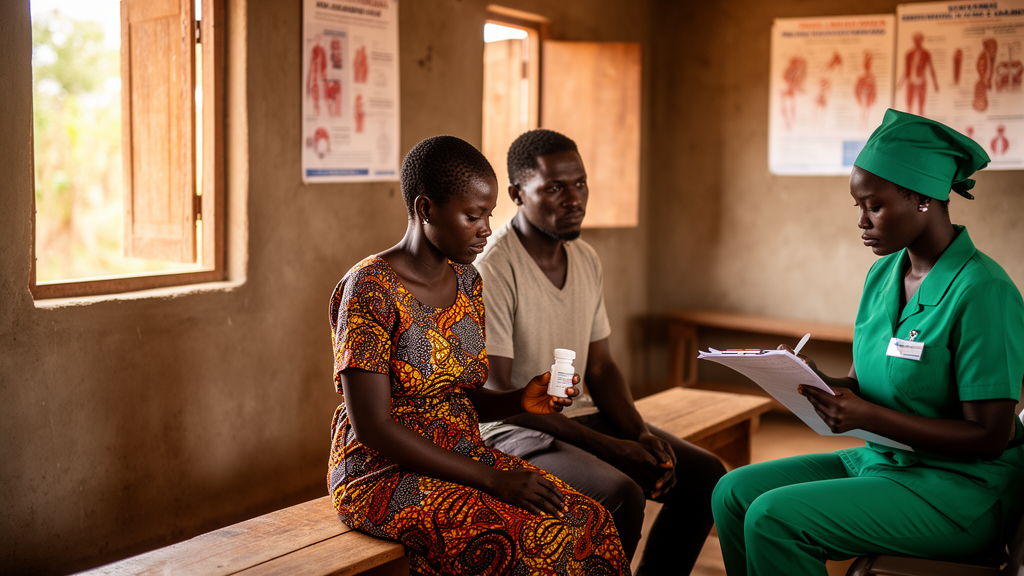
More than nine in ten HIV-negative partners in serodifferent relationships in northern Uganda report taking their daily oral pre-exposure prophylaxis as prescribed, according to a new cross-sectional study published in BMC Public Health. The research, conducted across four health facilities in Gulu District, found that 92.2 percent of the 460 participants surveyed reported good adherence to oral tenofovir disoproxil fumarate/emtricitabine, the most widely used form of HIV pre-exposure prophylaxis, or PrEP, in the region.
Serodifferent relationships, in which one partner lives with HIV and the other does not, represent a critical frontier in HIV prevention. The HIV-negative partner in such a couple faces ongoing exposure risk, and oral PrEP has emerged as one of the most effective biomedical tools for reducing that risk when taken consistently. The study, led by Aromorach Vivian Calo of Makerere University’s Department of Clinical Epidemiology and Biostatistics, together with colleagues from Makerere and the Infectious Diseases Institute in Kampala, set out to quantify how well HIV-negative partners in Gulu District actually adhere to their PrEP regimens and to identify the factors that shape adherence behavior.
The research team recruited participants consecutively from Gulu Regional Referral Hospital, the TASO Gulu Clinic, Awach Health Centre IV, and Layibi Techo Health Centre III between July 1 and August 31, 2024, with proportional allocation across the four sites. Data were collected using a modified AIDS Clinical Trials Group adherence questionnaire, a validated instrument widely used in antiretroviral research. Because the observed prevalence of good adherence was high, the investigators applied modified Poisson regression with robust standard errors, a statistical approach designed for common outcomes that conventional logistic regression can distort, reporting adjusted prevalence ratios with 95 percent confidence intervals.
The headline figure of 92.2 percent good adherence, with a 95 percent confidence interval of 89.4 to 94.3, is notable in a field where self-reported adherence to daily oral PrEP often falls well below optimal levels. Oral TDF/FTC requires consistent daily intake to achieve the protective drug concentrations in mucosal tissues that block HIV acquisition, and real-world adherence has been a persistent challenge across many settings. The Gulu findings suggest that, at least among this population of serodifferent couples attending regular HIV care facilities, oral PrEP is being taken reliably by the vast majority of users.
Three factors emerged as significantly associated with good adherence. The strongest was high perceived risk of HIV acquisition, which increased the prevalence of good adherence by 54 percent (adjusted prevalence ratio 1.54; 95 percent CI 1.23 to 1.95; p less than 0.001). Participants who believed they were at substantial risk of contracting HIV from their partner were markedly more likely to take their pills as directed. Tertiary education was also linked to better adherence (aPR 1.04; 95 percent CI 1.00 to 1.05; p equals 0.03), and the absence of fear of side effects raised adherence prevalence by 19 percent (aPR 1.19; 95 percent CI 1.02 to 1.39; p equals 0.025).
Two factors worked in the opposite direction. The absence of family support was associated with a 9 percent lower prevalence of good adherence (aPR 0.91; 95 percent CI 0.85 to 0.97; p equals 0.012), while forgetfulness reduced adherence prevalence by 5 percent (aPR 0.95; 95 percent CI 0.92 to 0.99; p equals 0.018). These findings point to the social and cognitive architecture underlying pill-taking behavior: people who have supportive family environments and who can remember their daily dose are more likely to maintain the regimen over time.
The emphasis on perceived risk is particularly instructive from a public health standpoint. PrEP works only if people who need it take it, and people take it only if they believe they need it. In serodifferent relationships, the HIV-negative partner’s risk perception can fade over time, especially when the HIV-positive partner is on effective antiretroviral therapy and has a suppressed viral load. The study’s authors suggest that enhanced counseling to sustain risk perception is a key intervention target, alongside strategies to manage side effects and adherence support tools such as reminders.
The finding on family support adds a social dimension to adherence science that is often overlooked in biomedical framing. In Ugandan communities, where extended family networks play a central role in daily life, the presence or absence of supportive family members can influence whether an individual maintains a daily medication routine. The authors call for greater family involvement in PrEP adherence support, an approach that could involve educating family members about PrEP and encouraging them to help remind and motivate the HIV-negative partner.
Forgetfulness, the other negative factor, is a well-documented barrier to daily oral PrEP adherence globally. The study’s recommendation of adherence support tools such as reminders aligns with a growing body of evidence that digital and behavioral reminder systems can improve medication adherence across many chronic disease contexts. Simple interventions, from mobile phone text messages to pill organizers, could help address this cognitive barrier in resource-limited settings.
The study arrives at a moment of rapid expansion in the HIV prevention landscape. While oral TDF/FTC remains an important PrEP option, the field now includes the dapivirine vaginal ring and long-acting injectable cabotegravir, and in 2025 the World Health Organization recommended twice-yearly injectable lenacapavir as an additional PrEP option. The authors note that strengthening adherence monitoring systems and preparing for the integration of these long-acting options will be critical for sustaining HIV prevention efforts in Uganda. For now, the Gulu findings offer a measure of reassurance that oral PrEP, when embedded in supportive clinical and family environments, can achieve high adherence among the people who need it most.
Subject of Research: HIV Prevention
Article Title: Prevalence and factors associated with pre-exposure prophylaxis adherence among HIV-negative partners in serodifferent relationships attending selected health facilities in Gulu District, Uganda
Article References: Calo, A. V., Ngabirano, T., Mujugira, A., Kalyango, J., & Okwero, M. (2026). Prevalence and factors associated with pre-exposure prophylaxis adherence among HIV-negative partners in serodifferent relationships attending selected health facilities in Gulu District, Uganda. BMC Public Health. https://doi.org/10.1186/s12889-026-29931-4
Image Credits: AI Generated
DOI: 10.1186/s12889-026-29931-4
Keywords: PrEP adherence, serodifferent couples, HIV prevention, Uganda, oral TDF/FTC, prevalence, modified Poisson regression, family support, perceived HIV risk, side effects, Gulu District, antiretroviral prophylaxis
News Source: Ophelia Keating. (October 17, 2026). High PrEP Adherence Reported Among HIV-Negative Partners in Uganda’s Serodifferent Couples. Scienmag.