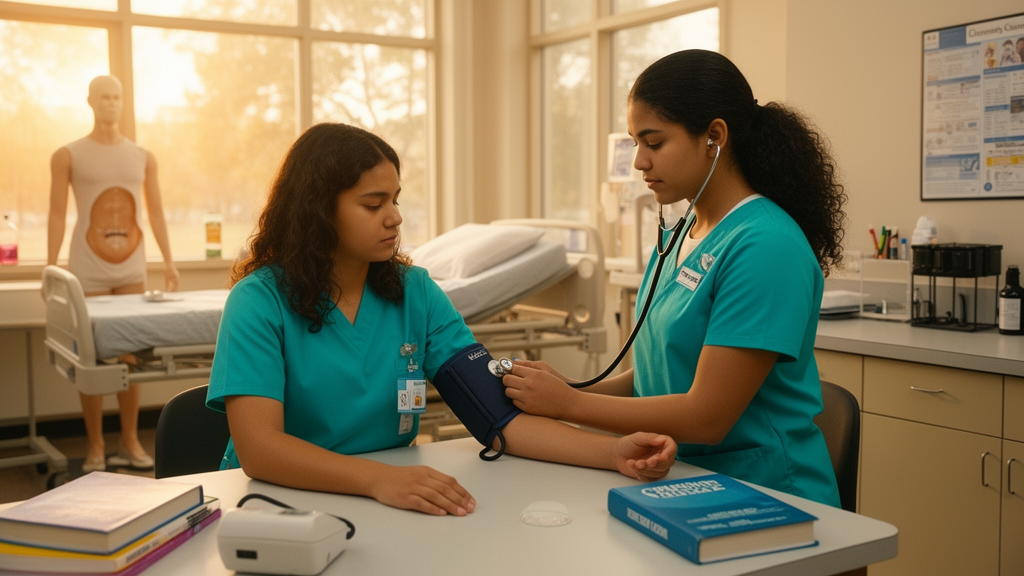
In the agricultural heartland of California’s Central Coast, where fresh-market vegetables cover more than 275,000 acres of farmland and nearly 80 percent of residents identify as Latinx, a quiet revolution in nursing education is underway. A new study published in Nursing Open offers one of the most detailed portraits yet of first-generation college students training to become registered nurses at a rural community college, revealing both the formidable obstacles these students face and their extraordinary determination to transform health care in the very communities that raised them.
The research arrives at a precarious moment for the American nursing workforce. In 2021, the number of nurses under 35 in the workforce plummeted by more than 100,000 in a single year, a decline significantly higher than any seen in the previous four decades, although updated forecasts suggest the profession is recovering following the COVID-19 pandemic. The National Sample Survey of Registered Nurses projects a national deficit of 78,610 full-time equivalent registered nurses in 2025, easing slightly to 63,720 by 2030. Globally, shortages fueled by an aging, retiring workforce and persistent retention problems compound the crisis. And while the shortage is nationwide, it bites hardest in rural America, where approximately 46 million people live with disproportionately poor access to care.
The health consequences of that scarcity are stark. Rural residents are more likely than urban dwellers to die prematurely from the five leading causes of death: cardiovascular disease, cancer, unintentional injury, chronic lower respiratory disease, and stroke. Long distances to facilities, inadequate transportation, low insurance rates, limited health literacy, and chronic provider shortages all conspire to worsen outcomes. Between 2012 and 2019, rural populations recorded a 45 percent higher mortality rate from opioid overdose compared with urban areas. The pandemic deepened these divides, bringing lower vaccination rates and higher hospitalization and death rates to rural communities. For farmworkers, the picture is even grimmer: the average life expectancy of a United States farmworker is just 49 years, and chronic disease risk factors such as overweight and obesity, affecting 81 percent of surveyed California agricultural workers, exceed those of the general population.
Against this backdrop, researchers turned to a rural community college nursing program in a region federally designated as both a Medically Underserved Area and a Health Professional Shortage Area, where fewer than 10 percent of residents hold a bachelor’s degree compared with 23 percent nationally. In April 2022, the team invited 87 students from the first- and second-year cohorts of the associate degree registered nursing program to complete a cross-sectional survey, developed through multiple stages of pilot testing and built on questions from validated national surveys. The response was remarkable: 82 students returned surveys, a 91 percent response rate. The study was guided by an intersectionality framework examining how race, gender, and class hierarchies shape experiences within the nursing profession, and a single open-ended question invited students to describe what being a first-generation college nursing student meant to them.
The findings were striking. Approximately 70 percent of participants were first-generation college students, defined under the Higher Education Act as individuals whose parents did not complete a baccalaureate degree. The cohort was overwhelmingly female at 81.7 percent, ethnically diverse, and multilingual: half identified as Hispanic or Latino, one-quarter were fluent in Spanish, and others spoke Tagalog, Cebuano, and other languages. The mean age was 31.54 years, with no significant difference between first-generation and non-first-generation students. Most students were enrolled in a two-year Associate Degree in Nursing program, a pathway researchers note may be more feasible for first-generation students because of its affordability, shorter completion time, and flexibility for those with family caregiving responsibilities.
The statistical comparisons revealed a pattern that defies some conventional assumptions about first-generation disadvantage. While roughly 73 percent of participants were unsure of receiving mentoring support or received none during the admissions process, and while barriers such as the application process, tuition costs, accessing counselors, lack of information, and school distance were common, nearly all of these burdens were shared equally across both groups. Only one dimension separated them: first-generation college students were far more likely to report that high school guidance counselors had questioned their future potential, with 94.4 percent of first-generation students reporting this experience compared with just 5.6 percent of their peers, a statistically significant difference. Even more surprising, first-generation students carried significantly less student loan debt, averaging $4,192 compared with $21,404 for non-first-generation students, though the authors caution that the study did not capture the proportions of student income, living expenses, and tuition that might explain this gap.
The financial portrait of these students is sobering nonetheless. Nearly half reported that their families depended on them as a source of financial support while attending school, and 75.6 percent said their families relied on them for emotional support. Students funded their education through federal or state loans, grants, scholarships, savings, credit cards, and income from work, with nearly a third working part-time and others full-time or on-call. A substantial 31.6 percent reported financial concerns serious enough that they considered dropping out of college. Meanwhile, more than a third struggled to access health care services themselves, and comparable numbers lacked adequate study space, educational materials, transportation, or childcare. Experiences of bias or discrimination related to race, ethnicity, and national origin were reported about 7 percent of the time.
Yet the qualitative responses revealed a powerful undercurrent of purpose. Content analysis of the open-ended question identified five themes: breaking the cycle, financial challenges, empowerment and pride, pressure and uncertainty, and gratitude and motivation. One student captured the duality of the experience: being a first-generation college student is empowering and scary, empowering because she is able to break the chain and scary because there are many unknowns about the process. Others described breaking barriers and stigma, setting an example for younger siblings, and pursuing opportunities their parents never had. Many spoke of honoring parental sacrifice, with one student writing that accomplishing a college degree means the whole world to her, and another hoping to motivate her son, nieces, and nephews to continue their education.
Perhaps the most consequential finding for workforce policy is the students’ commitment to the communities that produced them. A significantly greater proportion of first-generation students grew up in rural or designated low-income areas, at 88 percent compared with 12 percent of non-first-generation peers. And while 40.2 percent of all respondents planned to work in under-resourced communities after finishing their schooling, first-generation students were dramatically more likely to express that intention, comprising 87.9 percent of those affirmatively interested versus 12.1 percent of non-first-generation students. The students also expressed overwhelming interest in continuing their education beyond the associate degree: 89.2 percent planned to complete a Bachelor of Science in Nursing within one to three years, 59.1 percent intended to pursue master’s-level education, and 31.5 percent showed interest in doctoral study.
The implications ripple outward from this single rural campus. Research consistently shows that culturally, socially, and racially concordant care, in which providers mirror the patients they serve, produces significantly better health outcomes and patient satisfaction. Yet only about 10 percent of registered nurses in the United States are Latinx, even as Latinos constitute California’s largest ethnic group at 15 million people and the state holds the most diverse older population in the nation. First-generation college healthcare providers may bring a unique perspective on the experiences of patients from similar backgrounds, strengthening patient-provider relationships and outcomes. The authors acknowledge limitations, including the cross-sectional design, the single rural site, and the focus on community college students, which may limit generalizability to baccalaureate and graduate programs or to first-generation students in other regions. Still, their conclusion is clear: recruiting and retaining first-generation college nurses represents a tangible, evidence-supported strategy for tackling nursing workforce shortages in underserved rural areas, one that requires concerted effort from policymakers, healthcare providers, and community members alike. For the students themselves, the mission is already personal. They are not merely filling workforce gaps; they are breaking a generational cycle, one degree at a time, in the communities that need them most.
Subject of Research: Experiences and workforce potential of first-generation college nursing students at a rural community college
Article Title: Breaking the Cycle: First‐Generation College Nursing Students Attending a Rural Community College
Article References: Arriaga, A. T., Castillo, E., Chan, G. K., & Wagner, L. M. (2026). Breaking the Cycle: First‐Generation College Nursing Students Attending a Rural Community College. Nursing Open, 13(10), Article e70878. https://doi.org/10.1002/nop2.70878
Image Credits: AI Generated
DOI: 10.1002/nop2.70878
Keywords: nursing workforce, first-generation college students, rural health, community college, health disparities, nursing education, farmworker health, California, registered nurses, health professional shortage areas, student loan debt, workforce diversity
News Source: Ophelia Keating. (October 17, 2026). First-Generation Nursing Students Break Barriers in Rural California. Scienmag.