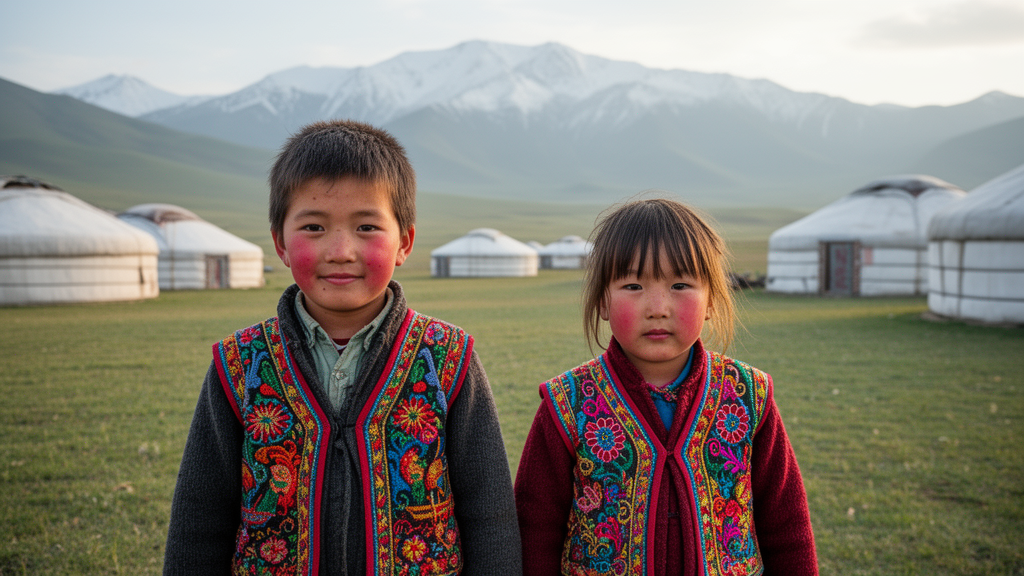
High in the mountains of Kyrgyzstan, children are growing up differently than their peers in the capital city below. A new cross-sectional study published in Physiological Reports reveals that schoolchildren raised at high altitude in the rural Naryn region are significantly shorter and lighter than children raised in urbanized low-altitude Bishkek, yet they also exhibit superior lung function, higher hemoglobin levels, and stronger hand grip strength. The findings suggest that altitude itself, rather than malnutrition alone, may shape child development in mountainous regions.
Kyrgyzstan, a predominantly mountainous country in Central Asia where approximately 94% of the territory lies at elevations ranging from 400 to over 7000 meters above sea level, has made remarkable progress in reducing childhood malnutrition over the past two decades. Between 1997 and 2014, the prevalence of stunting declined from 36.2% to 12.9%, according to UNICEF data. Despite this improvement, persistent regional disparities remain, particularly in high-altitude areas characterized by rural settlement patterns, limited infrastructure, and reduced access to healthcare services.
The research team, collaborating between Denmark and Kyrgyzstan, conducted an observational cross-sectional comparative study between February and June 2025. They recruited healthy schoolchildren aged 10 to 12 years from two settings: the rural villages of Ak-Muz and Ozgorush in the Naryn region, both located at 2400 meters above sea level, and School No. 96 in Bishkek, the capital, at approximately 800 meters. After screening 317 children and excluding 51, the final analysis included 266 participants: 123 from Bishkek and 143 from Naryn.
To participate, children had to have lived more than 50% of their lives in the study region, limiting migration noise in the samples. The team excluded children with chronic conditions such as asthma, diabetes, epilepsy, or thyroid disease, as well as those with acute infections or taking medications like corticosteroids or bronchodilators. Parents completed a 20-item questionnaire covering household demographics, early life factors, nutritional practices, healthcare access, socioeconomic indicators, and household smoking. The questionnaire allowed researchers to control for income category, maternal characteristics, dietary diversity, supplement count, vaccination status, and birthweight.
The measurements were comprehensive. Height was recorded to the nearest 0.5 centimeters using a stadiometer, weight to the nearest 0.05 kilograms, and waist and mid-upper arm circumferences with standard measuring tapes. Oxygen saturation and pulse rate were measured with a portable SpO2 monitoring system after 30 seconds of rest. Hand grip strength was assessed with an electronic hand dynamometer, with each child performing three maximum-effort attempts per hand. Lung function was measured using spirometry following American Thoracic Society and European Respiratory Society guidelines, with predicted values calculated against a Caucasian reference population from the Global Lung Function Initiative equations. Hemoglobin was measured from a pinprick of capillary blood using a Hemocue analyzer.
The results were striking. Children in Bishkek were significantly taller, averaging 146.4 centimeters compared to 143.7 centimeters in Naryn, and significantly heavier at 38.7 kilograms versus 36.0 kilograms. Height-for-age z-scores differed significantly, with Bishkek children at −0.1 and Naryn children at −0.6. However, BMI and BMI-for-age z-scores did not differ significantly between groups. Children in Naryn had significantly higher hemoglobin levels at 134.6 grams per liter compared to 120.2 grams per liter in Bishkek, significantly lower oxygen saturation at 95.5% versus 97.6%, and significantly stronger hand grip strength at 20.7 kilograms-force versus 19.4 kilograms-force.
Lung function findings were particularly intriguing. Unadjusted FEV1 and FVC values did not differ significantly between groups. But when expressed as percent predicted against a Caucasian reference population, Naryn children had significantly higher FEV1 percent predicted at 98.3% versus 93.7% and FVC percent predicted at 99.8% versus 94.6%. The FEV1/FVC ratio remained nonsignificant. Regression models controlling for height, weight, gender, and income category confirmed that Naryn children had approximately 7.7% larger FEV1 and 7.2% larger FVC than their Bishkek counterparts.
Height differences persisted even after controlling for covariates including demographics, income category, maternal factors, and birthweight. Notably, the researchers found a significant gender-altitude interaction: male children in Bishkek were significantly taller than their Naryn counterparts, adjusted for age, while female children from Bishkek were not significantly taller than their Naryn peers. The altitude effect on height was significant for males but not for females. This pattern was replicated in height-for-age z-score calculations. Birthweight was significantly lower among children born at higher altitude, consistent with documented associations between altitude exposure and reduced fetal growth, but birthweight only partially explained the observed height differences.
The researchers hypothesize that the lower stature and weight may be due to development at high altitude under hypobaric hypoxia rather than malnutrition alone. Previous authors have suggested that this may be due to an adaptive response in the fetus that maximizes oxygen delivery through a smaller placenta, and during child growth, the body directs available energy to critical oxygen-transporting organs rather than the musculoskeletal system. The superior lung function, stronger hand grip strength, and higher hemoglobin levels observed in Naryn children are adaptations associated with healthy development and high-altitude residence, not necessarily with malnourished populations. The respiratory findings appear less dependent on birthweight-related in-utero exposure and may instead reflect postnatal physiological adaptation to chronic hypoxia.
The study has limitations. The researchers acknowledge differential selection bias, as participants in the Naryn region were largely driven by healthcare scarcity, while citizens of the urban capital might have more confidence in their child’s healthy development. The study did not control for puberty status, which could explain the gender difference in height, as some children aged 10 to 12 were probably already in puberty. Kyrgyzstan struggles with air quality, particularly in Bishkek during winter months, and differences in chronic air pollution exposure between settings were not directly assessed. The researchers used a Caucasian reference population for lung function, as no reference exists for Kyrgyz children yet. The children in Naryn were examined during late winter while Bishkek children were examined during early summer, creating a stark environmental contrast.
Clinically, the findings are meaningful on a population basis. A difference of 2.7 centimeters in linear growth might not be clinically meaningful when observing individuals, but a difference of 0.5 standard deviations seen on a population basis is clinically meaningful. The 14 grams per liter difference in hemoglobin levels and the roughly 7% difference in FEV1 and FVC are clinically significant when assessing a patient, as it would be important to consider that these children develop in an environment with increased demand for nutrition and respiratory capacity. The 1.3-kilogram difference in hand grip strength corresponds to the average developmental increase seen over an entire year in Dutch reference populations.
The researchers emphasize that their findings highlight the need to interpret WHO growth standards with caution when considering high-altitude pediatric populations. While the developmental profile may be supported by adaptation and acclimatization rather than malnutrition, the findings are observational and do not call for less investment in pediatric healthcare. If anything, attention to childcare and development should remain a continued focus, precisely because the development of these children is influenced by multiple factors and is hard to interpret by traditional standards such as linear growth alone. Future research employing longitudinal designs tracking children into adolescence and adulthood would help determine whether the observed gender differences in height persist and whether highland children’s functional advantages translate into long-term health benefits or limitations.
Subject of Research: Altitude and child development in Kyrgyzstan
Article Title: Altitude and child development: A cross‐sectional comparative study of children in urbanized low‐altitude and rural high‐altitude settings in Kyrgyzstan
Article References: Olsen, A. B. T., Isaeva, E., Umetalieva, M., Osmonbaeva, N., Wright, S. V., Serefoglu, L. D. L., Kretzchmar, F. N., Høegh, T. D., Kjærgaard, J., Nielsen, K. G., Sooronbaev, T., & Poulsen, A. (2026). Altitude and child development: A cross‐sectional comparative study of children in urbanized low‐altitude and rural high‐altitude settings in Kyrgyzstan. Physiological Reports, 14(19), Article e71132. https://doi.org/10.14814/phy2.71132
Image Credits: AI Generated
DOI: 10.14814/phy2.71132
Keywords: child development, high altitude, Kyrgyzstan, hypobaric hypoxia, lung function, hemoglobin, stunting, pediatric physiology, Altitude, child, development, cross
News Source: Harold Sullivan. (October 17, 2026). Growing Up at Altitude: Kyrgyz Children Show Distinct Developmental Pattern. Scienmag.