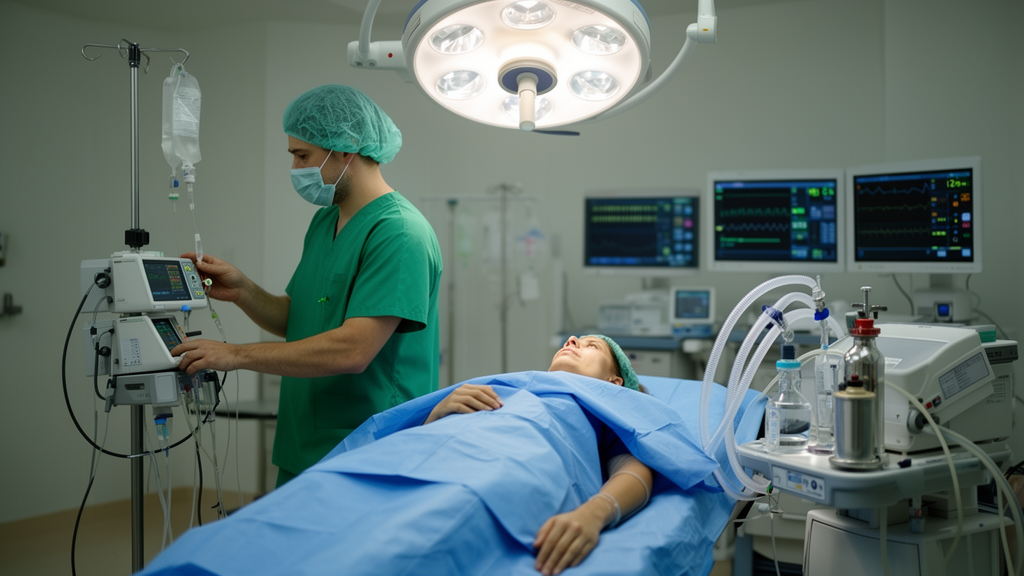
One of the longest-running debates in operating theatres across the United Kingdom has been settled, at least for now, by the largest trial of its kind ever conducted. The choice between total intravenous anaesthesia and the older technique of delivering anaesthetic gases through an inhaled mixture makes no meaningful difference to how patients recover after major surgery, according to findings published in JAMA by researchers from the University of Warwick and The Royal Marsden NHS Foundation Trust.
The VITAL trial, funded by the National Institute for Health and Care Research, enrolled 2,507 patients aged 50 and over who were undergoing major planned non-cardiac operations at 49 NHS hospitals. Participants were randomly allocated to receive either total intravenous anaesthesia, known as TIVA, delivered through a continuous infusion of the drug propofol, or a volatile anaesthetic such as sevoflurane or isoflurane, inhaled through a mask or breathing circuit during surgery. Both methods are used routinely to keep patients unconscious during the more than 1.5 million major non-cardiac operations performed in the UK each year, yet until now no large-scale British trial had determined whether one technique offered patients a better outcome than the other.
The trial’s primary measure of recovery was the number of days patients were alive and out of hospital in the 30 days following their operation. On this endpoint, the two groups were essentially indistinguishable. Rates of major complications, delirium and death assessed at 30 days, 90 days and six months were also similar between the two anaesthetic approaches, providing strong evidence that neither technique confers a survival or complication advantage over the other in this broad surgical population.
There was, however, a signal of modest benefit in the immediate aftermath of surgery. Patients who received TIVA reported lower rates of thirst, hoarseness, nausea and vomiting on the day after their operation. These symptoms, while rarely dangerous, contribute substantially to the discomfort of the first hours and days after a major operation, and the finding suggests that intravenous anaesthesia may offer a somewhat smoother and more comfortable early recovery, even if it does not change the overall trajectory of healing or discharge.
The debate between the two camps of anaesthetists has been running for years. Advocates of TIVA have argued that it offers a smoother recovery with less postoperative sickness and pain, while critics have pointed to rare risks associated with the technique, including the possibility that a patient may briefly regain awareness during surgery when anaesthesia is maintained by infusion alone. Proponents of volatile gases have countered that these agents allow anaesthetic depth to be monitored continuously through exhaled concentrations, providing a well-established margin of safety. The VITAL results indicate that, for most patients, neither argument tips the balance decisively.
A companion economic evaluation, published in the journal Anaesthesia, examined the financial dimension of the question. It found that the two techniques cost the NHS a similar amount and delivered comparable quality of life for patients over a six-month period. This matters because propofol infusions require syringe pumps and careful pharmacological management, while volatile agents carry ongoing procurement costs and, increasingly, environmental scrutiny. Taken together, the clinical and economic findings indicate that TIVA and inhalational anaesthesia are equivalent both in outcomes and in value for adults having major non-cardiac surgery.
Professor Joyce Yeung of Warwick Clinical Trials Unit, chief investigator of the VITAL trial, said the results resolve a question that has divided the specialty. For years, she noted, anaesthetists have debated which technique gives patients the best start to their recovery. What the trial shows, she said, is that for most patients having major surgery the two methods are equally viable. That is reassuring for patients, she added, and it means doctors can keep making the decision based on what is right for the person in front of them rather than on pressure to switch to a newer or supposedly superior technique.
The practical implication is that anaesthetic choice can continue to rest on patient preference, clinician expertise and local availability rather than on any mandate to adopt a single approach across the health service. Some patients may prefer the absence of a breathing mask and the reported reduction in nausea associated with intravenous delivery, while others may be better served by the titratable control offered by inhaled agents. The trial suggests that either path leads to a comparable recovery, freeing anaesthetists to tailor their technique to the individual rather than to a guideline.
The researchers are careful to acknowledge the limitations of their study. The trial was not blinded, which means patients and their carers knew which anaesthetic they had received, a factor that could influence patient-reported outcomes such as pain and nausea. All participants were treated within the NHS, so the findings may not transfer directly to health systems with different staffing, equipment or postoperative care pathways. The study also did not examine longer-term cancer outcomes, a question that has been raised in smaller studies, nor did it assess the environmental impact of the two techniques.
That environmental question is far from trivial. Volatile anaesthetic gases such as sevoflurane and isoflurane are potent greenhouse gases, and their routine release into the atmosphere has become an area of growing interest for sustainability-minded hospitals, with some trusts already reviewing their use. The VITAL findings do not settle this dimension of the debate, but they do clarify that any future shift away from volatile agents for environmental reasons would not need to be justified on grounds of patient recovery, since the two techniques are clinically interchangeable in that respect. For the millions of people who undergo major surgery each year, the message from this landmark trial is straightforward: the anaesthetic that keeps them safely asleep matters far less than the skill of the team delivering it.
Subject of Research: Comparison of total intravenous anaesthesia and volatile inhalational anaesthesia for recovery after major non-cardiac surgery
Article Title: Anaesthesia choice makes no difference for patient recovery after major surgery
Article References: Anaesthesia choice makes no difference for patient recovery after major surgery. Original publication (Bibliographic details unavailable.)
Image Credits: AI Generated
DOI: Not provided
Keywords: anaesthesia, TIVA, propofol, sevoflurane, VITAL trial, major surgery, patient recovery, randomized controlled trial, NHS, postoperative outcomes, JAMA, health economics
News Source: Ophelia Keating. (October 16, 2026). Major trial finds no recovery advantage for intravenous over inhaled anaesthesia. Scienmag.