Credit: Cindy Brodoway
Wilmington, DE – The field of cancer research is moving rapidly toward three-dimensional (3D) laboratory cultures because 3D models can speed drug discovery and better predict the efficacy of using certain drug therapies. Just 1% of drugs investigated ever make it through the gamut of testing and approval to market. Technology that accommodates better precision in drug discovery and treatment is now being pursued with intensity.
A traditional two-dimensional (2D) culture is a flat monolayer grown in a plastic dish, which, while containing tumor cells, does not necessarily mimic the three-dimensional nature of a tumor. In other words, 2D doesn't reflect the human body. Think of a sheet of tissue versus a ball of tissue. The ball more accurately represents the tumor's composition and in vivo conditions.
One of the problems with applying 3D cell cultures to drug discovery has been the incompatibility of 3D models with high throughput screening (HTS) techniques in place in drug discovery labs. Research in bridging this gap is hot as scientists, engineers and physicians work together to develop ways to connect 3D models and HTS to lead to more meaningful drug discovery.
The advantage of the new process is that it allows greater predictability of the effectiveness and toxicity of certain drug therapies before the drugs move into clinical trials which, in turn, is expected to lower the attrition rate of new medicines under development. Because the 3D models offer a more in vivo-like context, researchers will be able to re-visit drug therapies that may have been ruled out or overlooked in the past using 2D models.
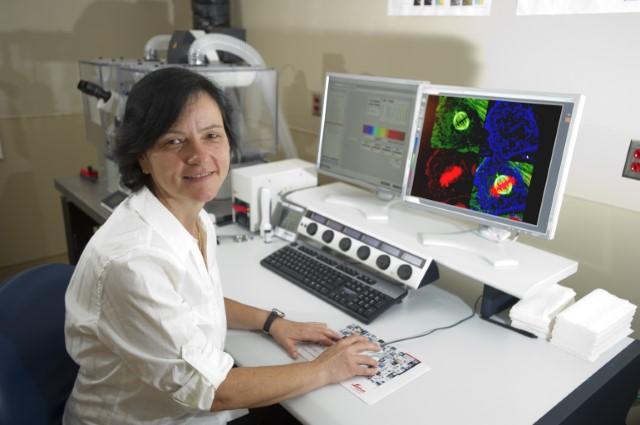
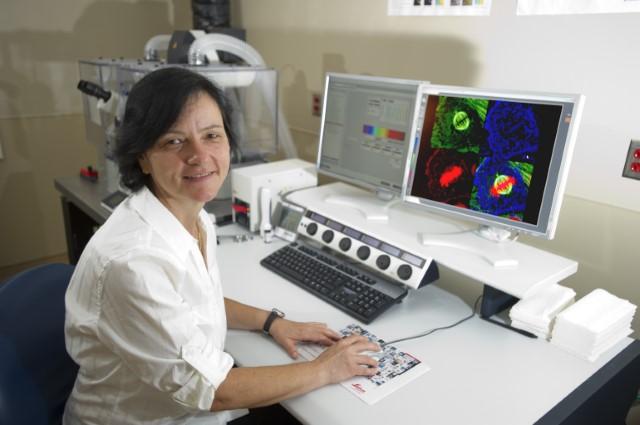
Nemours Biomedical Research and the University of Delaware (UD) Department of Materials Science and Engineering have developed a patent-pending process to make 3D models work in HTS labs, allowing drug discovery to move into more meaningful screening systems. Sigrid Langhans, PhD, of Nemours, along with Darrin Pochan, PhD, of the University of Delaware and colleagues, published an article about their findings this week in Analytical Biochemistry.
Dr. Langhans, Head of the HTS Lab at Nemours, says the new process can mimic the physical properties of tumors and signaling pathways, which vary greatly between 2D and 3D models. Many drugs never make it to market because labs are not using appropriate models. The process is a simple one with broad applicability and no need for additional specialized equipment. Her focus at Nemours is on pediatric brain tumors – specifically medulloblastoma – but she says many labs will be able to duplicate the process to look into other types of pediatric and adult cancers. "The technology is simple and can be tuned and adapted so that it's broadly applicable in other labs," she said.
Glioblastoma, the form of brain cancer that Sen. John McCain has, is aggressive and hard to treat in adults. It is also one of those tumors where 3D culture technologies hold great promise. There is potential, Langhans said, for the Nemours/UD process to further research and treatment if investigators are able to generate more models for glioblastoma and thus speed the discovery of more drug therapy options.
###
Nemours is an internationally recognized children's health system that owns and operates the Alfred I. duPont Hospital for Children in Wilmington, Delaware and the Nemours Children's Hospital in Orlando, Florida, along with pediatric primary and specialty care sites in Delaware, Florida, Pennsylvania, New Jersey and Maryland. Established as The Nemours Foundation through the legacy and philanthropy of Alfred I. duPont, Nemours offers pediatric inpatient and outpatient clinical care, research, education, advocacy and prevention programs to families in the communities it serves. For more information, visit http://www.Nemours.org
Media Contact
Karen Bengston
[email protected]
302-293-4928
http://www.nemours.org
Original Source
http://www.nemours.org/about/mediaroom/press/dv/new-technology-pushes-cancer-research-forward.html