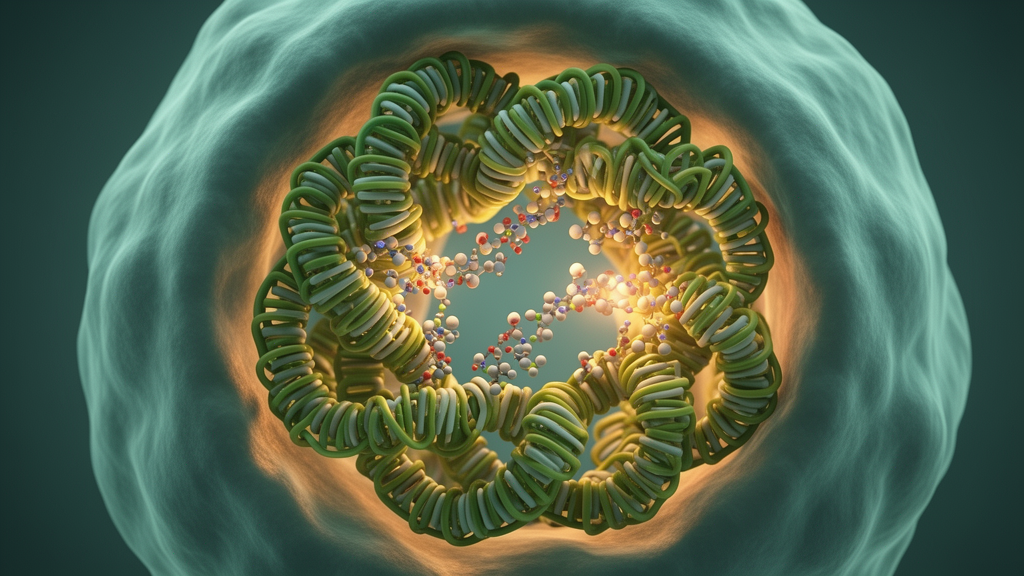
Plant DNA viruses are among the most destructive pathogens in agriculture, and the way they manipulate their hosts at the chromatin level is only now coming into focus. A new study published in PLOS Pathogens shows that Cauliflower mosaic virus, a pararetrovirus that devastates crops across the world, does not simply replicate inside plant cells. Instead, it actively recruits components of the host’s ubiquitin-processing machinery to strip away repressive chemical marks from its own genetic material, effectively persuading the plant to keep the viral genome switched on rather than silenced.
The research, led by Shun Li, Fangqin Yu, Yi Zhang, Siqi Liu, Hui-Wen Wu, Nam-Hai Chua and Shulin Deng, centers on the CaMV pathogenicity factor P6, a multifunctional viral protein long known to interfere with host defenses. Using affinity purification coupled to mass spectrometry, the team identified two prominent interaction partners of P6: the Arabidopsis deubiquitinases UBP12 and UBP13. These enzymes belong to a family of ubiquitin-specific proteases that remove ubiquitin tags from target proteins, and they have previously been characterized as negative regulators of plant immunity, meaning that the plant itself uses them to dampen its own defensive responses.
The discovery that P6 binds UBP12 and UBP13 is significant because it suggests a mechanism by which the virus co-opts a host pathway that normally keeps immune genes in check. When the researchers examined the subcellular localization of these interactions, they confirmed that UBP12 and UBP13 associate with P6 in the nucleus, the compartment where viral minichromosomes reside. This nuclear association is critical, because CaMV, like other plant DNA viruses, does not exist as free DNA in the host cell. Instead, its circular genome is assembled into minichromosomes wrapped around host histones, the same packaging proteins that organize plant chromatin.
Because viral genomes are packaged in this chromatin-like structure, they are subject to the same post-translational modifications that regulate host genes. Histone marks such as monoubiquitinated H2A and trimethylated histone H3 lysine 27, known as H2Aub and H3K27me3 respectively, are generally associated with transcriptional repression. When these marks accumulate on the viral 35S promoter, the major promoter driving CaMV gene expression, they can silence the viral genome and prevent replication. The new study demonstrates that UBP12 and UBP13 appear to counteract this silencing by removing ubiquitin marks from viral chromatin.
The evidence for this model comes from several complementary approaches. First, the researchers found that CaMV infection and overexpression of P6 both increased the abundance of UBP12 in infected plants, suggesting that the virus actively promotes the accumulation of these deubiquitinases. Second, when they examined mutant plants lacking functional UBP12 and UBP13, they observed enhanced resistance to CaMV, characterized by reduced accumulation of viral DNA and viral transcripts. This result directly implicates UBP12 and UBP13 as factors that promote, rather than inhibit, viral infection.
To understand how UBP12 and UBP13 influence viral chromatin at the molecular level, the team performed chromatin immunoprecipitation followed by quantitative PCR, or ChIP-qPCR, to measure specific histone modifications on viral minichromosomes. They found that in ubp12/13 mutant plants, the levels of monoubiquitinated H2A and the repressive H3K27me3 mark were significantly elevated on the CaMV 35S promoter compared with wild-type plants. By contrast, these changes were not observed on the 19S promoter, a different viral promoter, indicating that the effect is selective rather than global across the viral genome.
This selectivity is important because it suggests that UBP12 and UBP13 do not simply strip ubiquitin from all viral chromatin indiscriminately. Instead, they appear to target specific regions of the viral genome, particularly the 35S promoter, which drives expression of the 35S RNA that serves as both a mRNA for viral proteins and a template for reverse transcription. By removing H2Aub from this promoter, UBP12 and UBP13 may relieve epigenetic silencing and allow the viral genome to be transcribed efficiently, thereby promoting viral replication and spread throughout the plant.
The researchers also discovered that this strategy is not unique to CaMV. They found that AC2, a transcriptional activator from Cabbage leaf curl virus, a geminivirus that infects Arabidopsis and other plants, also targets UBP12 and UBP13. This finding indicates that the recruitment of host deubiquitinases is a conserved strategy among plant DNA viruses, rather than a peculiarity of CaMV. The convergence of two distantly related virus families on the same host factors underscores how central this pathway is to the arms race between plant DNA viruses and their hosts.
The working model proposed by the authors is that viral pathogenicity factors such as P6 and AC2 hijack UBP12 and UBP13, which in turn alter H2Aub homeostasis on viral minichromosomes. By removing ubiquitin marks from viral chromatin, these enzymes relieve epigenetic silencing and create a chromatin environment permissive for viral transcription and replication. This represents a previously unrecognized route by which plant DNA viruses influence host chromatin-associated pathways, extending the known repertoire of viral strategies beyond protein-level interference into the realm of epigenetic manipulation.
Beyond its fundamental significance for understanding virus-host interactions, the study identifies UBP12 and UBP13 as potential targets for engineering virus-resistant crops. Because ubp12/13 mutant plants exhibit enhanced resistance to CaMV, reducing the activity of these deubiquitinases, or disrupting their interaction with viral pathogenicity factors, could provide a route to developing crop varieties that are less susceptible to devastating DNA virus infections. As plant DNA viruses continue to cause substantial yield losses worldwide, strategies that exploit this newly discovered vulnerability in the viral life cycle may prove increasingly valuable for agricultural biotechnology.
Subject of Research: How plant DNA virus pathogenicity factors recruit Arabidopsis deubiquitinases UBP12/13 to alter histone ubiquitination on viral minichromosomes and promote infection.
Article Title: The pathogenicity factor of DNA virus interacts with Arabidopsis deubiquitinases UBP12/13 to promote viral infection
Article References: Li, S., Yu, F., Zhang, Y., Liu, S., Wu, H.-W., Chua, N.-H., & Deng, S. (2026). The pathogenicity factor of DNA virus interacts with Arabidopsis deubiquitinases UBP12/13 to promote viral infection. PLOS Pathogens, 22(10), e1014686. https://doi.org/10.1371/journal.ppat.1014686
Image Credits: AI Generated
DOI: 10.1371/journal.ppat.1014686
Keywords: Cauliflower mosaic virus, Cabbage leaf curl virus, UBP12, UBP13, deubiquitinases, H2Aub, H3K27me3, viral minichromosomes, epigenetic silencing, plant immunity, P6, AC2
News Source: Kristina Jarvis. (October 16, 2026). Plant DNA Viruses Hijack Host Deubiquitinases to Lift Epigenetic Silencing. Scienmag.