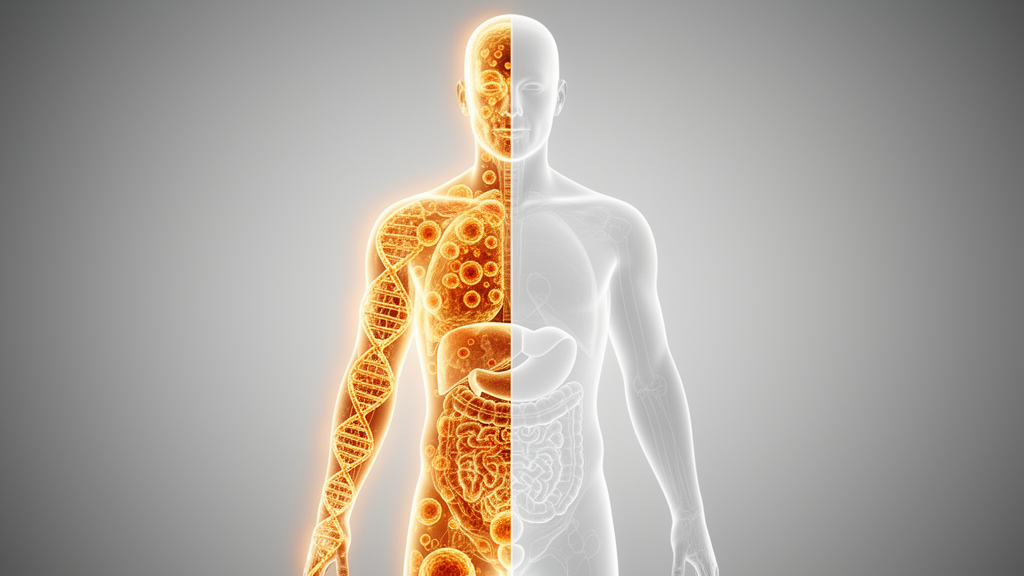
When a large language model rewrites a dense medical abstract into plain language, the result usually reads smoothly, confidently, and reassuringly. That fluency is precisely what makes these tools attractive to patients, clinicians, and health communicators alike. But according to a new study published in PLOS Digital Health, the polished surface of a patient-friendly summary can conceal a troubling problem: roughly half of the original medical knowledge simply vanishes in the rewrite, and no amount of conventional prompt engineering appears to bring it back.
The research, conducted by Mei Chen and Shibin Wang, tackles a blind spot in how we evaluate medical AI. Most assessments of large language models in health communication focus on hallucinations—the invention of facts that were never in the source text. That focus is understandable, since fabricated claims are dramatic and easy to spot once you know to look. Chen and Wang argue, however, that the opposite error deserves equal attention: the quiet, systematic omission of knowledge during text simplification. A summary that leaves out a drug’s key risk factor or a disease’s underlying mechanism does not announce its own incompleteness. It simply reads as complete.
To measure this hidden loss, the researchers developed a method they call knowledge triplet comparison, or KTC. The approach borrows a structure from knowledge graphs, the databases that represent factual information as connected triples of entities and relations. In the medical domain, a triplet might link a disease to its cause, a chemical to a disease it triggers, or a condition to one of its complications. By extracting such triplets from a source text and from the model’s adapted version, and then comparing the two sets, KTC turns the fuzzy question of whether meaning survived the rewrite into a countable, quantifiable measurement. Knowledge that appears in the original but not the adaptation counts as omitted; knowledge that appears only in the adaptation counts as added; and triplets that are altered between the two versions register as distortions of their own.
The team put this method to work on the Chemical-Disease Relations dataset, a benchmark corpus in which sentences from biomedical literature are annotated with relationships between chemicals and diseases. Six large language models were asked to adapt the material across eight different scenarios, each simulating a real-world use case: simplifying text for readers at a middle school reading level, shortening it, lengthening it, and other transformations of style, length, and audience. For each combination of model and scenario, the researchers measured how much of the original knowledge survived and how the surviving knowledge was distributed across categories of medical content.
The headline finding is stark. Across every adaptation scenario and every model tested, the systems retained only about half of the medical knowledge present in the source text. In other words, a patient who relies on an AI-generated plain-language version of a medical abstract is, on average, receiving roughly fifty percent of the factual content of the original. At the same time, the models inserted new material that was not in the source, adding roughly ten percent more knowledge than the original contained. This added fraction is the familiar territory of hallucination risk, and it is the smaller of the two problems the study documents.
The losses were not random, either. When the researchers categorized the omitted and distorted knowledge, a clear pattern emerged. Knowledge about etiology and pathological mechanisms—the explanations of why and how a disease develops—was among the most frequently lost categories, as was knowledge about complications and risk factors. These are not trivial details. Mechanistic understanding helps patients grasp why a treatment works or why a behavior matters, and risk-factor information often underpins prevention and early detection. A simplified text that systematically sheds exactly this kind of content may remain grammatically fluent and factually accurate in every sentence it keeps, while still leaving the reader dangerously under-informed.
Perhaps the most sobering result concerns the attempted fixes. The researchers tested whether targeted prompt engineering—explicitly instructing the models to preserve key knowledge, to avoid omissions, or to stay faithful to the source—could reduce the problem. It could not. Neither the quantity of knowledge lost nor its categorical distribution changed significantly in response to the corrective prompts. The distortion, in other words, is not a quirk of careless prompting but a persistent and regular property of how these models perform simplification. The authors suggest this regularity is itself valuable: if omissions follow predictable patterns, future research can characterize those patterns precisely and build detection and correction systems around them, rather than treating each summary as an unpredictable black box.
The implications reach well beyond the laboratory. Patient-friendly adaptation of medical literature is one of the most socially valuable applications proposed for language models, promising to close the gap between specialist publications and the general public. Hospitals, health websites, and patient advocacy organizations are already experimenting with AI tools that translate clinical jargon into accessible language. The study’s findings do not mean such tools are useless, but they do mean that fluency and readability are poor proxies for fidelity. A summary can score well on every readability metric while discarding half of what the source actually said, and current evaluation pipelines—built largely around hallucination detection and style assessment—would never flag it.
Chen and Wang frame their contribution as groundwork. By quantifying knowledge distortion systematically and showing that it follows stable, category-level patterns, the study lays the foundation for research into why models lose particular kinds of knowledge during simplification and how that loss might be prevented. The KTC method itself offers a template: rather than asking whether a summary sounds right, developers and regulators can ask, triplet by triplet, what survived the transformation. Until such safeguards mature, the study’s message to anyone using AI to make medicine readable is a cautionary one—the greatest danger of a simplified medical text may not be what it gets wrong, but everything it silently leaves out.
Subject of Research: Knowledge distortion in large language models during patient-friendly adaptation of medical literature
Article Title: Prevalent knowledge omissions: An unseen risk of LLMs in patient-friendly adaptation of medical literature
Article References: Chen, M., & Wang, S. (2026). Prevalent knowledge omissions: An unseen risk of LLMs in patient-friendly adaptation of medical literature. PLOS Digital Health, 5(10), e0001739. https://doi.org/10.1371/journal.pdig.0001739
Image Credits: AI Generated
DOI: 10.1371/journal.pdig.0001739
Keywords: large language models, medical literature, knowledge distortion, patient communication, hallucination, health informatics, text simplification, knowledge triplets, prompt engineering, PLOS Digital Health, AI safety, biomedical NLP
News Source: Denise Maddox. (October 16, 2026). AI Health Summaries Quietly Drop Half the Medical Knowledge They Rewrite. Scienmag.