

• HOME
  • NEWS
  • EXPLORE
    • CAREER
      • Companies
      • Jobs
    • EVENTS
    • iGEM
      • News
      • Team
    • PHOTOS
    • VIDEO
    • WIKI
  • BLOG
  • COMMUNITY
    • FACEBOOK
    • INSTAGRAM
    • TWITTER
Saturday, February 7, 2026
BIOENGINEER.ORG
No Result
View All Result
  • Login
  • HOME
  • NEWS
  • EXPLORE
    • CAREER
      • Companies
      • Jobs
        • Lecturer
        • PhD Studentship
        • Postdoc
        • Research Assistant
    • EVENTS
    • iGEM
      • News
      • Team
    • PHOTOS
    • VIDEO
    • WIKI
  • BLOG
  • COMMUNITY
    • FACEBOOK
    • INSTAGRAM
    • TWITTER
  • HOME
  • NEWS
  • EXPLORE
    • CAREER
      • Companies
      • Jobs
        • Lecturer
        • PhD Studentship
        • Postdoc
        • Research Assistant
    • EVENTS
    • iGEM
      • News
      • Team
    • PHOTOS
    • VIDEO
    • WIKI
  • BLOG
  • COMMUNITY
    • FACEBOOK
    • INSTAGRAM
    • TWITTER
No Result
View All Result
Bioengineer.org
No Result
View All Result
Home NEWS Science News Biology

Protein critical to early stages of cellular HIV infection identified

Bioengineer by Bioengineer
August 8, 2017
in Biology
Reading Time: 2 mins read
0
Share on FacebookShare on TwitterShare on LinkedinShare on RedditShare on Telegram
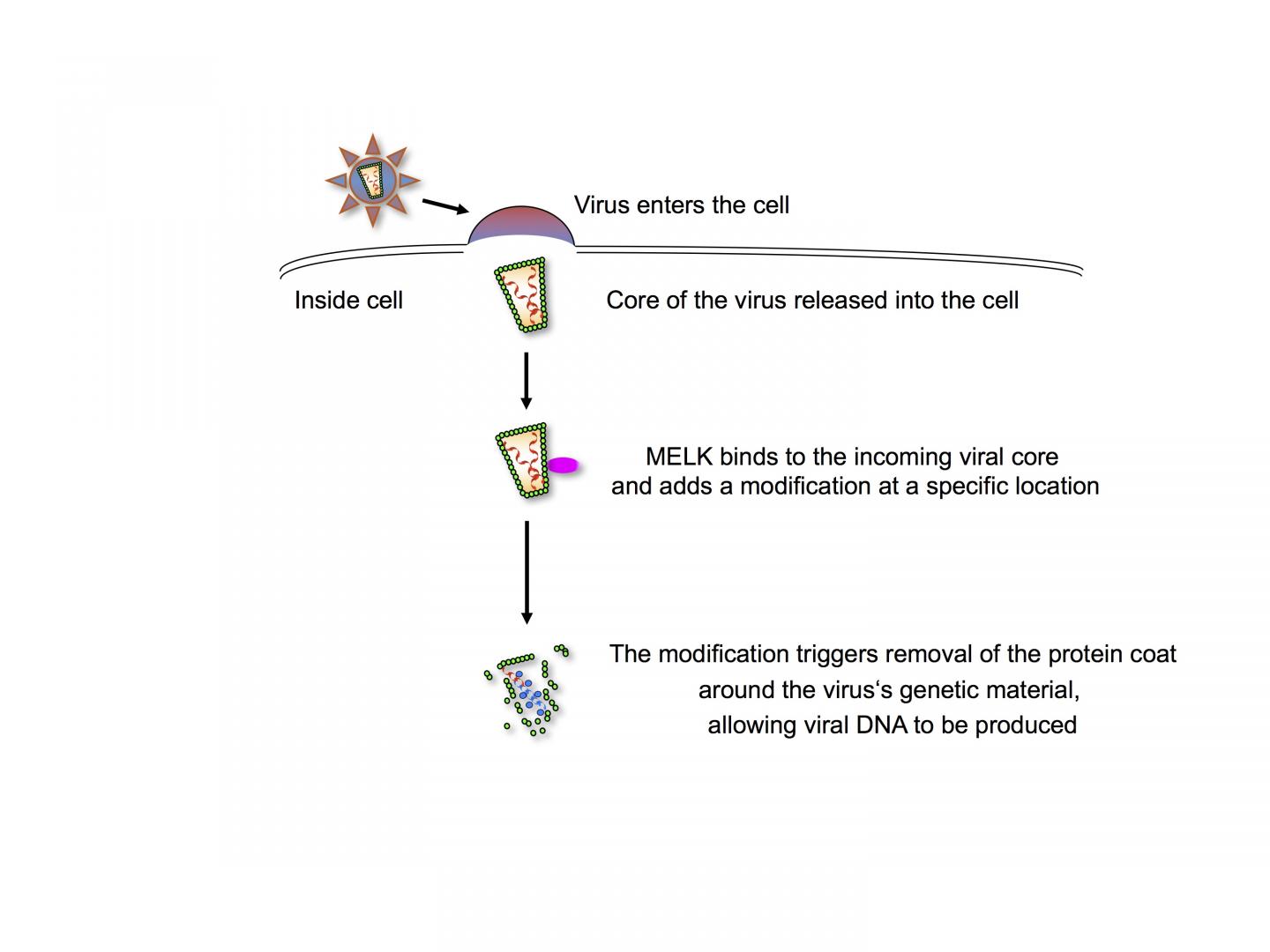
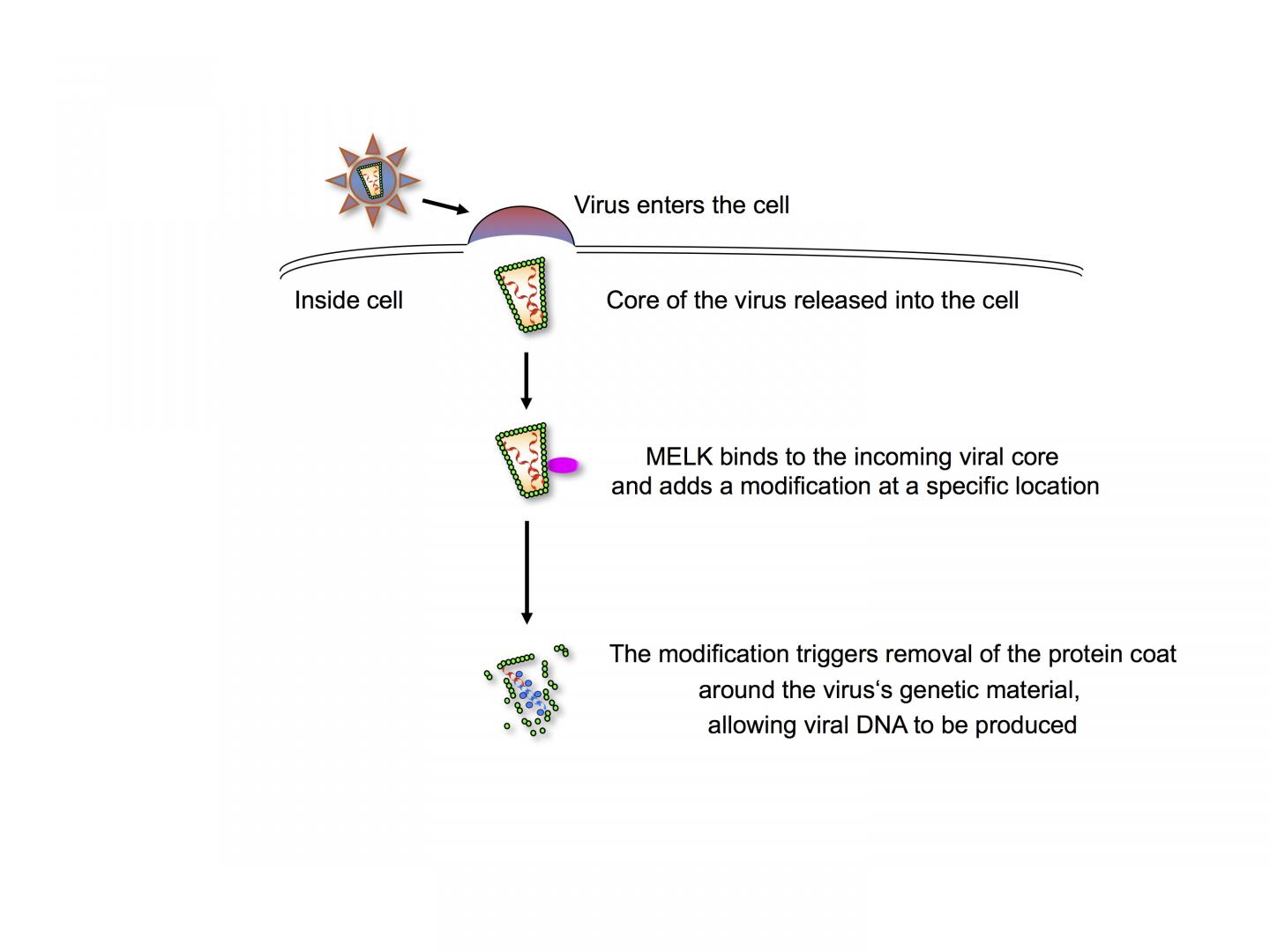
IMAGE

Credit: Department of Molecular Virology,TMDU

Tokyo Medical and Dental University (TMDU)-led researchers identify a protein critical to the early stages of infection of cells by HIV, offering a potential target for anti-HIV treatment

Tokyo, Japan – When a virus enters a cell, one of the first steps in the process of infecting that cell is removal of the protein coat that surrounds the virus's genetic material. The virus can then produce DNA from its own genes and insert it into the cell's genome. This allows the virus to hijack the host cell's machinery, forcing the cell to make copies of the virus.

HIV-1 is the most common form of HIV, the virus that causes AIDS. Now, a team led by researchers at Tokyo Medical and Dental University (TMDU) have identified a protein produced by the host cell that is necessary for correct removal of the protein coat of HIV-1. The study was published in PLOS Pathogens.

In their search for factors involved in HIV-1 infection, the team interfered with the activity of over 15,000 host cell genes to identify those whose suppression allowed the cells to survive exposure to the virus. This led them to focus on a protein called maternal embryonic leucine-zipper kinase (MELK).

"Depleting cells of MELK reduced HIV-1 infectivity," lead and corresponding author Hiroaki Takeuchi says. "The virus entered the MELK-depleted cell normally, but its protein coat was not removed correctly so it was unable to efficiently produce DNA from its own genetic material. When we restored MELK, the infection process was also restored."

The researchers went on to investigate how MELK interferes with the protein coat removal step of infection. They discovered that MELK alters the coat by attaching a biologically active modification at a specific location. This in turn ensures correct removal of the coat. When the team engineered a mutated version of HIV-1 that was already modified at this location, they found that MELK was no longer needed for coat removal.

"Our results reveal a previously unrecognized mechanism involved in removal of the protein coat of HIV-1 and contribute to our understanding of the early stages of the viral life-cycle," corresponding authors Hiroaki Takeuchi and Shoji Yamaoka say. "Furthermore, our findings suggest that MELK is a potential target for anti-HIV-1 therapy."

###

The article, "Phosphorylation of the HIV-1 capsid by MELK triggers uncoating to promote viral cDNA synthesis", was published in PLOS Pathogens at DOI: 10.1371/journal.ppat.1006441.

Media Contact

Hiroaki TAKEUCHI
[email protected]

http://www.tmd.ac.jp/english/

Original Source

http://www.tmd.ac.jp/english/press-release/20170808/index.html http://dx.doi.org/10.1371/journal.ppat.1006441

Share12Tweet7Share2ShareShareShare1

Related Posts

Florida Cane Toad: Complex Spread and Selective Evolution

Florida Cane Toad: Complex Spread and Selective Evolution

February 7, 2026
New Study Uncovers Mechanism Behind Burn Pit Particulate Matter–Induced Lung Inflammation

New Study Uncovers Mechanism Behind Burn Pit Particulate Matter–Induced Lung Inflammation

February 6, 2026

DeepBlastoid: Advancing Automated and Efficient Evaluation of Human Blastoids with Deep Learning

February 6, 2026

Navigating the Gut: The Role of Formic Acid in the Microbiome

February 6, 2026
Please login to join discussion

POPULAR NEWS

  • Robotic Ureteral Reconstruction: A Novel Approach

    Robotic Ureteral Reconstruction: A Novel Approach

    82 shares
    Share 33 Tweet 21
  • Digital Privacy: Health Data Control in Incarceration

    63 shares
    Share 25 Tweet 16
  • Study Reveals Lipid Accumulation in ME/CFS Cells

    57 shares
    Share 23 Tweet 14
  • Breakthrough in RNA Research Accelerates Medical Innovations Timeline

    53 shares
    Share 21 Tweet 13

About

We bring you the latest biotechnology news from best research centers and universities around the world. Check our website.

Follow us

Recent News

Barriers and Boosters of Seniors’ Physical Activity in Karachi

Evaluating Pediatric Emergency Care Quality in Ethiopia

TPMT Expression Predictions Linked to Azathioprine Side Effects

Subscribe to Blog via Email

Enter your email address to subscribe to this blog and receive notifications of new posts by email.

Join 73 other subscribers
  • Contact Us

Bioengineer.org © Copyright 2023 All Rights Reserved.

Welcome Back!

Login to your account below

Forgotten Password?

Retrieve your password

Please enter your username or email address to reset your password.

Log In
No Result
View All Result
  • Homepages
    • Home Page 1
    • Home Page 2
  • News
  • National
  • Business
  • Health
  • Lifestyle
  • Science

Bioengineer.org © Copyright 2023 All Rights Reserved.