Credit: University of Houston
An innovative approach integrating classroom instruction and research at the University of Houston will be spread to five colleges and universities around the country with a $2.1 million grant from the National Science Foundation.
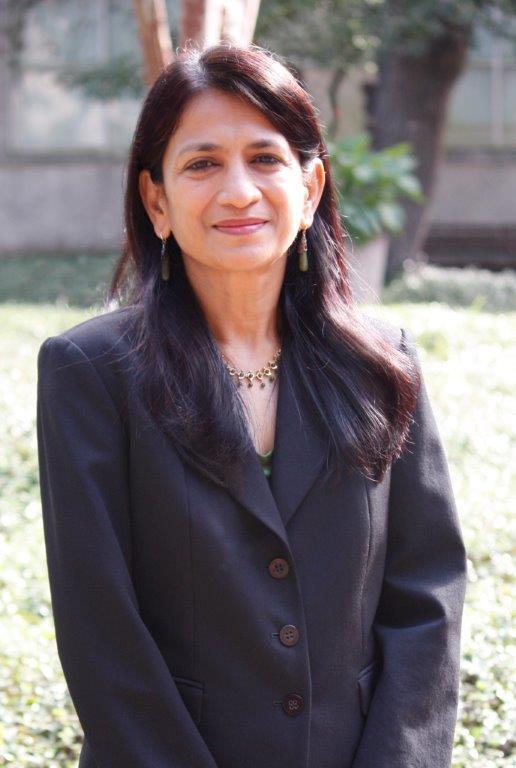
Rupa Iyer, principal investigator on the grant and founding director of the biotechnology program in the UH College of Technology, will implement the key components of the UH biotech program, including an environmental sampling research module, at five institutions: Rochester Institute of Technology, Southern Utah University, Louisiana Tech University, Prairie View A&M University and Alvin Community College.
She said the goal is to demonstrate that it works across the spectrum of higher education – two-year and four-year programs, private and public. The grant is the largest research grant ever awarded to a College of Technology faculty member.
Iyer, who also is associate dean of research and graduate studies at the College of Technology, started the biotech program at UH after realizing universities weren't adequately preparing biology students for a field that had become far more interdisciplinary. "We were not training our students to be the future scientists and innovators," she said.
The program incorporates an intense focus on undergraduate research and an understanding of industry needs with traditional academic instruction. It officially began with fewer than 10 students in 2009; it will have more than 600 students this fall.
The UH biotechnology program was the first in the country to be accredited, earning accreditation from the Association of Technology, Management and Applied Engineering in 2015. The research component, which includes a unit on environmental sampling, testing and the creation of a crowdsourced soil microbiome database, has been recognized for its commercial potential.
Iyer said she approached creating the program "like a startup," raising funding from the National Science Foundation and the Texas Workforce Commission and collaborating with industry to develop the degree. Ultimately, it may lead to an actual startup, as she and other project advisors consider commercializing the database and collected bacteria samples.
Students collect soil samples and process them for bacterial strains, logging the results on a map. So far, Iyer said, more than 60 bacterial strains have been identified from locations around Houston, including 12 never before identified; those are now part of a database compiled by the National Center for Biotechnology Information.
The map and soil sample collection will be expanded as the new programs come online in New York, Utah, Louisiana and elsewhere in Texas. Students will contribute and mine the data they collect to enhance their STEM skills; the expanded database will provide a platform for national and global research collaborations between students, faculty, governmental agencies and biotech companies.
That information, and the bacteria samples, could be used in a variety of ways, Iyer said.
While the research component is important in enhancing academic skills, "the research is valuable in itself," she said. "The students have found bacteria that degrade toxins, hydrocarbons and antibiotics, and that could be potential solutions to cleaning up toxic waste, for enhanced oil recovery and remediation. This has applications in health, energy and the environment."
###
Media Contact
Jeannie Kever
[email protected]
713-743-0778
@UH_News
http://www.uh.edu/news-events
Original Source
http://www.uh.edu/news-events/stories/2017/JULY%2017/08082017Iyer-NSF-Grant-Biotech.php