• HOME
  • NEWS
  • EXPLORE
    • CAREER
      • Companies
      • Jobs
    • EVENTS
    • iGEM
      • News
      • Team
    • PHOTOS
    • VIDEO
    • WIKI
  • BLOG
  • COMMUNITY
    • FACEBOOK
    • INSTAGRAM
    • TWITTER
Wednesday, April 1, 2026
BIOENGINEER.ORG
No Result
View All Result
  • Login
  • HOME
  • NEWS
  • EXPLORE
    • CAREER
      • Companies
      • Jobs
        • Lecturer
        • PhD Studentship
        • Postdoc
        • Research Assistant
    • EVENTS
    • iGEM
      • News
      • Team
    • PHOTOS
    • VIDEO
    • WIKI
  • BLOG
  • COMMUNITY
    • FACEBOOK
    • INSTAGRAM
    • TWITTER
  • HOME
  • NEWS
  • EXPLORE
    • CAREER
      • Companies
      • Jobs
        • Lecturer
        • PhD Studentship
        • Postdoc
        • Research Assistant
    • EVENTS
    • iGEM
      • News
      • Team
    • PHOTOS
    • VIDEO
    • WIKI
  • BLOG
  • COMMUNITY
    • FACEBOOK
    • INSTAGRAM
    • TWITTER
No Result
View All Result
Bioengineer.org
No Result
View All Result
Home NEWS Science News

Drug hope for acute myeloid leukemia

Bioengineer by Bioengineer
August 8, 2017
in Science News
Reading Time: 2 mins read
0
Share on FacebookShare on TwitterShare on LinkedinShare on RedditShare on Telegram
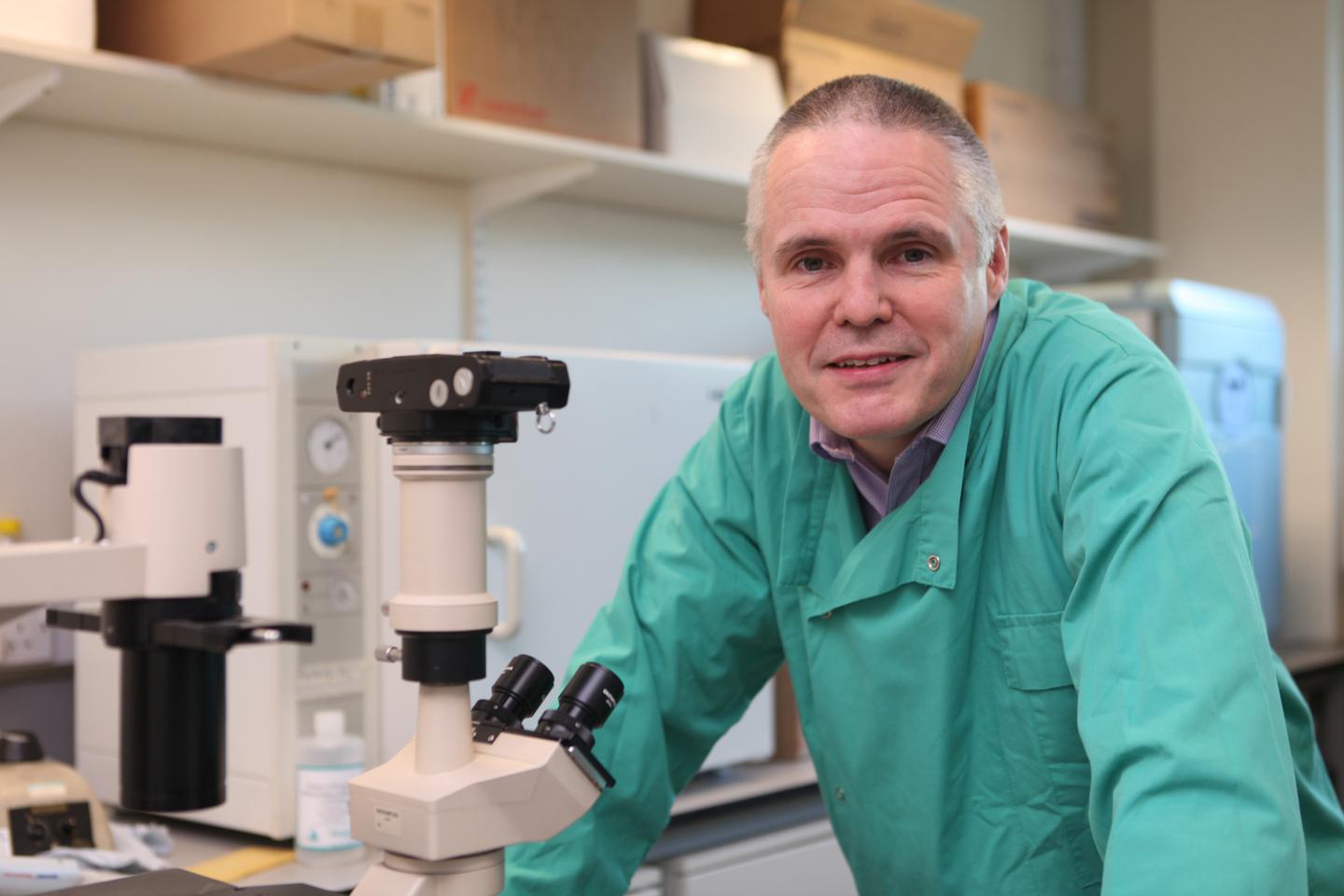
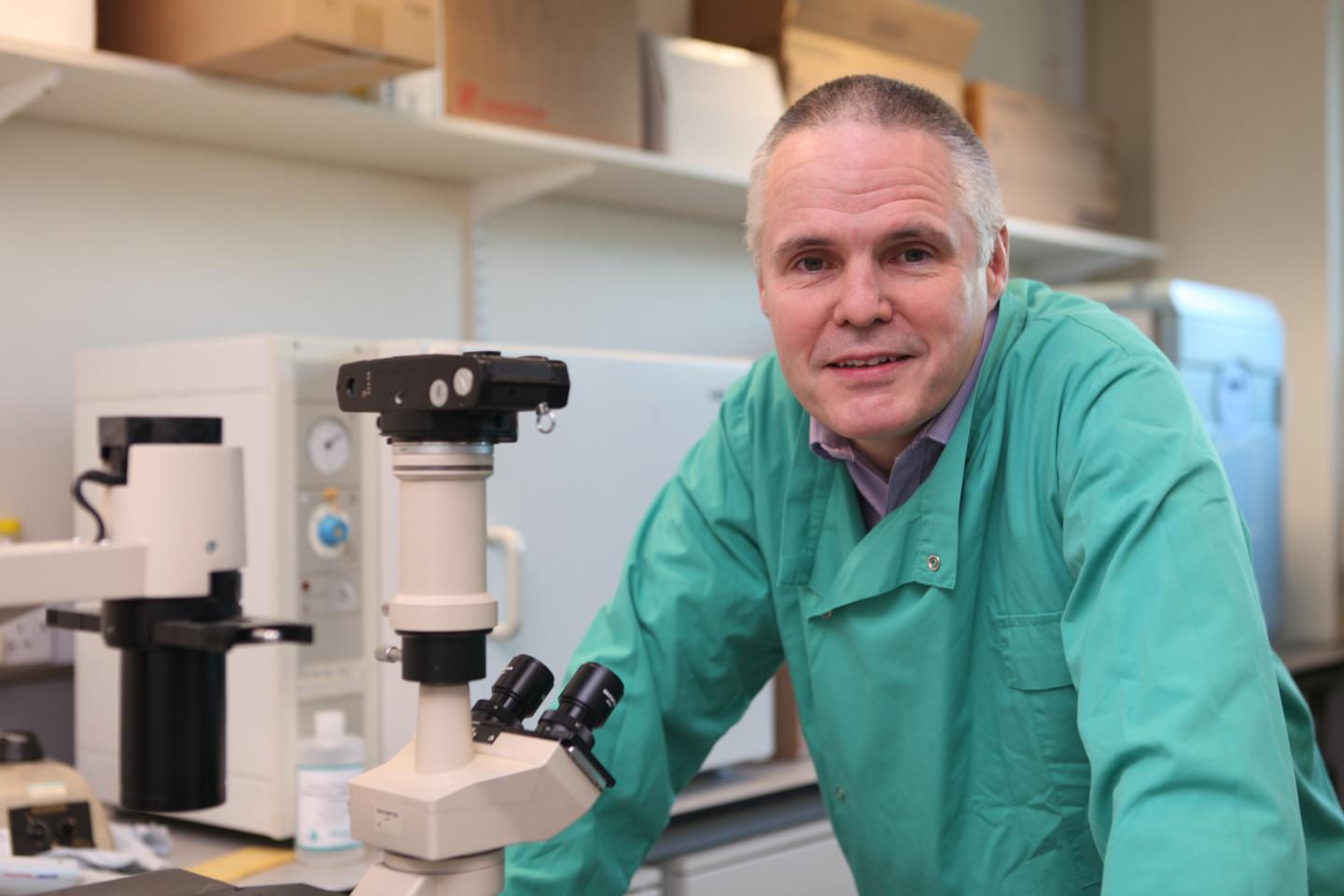
IMAGE

Credit: University of Bradford

A new drug that strips cancer cells of their "immortality" could help to treat patients suffering from one of the most aggressive forms of leukaemia.

The drug candidate, called HXR9, works by preventing the cancer cells from sidestepping the natural process that causes unhealthy and damaged cells to die, known as apoptosis.

Researchers at the University of Bradford have found the drug could be used to treat acute myeloid leukaemia (AML), which is responsible for 2,500 deaths in the UK and 265,000 worldwide each year.

The drug targets a particular family of genes, called HOX genes, which are involved in controlling the rapid growth of cells. In adults these are switched off but in cancer cells they can be turned back on. This helps to give the cancer cells the ability to continuously grow and divide by circumventing the normal mechanisms that trigger apoptosis – effectively making them immortal.

Professor Richard Morgan, Director of the Institute for Cancer Therapeutics at the University of Bradford who led the research, said HXR9 strips the cancer cells of this ability by turning off the HOX genes.

He said: "Acute myeloid leukaemia is a pretty intractable disease and doesn't respond to many treatments. This is a novel therapeutic target that hasn't been shown before to be effective against this form of leukaemia."

Previously, Professor Morgan and his colleagues have shown that HRX9 could potentially be used to treat solid cancer tumours like in prostate cancer. They are currently preparing for a clinical trial due to being next year, where a form of HRX9 will be given to cancer patients who have failed to respond to other types of treatment.

In the latest study, which is published in the journal Oncotarget, the researchers wanted to see if the same drug could be used to treat difficult to treat blood cancers.

They analysed gene expression data from 269 AML patients and found an association between the activity of a group of HOX genes and the patient survival rate.

Professor Morgan and his team then tested HXR9 on cancerous cells taken from patients suffering from AML and found it caused the cancer cells to undergo a process known as necroptosis.

Necroptosis causes the cells to explode and spew their contents into the bloodstream rather than simply digesting themselves as normally occurs in apoptosis. This increases the likelihood that there will be a subsequent immune reaction against the cancer cells, according to Professor Morgan.

The researchers found that when they combined HXR9 with another drug, a protein kinase C inhibitor called Ro31, it enhanced the reduction in cancer growth even further.

"It could well be used in combination treatments but the initial trials will be as a single therapy," said Professor Morgan.

###

Media Contact

Jenny Watkinson
[email protected]
44-012-742-36030
@BradfordUni

http://www.bradford.ac.uk

Share12Tweet8Share2ShareShareShare2

Related Posts

Unraveling Sleep Genetics via Wearable Device Data

April 1, 2026
Dopamine Drives Dynamic Social Specialization

Dopamine Drives Dynamic Social Specialization

April 1, 2026

FOLR3 and Neutrophils Worsen Sepsis Inflammation

April 1, 2026

Manchester Professor Named Expert Reviewer for Government Nuclear Decommissioning Review

April 1, 2026
Please login to join discussion

POPULAR NEWS

  • blank

    Revolutionary AI Model Enhances Precision in Detecting Food Contamination

    96 shares
    Share 38 Tweet 24
  • Imagine a Social Media Feed That Challenges Your Views Instead of Reinforcing Them

    1006 shares
    Share 398 Tweet 249
  • Promising Outcomes from First Clinical Trials of Gene Regulation in Epilepsy

    51 shares
    Share 20 Tweet 13
  • Popular Anti-Aging Compound Linked to Damage in Corpus Callosum, Study Finds

    43 shares
    Share 17 Tweet 11

About

BIOENGINEER.ORG

We bring you the latest biotechnology news from best research centers and universities around the world. Check our website.

Follow us

Recent News

Unraveling Sleep Genetics via Wearable Device Data

Dopamine Drives Dynamic Social Specialization

FOLR3 and Neutrophils Worsen Sepsis Inflammation

Subscribe to Blog via Email

Enter your email address to subscribe to this blog and receive notifications of new posts by email.

Join 78 other subscribers
  • Contact Us

Bioengineer.org © Copyright 2023 All Rights Reserved.

Welcome Back!

Login to your account below

Forgotten Password?

Retrieve your password

Please enter your username or email address to reset your password.

Log In
No Result
View All Result
  • Homepages
    • Home Page 1
    • Home Page 2
  • News
  • National
  • Business
  • Health
  • Lifestyle
  • Science

Bioengineer.org © Copyright 2023 All Rights Reserved.