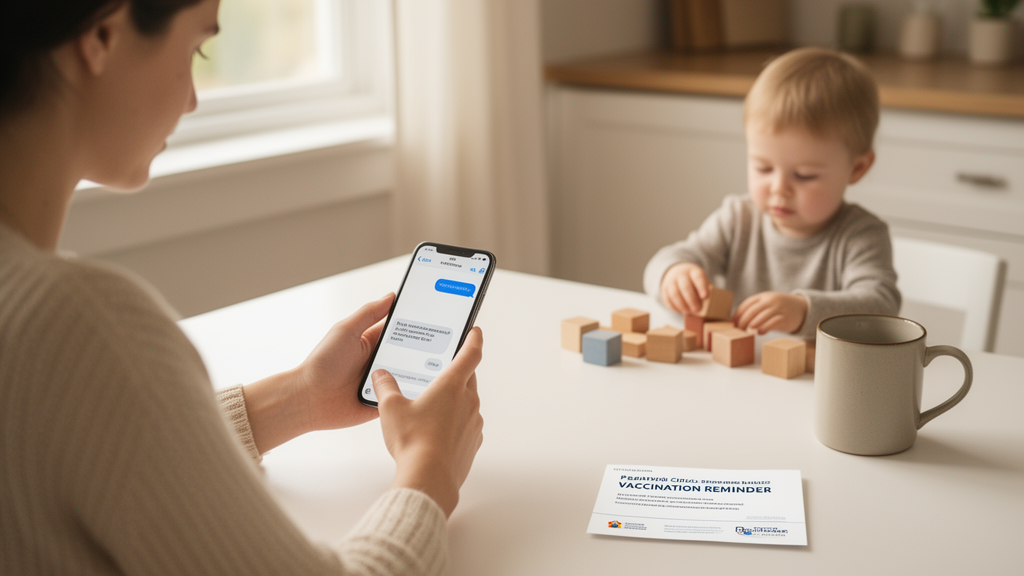
When parents turn to generative artificial intelligence for health advice, their children may be more likely to receive certain vaccines, according to a large exploratory study from Japan. The research, published in the World Journal of Pediatrics, analyzed survey data from more than 8,000 children and 5,000 parents across the country and found that regular use of AI chatbots for health guidance was associated with higher uptake of mumps, influenza, and COVID-19 vaccines. Notably, however, the association did not extend to age-appropriate measles-rubella vaccination, one of the most established and widely promoted immunizations in Japan’s routine schedule.
The study drew on nationwide survey data collected in 2025, covering children aged 1 to 17 years and their parents, with an additional linked sub-analysis spanning 2023 to 2025. The researchers defined regular parental AI use as consulting generative AI tools for health advice at least a few times per month. Among the 8,282 children and 5,170 parents analyzed, 1,278 children, or 15.4 percent, had parents who were regular AI health-advice users. This figure offers one of the first quantitative snapshots of how deeply chatbot-based health information seeking has penetrated everyday parenting in a developed health system.
To estimate the relationship between AI use and vaccination, the team employed modified Poisson regression, a statistical approach well suited to common binary outcomes such as whether a child received a particular vaccine. The models produced adjusted prevalence ratios, or aPRs, with 95 percent confidence intervals, while accounting for parent-level clustering and a battery of covariates. This clustering adjustment matters because some parents contributed more than one child to the dataset, and ignoring that structure would have artificially narrowed the confidence intervals and inflated the apparent precision of the estimates.
The headline result is a striking asymmetry across vaccines. For age-appropriate measles-rubella vaccination, the adjusted prevalence ratio was 1.02 with a confidence interval of 0.97 to 1.09, meaning the association was statistically indistinguishable from no difference at all. Yet for the three other vaccines examined, the associations were positive and statistically significant. Children of regular AI users had an adjusted vaccination rate of 76.6 percent for mumps compared with 72.7 percent among children of non-users, an aPR of 1.05. For influenza, the gap widened to 56.7 percent versus 49.0 percent, an aPR of 1.16. The largest difference appeared for COVID-19 vaccination, where 40.6 percent of children of AI-using parents were vaccinated compared with 30.9 percent of the rest, yielding an aPR of 1.31 with a confidence interval of 1.19 to 1.45.
Perhaps the most eye-catching finding emerged when the researchers stratified the COVID-19 result by parental age. Among parents younger than 30 years, the association was dramatically amplified, with an adjusted prevalence ratio of 2.58 and a confidence interval of 1.90 to 3.50, and a P value for interaction below 0.001. In practical terms, the youngest parents who regularly consulted AI for health advice had their children vaccinated against COVID-19 at more than two and a half times the rate of their peers who did not use AI, after adjustment. This age gradient suggests that the phenomenon is concentrated among the demographic most comfortable with conversational AI tools, and it hints that generative chatbots may function as a novel information gateway for a generation of parents who came of age alongside smartphones.
The authors did not stop at the cross-sectional snapshot. In a linked sub-analysis covering 2023 to 2025, they tested whether the associations persisted after adjusting for an available 2023 household-level prior vaccination marker and for vaccination attitudes. The associations survived this additional adjustment, which strengthens the case that the relationship is not simply an artifact of pre-existing vaccine-friendly households. Even so, the design remains observational and cross-sectional, and the authors are explicit that these are exploratory associations rather than evidence of causation.
Indeed, the study’s own interpretation is notably cautious. The researchers write that the findings may reflect digital health engagement, health information seeking, socioeconomic differences, or favorable attitudes, rather than vaccine-specific AI advice. In other words, parents who consult chatbots about their children’s health are likely a self-selected group: more digitally literate, more proactive about health information in general, and possibly more trusting of medical recommendations to begin with. The absence of an association with measles-rubella vaccination is consistent with this reading, because MR vaccination in Japan is a long-established routine immunization with near-universal promotion, leaving little room for any information source, AI or otherwise, to move the needle.
The contrast between the MR null result and the positive associations for the other three vaccines is itself informative. Mumps, influenza, and COVID-19 vaccines in Japan occupy a different position in the immunization landscape: they are either voluntary, more recently introduced for children, or subject to more fluctuating public debate. For these vaccines, parental decision-making is more contingent, and information-seeking behavior plausibly plays a larger role. A parent uncertain about whether to get their child a seasonal flu shot or a COVID-19 booster may find that a chatbot conversation supplies the nudge, the reassurance, or the practical details that tip the balance toward vaccination.
The study sits within a rapidly growing literature on AI and vaccine behavior. Prior evaluations have found that large language models generally align with World Health Organization positions on vaccine hesitancy and can counter common vaccination myths, while randomized trials of purpose-built vaccine chatbots have shown meaningful increases in HPV and influenza vaccination uptake. The Japanese findings add an observational, population-level dimension to this evidence base, suggesting that spontaneous, unguided AI use by parents correlates with higher uptake of vaccines where hesitancy or inertia is most common. At the same time, other research has flagged reliability and readability concerns in AI-generated pediatric health advice, underscoring that the quality of chatbot answers varies and that expert oversight remains essential.
For public health practitioners, the implications are twofold. First, generative AI has become a mainstream channel through which a meaningful minority of parents, roughly one in six in this sample, seek child health guidance, and that channel appears to lean toward vaccine-promoting rather than vaccine-skeptical behavior, at least in this Japanese cohort. Second, because the associations are strongest for vaccines where decision-making is most contested and among the youngest parents, health communicators may need to treat AI tools not merely as a risk to be mitigated but as an environment to be engaged. Whether the relationship is causal, and whether AI advice actively drives vaccination or simply marks out an already engaged population, will require longitudinal and interventional designs. Until then, this study stands as an early signal that the chatbot era is quietly reshaping how families navigate childhood immunization.
Subject of Research: Parental generative AI health-advice use and childhood vaccination uptake in Japan
Article Title: Associations between parental generative artificial intelligence health-advice use and child vaccination uptake in Japan: an exploratory cross-sectional study
Article References: Imanishi, Y., Iorini, M., Jwa, S., Sakamoto, M., Wada, I., Tabuchi, T., & Uchida, M. (2026). Associations between parental generative artificial intelligence health-advice use and child vaccination uptake in Japan: an exploratory cross-sectional study. World Journal of Pediatrics. https://doi.org/10.1007/s12519-026-01107-5
Image Credits: AI Generated
DOI: 10.1007/s12519-026-01107-5
Keywords: generative artificial intelligence, child vaccination, vaccine hesitancy, parental health information seeking, COVID-19 vaccine, influenza vaccine, mumps vaccine, measles-rubella vaccine, Japan, cross-sectional study, pediatrics, digital health
News Source: Ophelia Keating. (October 16, 2026). Parents Who Ask AI Chatbots for Health Advice May Be More Likely to Vaccinate Their Children. Scienmag.