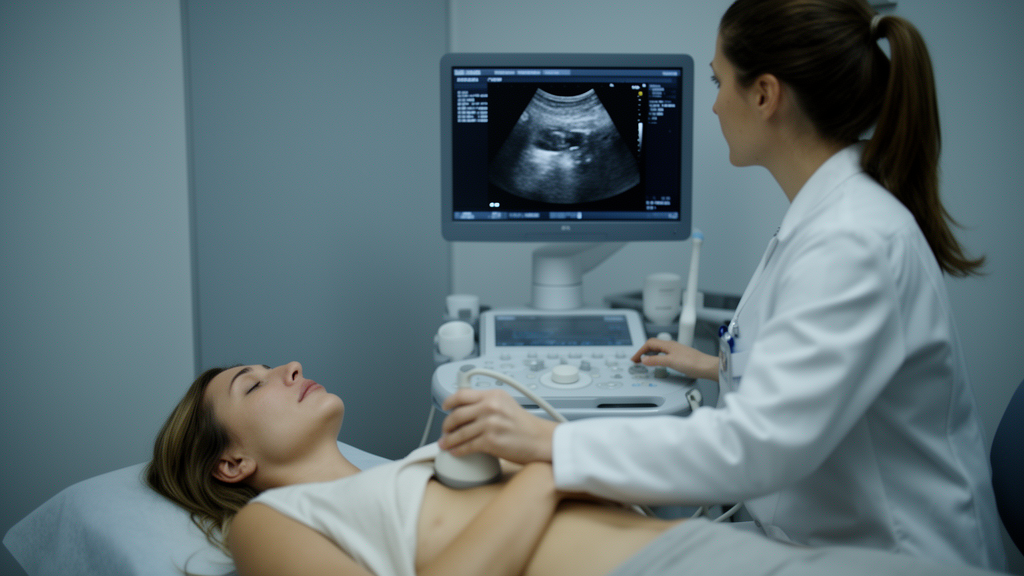
A breast lump that looks suspicious on ultrasound does not always mean cancer, and one of the most challenging diagnostic traps in breast imaging is granulomatous lobular mastitis, a rare chronic inflammatory condition whose ultrasound appearance can closely mimic invasive ductal carcinoma. Because the two entities overlap so heavily in conventional imaging features, many patients with this benign inflammatory disease end up undergoing biopsies that may ultimately prove unnecessary. A new study published in BMC Medical Imaging by Chun Yao and colleagues in Hangzhou, China, set out to tackle this problem with a quantitative decision-support tool built entirely from multimodal ultrasound data, and the results reveal both the power and the limits of this approach.
The research team enrolled 460 patients with pathologically confirmed granulomatous lobular mastitis or invasive ductal carcinoma, splitting them randomly into a training cohort of 322 patients and an internal-validation cohort of 138 patients at a 7:3 ratio. From grayscale ultrasound images of each lesion, the investigators extracted hundreds of quantitative radiomic features, mathematical descriptors of texture, intensity distribution, and spatial patterns that are invisible to the naked eye. Using least absolute shrinkage and selection operator regression, commonly known as LASSO, they compressed this high-dimensional feature space into a single radiomics score, or Radscore, designed to capture the subtle image signatures that distinguish inflamed glandular tissue from malignant tumor.
But the study did not stop at image texture. The researchers built what they call a multimodal ultrasound framework, combining conventional grayscale features with clinical variables and elastography, a technique that measures how stiff a lesion is by applying gentle compression and observing tissue deformation. Cancers tend to be stiffer than inflammatory masses, and elasticity scoring has long been used as an adjunct in breast ultrasound. By integrating age, lesion shape, margin characteristics, the presence of calcifications, and elasticity score alongside the Radscore, the team constructed four competing models: an age-only baseline, a clinical multimodal ultrasound model without radiomics, a radiomics-only model, and a combined model incorporating everything.
The statistical engine behind the final tool was multivariate logistic regression, a method that estimates the independent contribution of each predictor while adjusting for the others. Six predictors survived the selection process and were woven into a nomogram, a graphical scoring chart that allows clinicians to assign points to each feature and read off a probability that a given lesion is granulomatous lobular mastitis rather than cancer. Nomograms have become increasingly popular in oncology because they translate complex statistical models into something a clinician can actually use at the bedside or in the imaging suite.
The performance figures in the internal-validation cohort were striking. The clinical multimodal ultrasound model, which excluded the radiomics signature entirely, achieved an area under the receiver operating characteristic curve, or AUC, of 0.978, with a 95 percent confidence interval stretching from 0.956 to 0.999. Its sensitivity for detecting the condition reached 0.972, meaning it correctly identified nearly all true cases, while its specificity stood at 0.867. In practical terms, a clinician using this model would miss very few cases of granulomatous lobular mastitis while correctly ruling out the condition in the vast majority of patients who do not have it.
When the radiomics score was added, the combined model pushed the AUC marginally higher to 0.985, but the improvement came with an unexpected trade-off. Sensitivity dropped to 0.907 while specificity rose to 0.967, a redistribution the authors describe as a sensitivity-specificity rebalancing rather than a clear gain. The difference in AUC between the two models, at minus 0.0070, was not statistically significant, with a p-value of 0.153. In other words, the sophisticated texture analysis extracted from ultrasound images added no measurable diagnostic value beyond what the clinical and conventional ultrasound features already provided.
This finding carries real weight for the field of radiomics, which has generated enormous enthusiasm in recent years. Radiomics promises to unlock subvisual information from medical images, and hundreds of studies have reported impressive classification performance when radiomic features are combined with clinical variables. Yet the Hangzhou results suggest that in this particular diagnostic problem, the conventional multimodal ultrasound assessment was already so informative that the machine-extracted texture features had little left to contribute. Decision curve analysis, which evaluates the net clinical benefit of a model across a range of probability thresholds, showed largely overlapping curves for the two models between 0.1 and 0.5, confirming that the radiomics signature offered no consistent incremental benefit in real-world decision-making terms.
Perhaps the most surprising result came from the age-only model. Using nothing but patient age, this minimalist model achieved a validation AUC of 0.884, a figure that would be considered respectable in many diagnostic contexts. The clinical multimodal ultrasound model significantly outperformed this baseline, with a difference in AUC of 0.094 and a p-value of 0.005, confirming that the imaging and clinical features genuinely add diagnostic information beyond demographics alone. Still, the fact that age alone carries such discriminative power underscores how important it is to include simple clinical variables in any predictive model before reaching for more complex tools.
Calibration analysis, which assesses how well predicted probabilities match observed outcomes, showed acceptable agreement in the internal-validation cohort for both the multimodal ultrasound and combined models. This matters because a model can discriminate well between groups yet still produce poorly calibrated probabilities, leading clinicians astray when they try to interpret the numerical output. The Brier score and calibration slope metrics used in the study suggested that the nomogram’s probability estimates were reasonably trustworthy within the cohort in which it was developed.
The authors are careful to emphasize the limitations of their work. The cohort was pathology-enriched and binary, meaning every patient had a definitive tissue diagnosis of either granulomatous lobular mastitis or invasive ductal carcinoma, a population that does not reflect the full spectrum of breast lesions encountered in clinical practice. The model cannot be generalized to unselected breast lesions, and its utility in cases with equivocal conventional ultrasound findings remains a hypothesis for future research. External validation in independent cohorts is required before any clinical adoption. Nevertheless, the study demonstrates that a carefully constructed multimodal ultrasound nomogram, built from features already available in a routine breast ultrasound examination, can achieve near-perfect discrimination between a benign inflammatory condition and one of the most common breast malignancies, potentially sparing patients with granulomatous lobular mastitis from unnecessary invasive procedures while maintaining a high level of diagnostic confidence.
Subject of Research: A multimodal ultrasound and radiomics nomogram for differentiating granulomatous lobular mastitis from invasive ductal carcinoma
Article Title: Development and internal validation of a multimodal ultrasound and Radiomics‑Based nomogram for differentiating granulomatous lobular mastitis from invasive ductal carcinoma
Article References: Yao, C., Yao, J., Shan, Y., Yao, Y., Zeng, F., Hu, Z., & Huang, P. (2026). Development and internal validation of a multimodal ultrasound and Radiomics‑Based nomogram for differentiating granulomatous lobular mastitis from invasive ductal carcinoma. BMC Medical Imaging. https://doi.org/10.1186/s12880-026-02913-z
Image Credits: AI Generated
DOI: 10.1186/s12880-026-02913-z
Keywords: granulomatous lobular mastitis, invasive ductal carcinoma, breast ultrasound, radiomics, nomogram, elastography, LASSO regression, diagnostic accuracy, AUC, decision curve analysis, BMC Medical Imaging, machine learning
News Source: Ophelia Keating. (October 16, 2026). Ultrasound Nomogram Distinguishes Rare Breast Inflammation From Cancer With Near-Perfect Accuracy. Scienmag.