Gene therapy for Duchenne muscular dystrophy delivers billions of viral particles into a child’s bloodstream in a single infusion, and researchers are now mapping exactly what happens next inside the body. A new analysis of specimens from the landmark phase 1/2a trial of delandistrogene moxeparvovec reveals that even when treatment goes well, the immune system launches a dramatic, body-wide response that follows a precise and predictable choreography over the first three months after dosing.
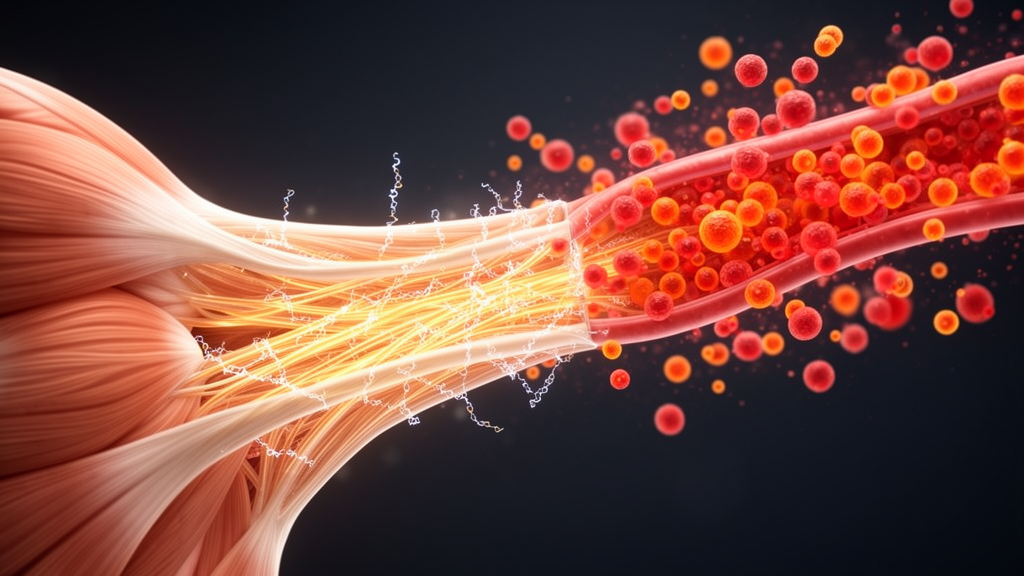
Duchenne muscular dystrophy is an X-linked childhood disease caused by loss of dystrophin, the protein that stabilizes muscle fibers during contraction. Delandistrogene moxeparvovec attempts to compensate by using an AAVrh74 viral vector to ferry a miniaturized micro-dystrophin gene into heart and skeletal muscle. Five FDA-approved gene therapies now rely on intravenous recombinant adeno-associated virus (rAAV), but the enormous doses needed to transduce enough tissue have produced serious adverse events and even deaths in clinical practice, making a detailed understanding of the body’s systemic reaction to these infusions a pressing safety concern.
The new study, led by researchers at the University of Florida Myology Institute, examined plasma and urine samples banked from four young boys in the NCT03375164 trial, all between four and eight years old. These participants received 2.0 × 10¹⁴ vector genomes per kilogram of rAAVrh74 carrying the micro-dystrophin transgene, and all four experienced effective muscle expression, multiyear functional improvement, and no serious adverse events. That makes them, in the researchers’ words, among the best representatives of a successful micro-dystrophin gene therapy, and therefore an ideal case study of what a favorable response looks like at the molecular level.
Using digital PCR to count viral genomes and immunoblotting to detect capsid proteins, the team found extraordinarily high levels of circulating vector one day after infusion, exceeding 10¹² vector genomes per milliliter of plasma. By day 7, plasma titers had dropped more than a thousandfold, to roughly 10⁹ vector genomes per milliliter or below. Urinary shedding was minimal and highly variable; two participants showed undetectable levels at every time point, while the highest value observed was 6 × 10⁶ vector genomes per milliliter in a single day 1 urine sample.
Critically, the circulating virus was not just inert debris. DNase pretreatment experiments showed that most of the detected genomes were protected inside intact capsids, and when day 1 plasma was added to cultured AC16 human cardiomyocytes, the particles successfully transduced the cells, proving that at least some of the vector remained biologically active a full day after infusion. This finding also addressed a recent concern in the field: laboratory studies have suggested AAV particles can spontaneously eject their genomes at body temperature, but the new data indicate genome ejection is not a prominent feature of systemic AAVrh74 therapy in humans.
The proteomic analysis told a more dramatic story. Using the SomaScan platform, which measures more than 5,000 circulating proteins with DNA-aptamer reagents, the researchers found 287 protein targets significantly altered across the treatment time course, and 99 targets changing at a stricter statistical threshold. Pathway analysis revealed that these changes were overwhelmingly concentrated in immune and infection-related programs: iron regulation, collagen biosynthesis, interleukin-6 signaling, complement and coagulation cascades, and ferroptosis all ranked among the most enriched pathways, even though none of the boys developed serious clinical complications.
The temporal pattern suggested an acute, self-limiting innate antiviral response. Interferon-stimulated genes such as MX1, IFIT3, IFI16, and TLR5 spiked sharply at day 7, coinciding with vector clearance, and largely returned to baseline by day 14. Macrophage markers like HMOX1, LST1, and MARCKSL1, along with neutrophil proteins including MPO, LCP1, and EZR, followed the same trajectory. Complement activation markers C3d, C1QTNF1, and C1S also peaked at day 7, while C1q components dropped at day 14, consistent with consumption during cascade activation. Notably, IL1R1 rose later, peaking at days 60 to 90 during the glucocorticoid taper, suggesting a rebound of interleukin-1 signaling as steroid suppression wore off rather than a direct effect of the virus.
Muscle biomarkers painted a nuanced picture of treatment effect. Sustained declines in TNNI3, a cardiac troponin, and MYL6B, a slow-fiber myosin light chain, hint at protection of heart and slow skeletal muscle. But a striking day 1 spike in titin, TTN, suggested transient muscle damage at the moment of infusion, and the classic damage markers fast troponin, cardiac troponin T, and creatine kinase showed no significant change at all. A newly proposed marker, the ubiquitin-conjugating enzyme UBE2S, declined steadily across the study and may reflect reduced muscle turnover as the transgene takes hold. Meanwhile, organ injury markers HAVCR1, FBP1, and IGFBP7 all peaked at days 60 to 90, and GDF15, a tissue stress signal, rose from day 7 and stayed elevated for at least three months, possibly explaining the vomiting that all participants experienced, since GDF15 is now linked to nausea in pregnancy and chemotherapy.
To test whether these immune signatures translate across species, the team injected dystrophic D2.mdx mice with a matching systemic rAAV dose and examined their livers a week later. Genes central to viral sensing and interferon signaling, including Ifit3, Ifnb, and Mavs, were significantly elevated, confirming that the antiviral response seen in human plasma also occurs in dystrophic liver tissue. The mouse work offers a tractable model for dissecting mechanisms and testing interventions, though the top human hit, MX1, only trended upward in mice, likely because inbred mouse strains carry nonfunctional Mx1 mutations.
The findings establish that robust immune activation is a natural and probably universal consequence of high-dose rAAV therapy, not merely a warning sign of impending toxicity. The key clinical question is what separates the transient, self-limiting response observed here from the sustained immune pathology seen in patients who develop hepatotoxicity, thrombotic microangiopathy, or fatal outcomes. By providing a detailed molecular reference point from a best-case scenario, the study gives clinicians a benchmark for monitoring future patients and points toward interventions, including complement control and anti-GDF15 strategies, that could make systemic gene therapy safer for the children who need it.
Subject of Research: Systemic immune and viral dynamics following intravenous rAAV micro-dystrophin gene therapy in boys with Duchenne muscular dystrophy
Article Title: Systemic responses to intravenous rAAV administration in boys with Duchenne muscular dystrophy
Article References: Harris, B. E., Seldin, B. M., Towne, S. C., Hobson, O. R., Zerpa, E., Prima, V., Sweeney, H. L., & Hammers, D. W. (2026). Systemic responses to intravenous rAAV administration in boys with Duchenne muscular dystrophy. Frontiers in Molecular Medicine, 6, Article 1953867. https://doi.org/10.3389/fmmed.2026.1953867
Image Credits: AI Generated
DOI: 10.3389/fmmed.2026.1953867
Keywords: rAAV gene therapy, Duchenne muscular dystrophy, micro-dystrophin, delandistrogene moxeparvovec, AAVrh74, SomaScan proteomics, interferon response, complement activation, digital PCR, vector dynamics, GDF15, immune response biomarkers
News Source: Juliet Wilcox. (October 15, 2026). Micro-Dystrophin Gene Therapy Reveals Hidden Immune Storm in Treated Boys. Scienmag.