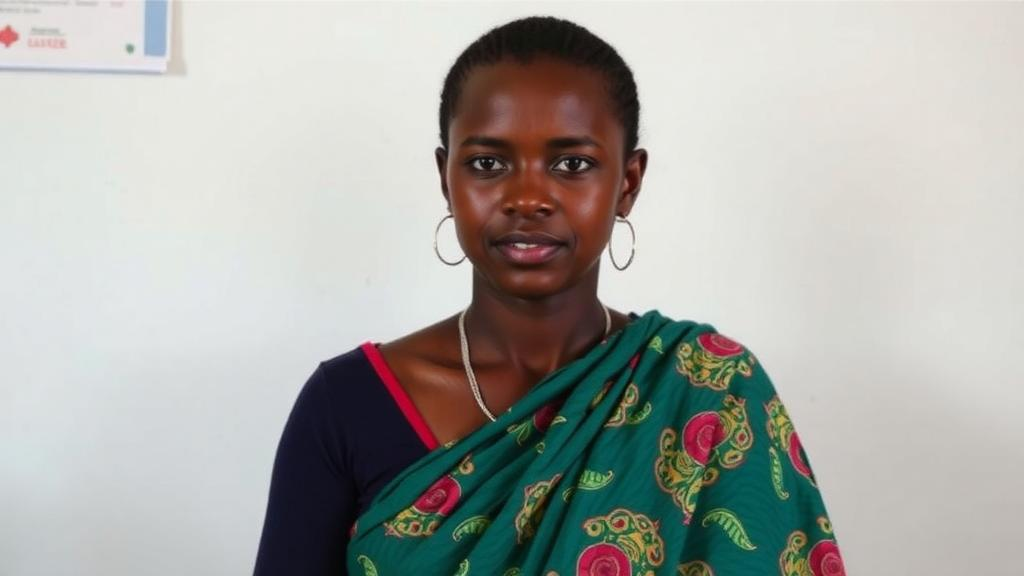
In Ethiopia, the simple accident of being born into a poor household may determine whether a young mother survives childbirth. A new analysis of nationally representative survey data has found that essential maternal health services—checkups during pregnancy, skilled care during delivery, and medical support after birth—are disproportionately reaching women from wealthier families, leaving the poorest behind at every step of the care pathway. The study, published in BMC Health Services Research, examined women aged 15 to 24 using data from the 2019 Ethiopian Mini Demographic and Health Survey and applied a statistical technique that allows researchers to measure not just whether inequality exists, but exactly how much each social factor contributes to it.
The maternal continuum of care is a concept that public health specialists use to describe an unbroken chain of services surrounding pregnancy and birth. It begins with antenatal care, the series of clinical visits during pregnancy in which complications such as anemia, hypertension, and infections can be detected and managed. It continues with skilled birth attendance, meaning delivery assisted by a trained health professional equipped to handle emergencies like obstructed labor and hemorrhage. It ends with postnatal care, the critical follow-up period in which both mother and newborn are monitored during the hours and weeks after birth, when the risk of fatal complications is at its highest. When any link in this chain is broken, the protective effect of the whole sequence collapses. Decades of evidence have shown that women who complete the continuum face dramatically lower risks of maternal and neonatal death than those who drop out along the way.
Despite these well-established benefits, coverage of the continuum remains low in Ethiopia, and the new study confirms that what coverage does exist is unevenly distributed. The research team, led by Atsedemariam Mengie Mekonnen of the University of Gondar, analyzed a weighted sample of 996 young women drawn from the 2019 mini survey, a nationally representative cross-sectional dataset designed to track health indicators between full survey rounds. Focusing on women aged 15 to 24 is significant because adolescent and young adult mothers face some of the highest risks of obstetric complications, particularly in settings where early marriage and early pregnancy remain common.
To quantify inequality, the researchers used the concentration index, a standard measure in health economics that summarizes how a health outcome is distributed across the socioeconomic spectrum, from poorest to richest. The index ranges from negative values, indicating concentration among the poor, to positive values, indicating concentration among the wealthy. The team also plotted concentration curves, which visually compare the actual distribution of care against a line of perfect equality. The results were stark. The normalized concentration index for maternal continuum of care coverage was 0.388, a strongly positive value that was statistically significant at p less than 0.001. In practical terms, this means that complete maternal care in Ethiopia is heavily concentrated among young women from wealthier households, while those at the bottom of the economic ladder are far less likely to receive even the basic sequence of services that could save their lives.
But measuring the size of the gap is only half the analytical challenge. The more difficult question is what causes it, and that is where the Wagstaff decomposition method comes in. Developed by health economist Adam Wagstaff, this technique breaks the concentration index down into additive contributions from individual explanatory variables. Each factor’s contribution depends on two things: how strongly it is associated with the health outcome, and how unequally that factor itself is distributed across wealth groups. By multiplying and summing these components, researchers can attribute specific shares of the overall inequality to education, residence, region, and other characteristics. It is essentially an accounting exercise for injustice, converting a single summary statistic into a detailed map of its drivers.
The decomposition revealed a constellation of contributing factors. Maternal age, household wealth quintile, women’s educational attainment, religion, the timing of the first antenatal care visit, parity, or the number of previous births, mode of delivery, region, and place of residence all made statistically significant contributions to the wealth-related inequality in continuum coverage. This list tells a coherent story. Wealth itself matters directly, because richer families can afford transport to clinics, fees for services, and the opportunity costs of time spent seeking care. But wealth also operates indirectly through education: women with formal schooling are more likely to understand the value of antenatal visits, to recognize danger signs during pregnancy, and to negotiate autonomy in decisions about where to deliver. Geography compounds both effects, since rural women face longer distances to facilities and health systems in some regions are far weaker than in others.
The timing of antenatal care initiation deserves particular attention. International guidelines recommend that women begin antenatal visits in the first trimester of pregnancy, because early contact allows screening and preventive interventions to start when they can do the most good. The study found that when a young woman first entered antenatal care significantly contributed to the overall inequality, suggesting that wealthier women not only use more services but start them earlier, compounding their advantage across the entire continuum. Similarly, mode of delivery appeared in the decomposition, reflecting the fact that cesarean sections, which require surgical capacity and are more accessible to better-off women, automatically connect a mother to skilled attendance and often to postnatal follow-up, while women delivering at home without professional help may never enter the formal care system at all.
The authors conclude that maternal continuum of care utilization in Ethiopia is disproportionately concentrated among women of higher socioeconomic status, and that women from poorer households, rural areas, and those with no formal education experience substantially lower coverage across the entire pathway. The pattern they describe is not unique to Ethiopia. Across sub-Saharan Africa, studies using comparable methods have repeatedly found pro-rich inequality in skilled birth attendance and postnatal care, and Ethiopia’s own maternal mortality ratio remains among the highest in the world. Young mothers sit at the intersection of several vulnerabilities: they are biologically more susceptible to complications such as obstructed labor and eclampsia, they often have less decision-making power within households, and they are less likely to have completed their education before becoming pregnant. When poverty is layered on top of youth, the barriers multiply.
What makes this study methodologically valuable is that it moves beyond description toward explanation. A simple comparison of coverage rates between rich and poor tells policymakers that a problem exists; the Wagstaff decomposition tells them where to aim. If education and residence account for large shares of the inequality, then interventions such as expanding girls’ schooling, deploying community health workers in rural areas, and removing user fees for maternal services can be prioritized and their expected equity impact estimated in advance. Ethiopia has made notable progress in expanding rural health infrastructure through its health extension program, but these findings suggest that the poorest and least educated young women are still not being reached at the scale required.
The findings land at a consequential moment. Maternal health sits at the heart of the United Nations Sustainable Development Goals, which call for reducing the global maternal mortality ratio and achieving universal coverage of reproductive health services. For a country like Ethiopia, where a large share of the population is under 25, the reproductive choices and health outcomes of young women will shape demographic and economic trajectories for decades. The study’s authors argue that efforts to improve equity should focus on reducing financial barriers and strengthening rural health services, with particular attention to disadvantaged populations. The statistical message is unambiguous: in Ethiopia today, the chance that a young woman will move safely through pregnancy, childbirth, and the postpartum period depends heavily on the contents of her family’s wallet. Closing that gap, the researchers suggest, is not merely a matter of building more clinics, but of dismantling the socioeconomic and educational barriers that determine who walks through their doors.
Subject of Research: Wealth-based socioeconomic inequality in maternal continuum of care coverage among young women in Ethiopia
Article Title: Wealth-based inequality in maternal continuum of care coverage among 15–24 aged women in Ethiopia using Wagstaff decomposition: EMDHS 2019
Article References: Wealth-based inequality in maternal continuum of care coverage among 15–24 aged women in Ethiopia using Wagstaff decomposition: EMDHS 2019. (n.d.). https://doi.org/10.1186/s12913-026-15845-9
Image Credits: AI Generated
DOI: 10.1186/s12913-026-15845-9
Keywords: Ethiopia, maternal health, continuum of care, health inequality, Wagstaff decomposition, concentration index, antenatal care, skilled birth attendance, postnatal care, EMDHS 2019, young women, health equity
News Source: Phoebe Ingram. (October 15, 2026). Wealth Divides Young Ethiopian Women’s Access to Lifesaving Maternal Care, Study Finds. Scienmag.