Credit: Brain Tumour Research
Researchers from the University of Portsmouth's Brain Tumour Research Centre of Excellence have identified molecules which are responsible for metastatic lung cancer cells binding to blood vessels in the brain.
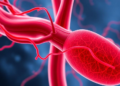
In order for a cancer cell to enter the brain, it must first bind to the cells which line the structure separating the blood from the brain which is called the blood-brain barrier (BBB). Such information about the factors associated with this process may provide a way of preventing the cancer cells binding to the BBB and crossing over into the brain.
Twenty to 40 percent of patients with non-small cell lung cancer (NSCLC) develop brain metastasis.
The study, funded by the charity Brain Tumour Research and conducted by researchers at their UK Centre of Excellence at the University of Portsmouth, examined the factors present on the surface of NSCLC cells. These cells have different factors on their surfaces which determines how "sticky" the cells are and whether they are responsible for mediating the cancer cells binding to the blood vessel walls.
One of these factors is a molecule called CD15s. While it is present on a number of different types of cells in the body, it is expressed at higher levels on metastatic tumour cells, including those which have spread from the lung. It is only present at low levels in lung cancer cells which are not metastatic and remain within the lung.
The scientists examined what CD15s binds to on the blood vessel wall and identified another factor called CD62E. The researchers then used a specific tool to block the CD15s on the surface of the tumour cells, and this prevented the NSCLC cells from attaching to the blood vessels. They also used a model which simulated the cancer cells flowing through the blood vessels, and got the same result. So, blocking the adhesive properties of CD15s may provide a tool to prevent the establishment of secondary cancers.
Professor Geoff Pilkington, study co-author and Head of the Brain Tumour Research Centre, said: "Although this work is still at an early stage, we have demonstrated key elements that are associated with tumour cell binding to blood vessels and this may provide a target for future drug development to prevent the development of secondary tumours in the brain. Increasing our understanding of the adhesive properties of tumours may also help to develop new treatments to halt the development and spread of primary brain tumours."
The adhesive properties of cancer cells play a key role in the formation and development of a tumour. While cells in a low-grade tumour bind very tightly together, the cells become less adhesive as the tumour becomes malignant. This is very important for the tumour cells which then spread into the surrounding nervous tissue.
Understanding more about the factors which mediate cell adhesion is key for the potential identification of new therapies.
Dr Kieran Breen, Director of Research at Brain Tumour Research, said: "Brain tumours kill more children and adults under the age of 40 than any other cancer, yet just 1 per cent of the national spend on cancer research has been allocated to this devastating disease. We are funding vital research in the UK to address this situation and are encouraged by Professor Pilkington's findings."
In addition to primary tumours which start in the brain, the secondary or 'metastatic' tumours which originate elsewhere and which migrate to the brain have been the focus of this new study. Secondary brain tumours are most likely to originate in the breast, lung or skin (melanoma). When they enter the brain, they generally form multiple tumours and can be extremely difficult to treat. Usually, treatment would require whole-brain radiation which is extremely toxic and the average survival time is just 3-6 months from diagnosis, with fewer than 20 per cent of patients surviving more than one year. If the people whose tumours are more likely to spread to the brain could be identified, researchers may be able to prevent this from happening.
The research is published in the International Journal of Molecular Sciences.
###
Media Contact
Glenn Harris
[email protected]
0239-284-2728
http://www.port.ac.uk
Original Source
http://uopnews.port.ac.uk/2017/08/02/helping-to-prevent-the-development-of-brain-tumours/ http://dx.doi.org/10.3390/ijms18071474