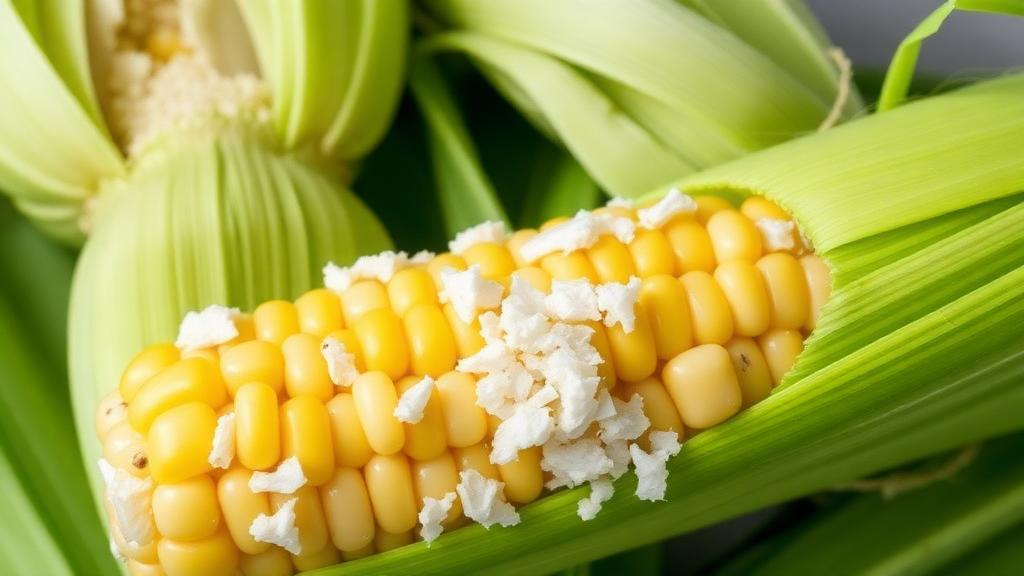
Soil salinity is one of the quiet saboteurs of modern agriculture. As sodium and chloride accumulate in farmland, they lower the soil water potential, making it harder for roots to draw up water. Inside the plant, the excess ions disrupt potassium retention, enzyme function, membrane integrity, and photosynthesis. The result is a surge in reactive oxygen species, or ROS, including superoxide radicals and hydrogen peroxide. At low concentrations, these molecules act as stress signals that help plants acclimate. But once production outpaces the plant’s detoxifying capacity, ROS damage lipids, proteins, pigments, and DNA, and crop performance collapses. A new study from Florida International University, published in Frontiers in Plant Physiology, suggests that a carefully engineered cocktail of green-synthesized zinc oxide nanoparticles and organic acids can dramatically strengthen the antioxidant defenses of sweet corn under exactly these conditions.
The research team, led by Sana Awan and Krishnaswamy Jayachandran, set out to answer a question that has puzzled plant physiologists working at the intersection of nanotechnology and stress biology: do zinc oxide nanoparticles, fulvic acid, and ascorbic acid work better together than apart? Each of these materials has been studied individually under abiotic stress, but few experiments have compared them under the same crop, salinity level, nanoparticle dose, and sampling conditions, especially in sweet corn. The investigators designed a pot experiment with nine treatments, spanning an untreated control, foliar or irrigation-applied zinc oxide nanoparticles, combinations of the nanoparticles with fulvic acid or ascorbic acid, and each organic acid applied alone. Every treatment was tested under both non-saline and saline conditions, giving a total of 72 pots with four biological replicates per treatment-salinity combination.
The zinc oxide nanoparticles themselves were synthesized through an unusually elegant route. Rather than relying on industrial chemical precursors, the team used avocado seed extract obtained from the USDA Agricultural Research Service Subtropical Horticulture Research Station. A 0.01 M zinc acetate solution was heated to 70 degrees Celsius under continuous stirring, and the avocado seed extract was added dropwise. Sodium hydroxide was then introduced gradually until the pH reached approximately 11, producing a white zinc hydroxide precipitate that was maintained at 70 degrees for five hours to convert into zinc oxide. The resulting nanoparticles were collected by centrifugation at 13,000 rpm and washed repeatedly with deionized water. Powder X-ray diffraction confirmed the formation of crystalline hexagonal wurtzite zinc oxide with an average crystallite size of roughly 18 nanometers, while high-resolution transmission electron microscopy revealed quasi-spherical particles with an apparent diameter near 100 nanometers, suggesting that individual particles may consist of multiple crystalline domains or that aggregation contributed to the larger size observed by TEM.
Sweet corn plants of the cultivar Golden Bantam were grown in 10-inch pots containing sandy loam soil with an initial electrical conductivity below 1 dS per meter. For the saline treatment, sodium chloride was mixed into the soil before sowing, and a 50 mM NaCl solution was applied at two-week intervals thereafter. Soil electrical conductivity was checked regularly with a FieldScout TDR 250 meter to maintain a moderate salinity level of 2 to 3 dS per meter throughout the three-month exposure period. The nanoparticle suspensions were prepared at 200 mg per liter, combined formulations contained either 0.01 percent fulvic acid or 0.01 percent ascorbic acid, and all formulations were adjusted to pH 8.0 before being sonicated for two minutes and applied immediately. Treatments were delivered three times at three-week intervals after germination, with a cumulative dose of 1 mg of zinc oxide per plant.
The biochemical readouts focused on four key indicators of oxidative stress and antioxidant capacity: leaf hydrogen peroxide content, superoxide dismutase activity, catalase activity, and peroxidase activity. Hydrogen peroxide was quantified using the potassium iodide method, with absorbance measured at 390 nanometers against a standard curve. Superoxide dismutase was assessed through the NBT photoreduction assay, catalase through a molybdate endpoint assay, and peroxidase through a guaiacol-based colorimetric method. Salinity, treatment, and their interaction all significantly affected hydrogen peroxide, superoxide dismutase, and catalase, with p values below 0.001. Peroxidase showed significant treatment and interaction effects but no significant salinity main effect, hinting at a more nuanced role for this enzyme in the plant’s response.
The headline finding is striking. Under salinity, hydrogen peroxide in the untreated control rose by 68.5 percent, climbing from 0.169 to 0.284 µmol per gram fresh weight. But when the researchers applied zinc oxide nanoparticles through irrigation combined with ascorbic acid, hydrogen peroxide dropped by 66.2 percent relative to the saline control. The foliar combinations with fulvic acid and ascorbic acid achieved reductions of 65.6 percent and 64.8 percent respectively, and their concentrations did not differ significantly from one another. Ascorbic acid alone was the least effective treatment under salinity, with a hydrogen peroxide concentration of 0.151 µmol per gram fresh weight, though it still remained lower than the untreated control. The message is clear: the nanoparticle-organic acid combinations outperformed the individual components by a wide margin.
Catalase activity showed the largest relative response to treatment of any enzyme measured. Under non-saline conditions, foliar zinc oxide nanoparticles combined with ascorbic acid produced the highest catalase activity, reaching 51.13 percent hydrogen peroxide degraded, compared with just 2.59 percent in the untreated control. Under salinity, the same foliar combination increased catalase activity by 132.6 percent relative to the saline control, while the foliar combination with fulvic acid and the irrigation combination with ascorbic acid achieved increases of 124.3 percent and 122.6 percent respectively. Superoxide dismutase activity followed a similar pattern, with the foliar zinc oxide plus ascorbic acid treatment raising SOD by 41 percent under salinity, reaching 90.57 percent inhibition of NBT photoreduction. Together, these responses represent the strongest combined SOD-CAT activation observed in the experiment, indicating a coordinated strengthening of the plant’s first line of enzymatic antioxidant defense.
Peroxidase activity told a different story. The salinity main effect was not significant, but the salinity-treatment interaction was highly significant, reflecting increased peroxidase activity in certain treatments under salt stress and decreased activity in others. Ascorbic acid alone maintained the highest peroxidase activity under both conditions, while the foliar combination with fulvic acid showed a pronounced increase under salinity. Guaiacol peroxidase participates in hydrogen peroxide metabolism, phenolic oxidation, and cell-wall processes, so a high peroxidase response alone does not necessarily indicate stronger antioxidant protection. The authors stress that peroxidase should be interpreted alongside hydrogen peroxide, superoxide dismutase, and catalase rather than in isolation.
The mechanistic interpretation is where the study becomes especially interesting. Zinc plays a structural role in proteins, membranes, gene transcription, and copper/zinc superoxide dismutase, and it is commonly deficient in agricultural soils, which is why cereal breeders and agronomists already pursue zinc biofortification. Zinc oxide nanoparticles can serve as a highly reactive zinc source and may shift stress signaling and nutrient status. Ascorbic acid, meanwhile, scavenges ROS directly and keeps the ascorbate-glutathione cycle running, while fulvic acid chelates nutrients, changes their mobility, supports osmotic adjustment, and shapes rhizosphere activity. The application route matters too: foliar application exposes leaves directly to the formulation, whereas irrigation introduces it into soil, where minerals, organic matter, root exudates, and microorganisms may alter aggregation, dissolution, and zinc availability. These distinct pathways may explain why the fulvic acid combination behaved differently depending on whether it was sprayed or delivered through irrigation.
The authors are careful to acknowledge the boundaries of what their design can establish. Tissue zinc, sodium-potassium balance, oxidative damage, nanoparticle uptake, dissolution, localization, photosynthesis, biomass, and yield were not measured, so the responses cannot be attributed exclusively to nanoparticulate zinc oxide. Contributions from dissolved zinc and residual seed-derived compounds cannot be excluded, and the experiment did not provide a formal test of biochemical synergy between the nanoparticles and the organic acids. Field applicability was not evaluated because the study used controlled pot conditions without field-level validation. Still, the findings represent a significant step forward in understanding how green-synthesized nanomaterials and organic acids can be combined to strengthen crop antioxidant responses under salinity, and they underscore the importance of formulation-specific and application-route-specific testing before such approaches can be scaled to real-world agriculture.
Subject of Research: Green-synthesized ZnO nanoparticles combined with fulvic and ascorbic acid strengthen antioxidant responses in sweet corn under salinity stress
Article Title: Green-synthesized ZnO nanoparticles combined with fulvic and ascorbic acid strengthen antioxidant responses in sweet corn under salinity stress
Article References: Awan, S., & Jayachandran, K. (2026). Green-synthesized ZnO nanoparticles combined with fulvic and ascorbic acid strengthen antioxidant responses in sweet corn under salinity stress. Frontiers in Plant Physiology, 4, Article 1948674. https://doi.org/10.3389/fphgy.2026.1948674
Image Credits: AI Generated
DOI: 10.3389/fphgy.2026.1948674
Keywords: Green-synthesized, nanoparticles, combined, fulvic, ascorbic, acid, strengthen, antioxidant, responses, sweet, corn, under
News Source: Drew Townsend. (October 15, 2026). Avocado-Powered Nanoparticles Give Sweet Corn a Fighting Chance Against Salt. Scienmag.