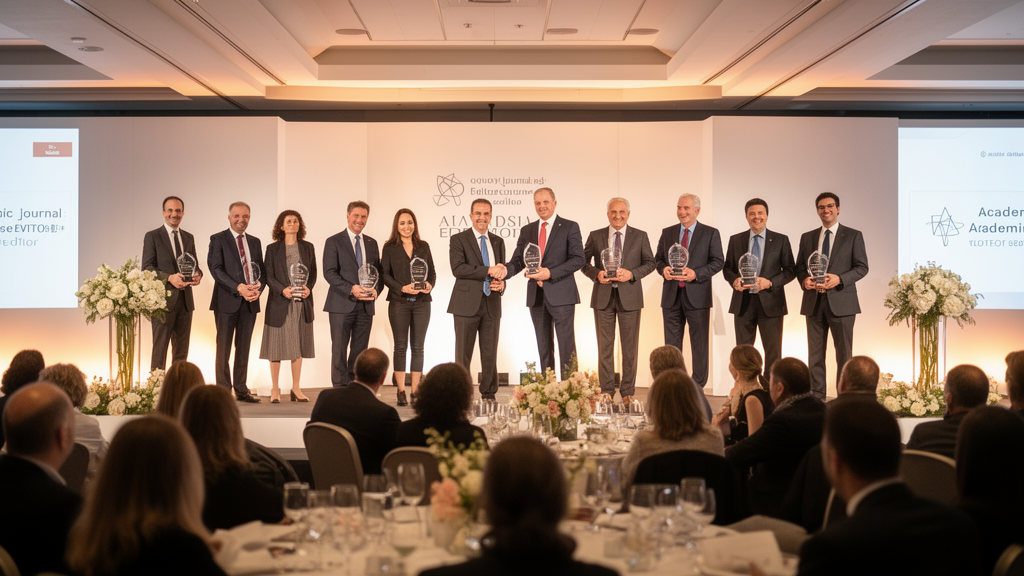
The editors of the Journal of Pharmaceutical Investigation, a Springer Nature title covering drug delivery systems, pharmaceutical technology, and investigative pharmacology, have been recognized in the 2026 Springer Nature Editor of Distinction Awards. The annual program celebrates editors whose behind-the-scenes labor keeps the scientific record accurate, the peer review process rigorous, and the author experience constructive. This year, ten editors associated with the journal received the Springer Nature Editorial Contribution Award, and nine of them also received the Springer Nature Author Service Award, an unusually strong showing for a single specialty journal and a signal of how much editorial capacity the pharmaceutical sciences community invests in scholarly publishing.
The Editorial Contribution Award is given for meticulous assessment of submissions and rigorous management of the peer review process, work that Springer Nature describes as safeguarding the scientific accuracy of the published record. The 2026 recipients from the Journal of Pharmaceutical Investigation are Chulhun Park, Gayong Shim, Han-Joo Maeng, Hyun-Jong Cho, Jee-Heon Jeong, Jong Oh Kim, Kwangmeyung Kim, Wooram Park, Yoo Kyung Kang, and Yoon-Jee Chae. These are names well known within Korean pharmaceutical science, a field that has produced influential research on nanoparticle drug carriers, lipid-based delivery platforms, and targeted therapeutics, and several of the honorees lead laboratories whose work appears regularly in the very literature they help to vet.
The Author Service Award, the second distinction conferred this year, recognizes exceptional service in improving the author experience and ensuring that peer review is efficient, constructive, and fair. Nine of the ten Editorial Contribution recipients also earned this honor: Chulhun Park, Gayong Shim, Han-Joo Maeng, Jee-Heon Jeong, Jong Oh Kim, Kwangmeyung Kim, Wooram Park, Yoo Kyung Kang, and Yoon-Jee Chae. The overlap is notable. It suggests that the same editors who scrutinize experimental design and statistical reasoning are also the ones who return manuscripts with actionable feedback on time, a combination that reviewers and authors alike tend to describe as the gold standard of editorial practice.
What does rigorous editorial assessment actually involve in a pharmaceutical investigation journal? Manuscripts arriving at such a title typically report on formulation science, pharmacokinetics, nanocarrier characterization, and preclinical efficacy studies. An editor must judge whether particle size distributions and zeta potentials were measured with appropriate methods, whether release kinetics follow recognized models, whether animal studies include proper controls and ethical approvals, and whether claims of improved bioavailability are supported by statistically sound comparisons. Errors at any of these stages can propagate through the literature, misleading subsequent researchers who cite a result without re-examining its foundations. Editors act as the first line of defense against that kind of drift, which is why Springer Nature frames their contribution in terms of protecting the accuracy of the published record.
Peer review management is also a logistical discipline in its own right. A handling editor must select reviewers with genuine domain expertise while screening out those with conflicts of interest, set realistic deadlines, chase overdue reports, weigh contradictory referee opinions, and decide when a manuscript needs another round of revision or an outright rejection. In fast-moving areas such as mRNA delivery, exosome-based therapeutics, and immunonanomedicine, the reviewer pool is small and heavily oversubscribed, so an editor’s professional network directly determines how quickly science moves from submission to publication. Springer Nature’s citation of editors who develop networks for authors and peer reviewers reflects this reality: editorial work is as much about cultivating community infrastructure as it is about reading papers.
The Author Service Award highlights a dimension of publishing that receives less attention but matters enormously to researchers, particularly early-career scientists. A review process can be technically rigorous yet demoralizing, with vague criticisms, contradictory demands, and months of silence between decisions. Constructive peer review, by contrast, identifies specific weaknesses, distinguishes fatal flaws from fixable ones, and gives authors a clear path to improvement. For authors whose first language is not English, or whose work crosses disciplinary boundaries between pharmacy, materials science, and biology, an editor who communicates clearly and fairly can determine whether a good study eventually reaches the readers it deserves. The award explicitly honors efficiency and fairness alongside constructiveness, acknowledging that turnaround time is itself an ethical property of the review system.
The concentration of this year’s honorees at a single journal also illuminates how regional research communities sustain global publishing. The Journal of Pharmaceutical Investigation, hosted by the Korean Society of Pharmaceutical Sciences and Technology, draws its editorial board largely from South Korean universities and research institutes, and its editors are active researchers who volunteer substantial time alongside their laboratory and teaching duties. Chulhun Park, of Pusan National University, works on drug delivery and nanomedicine; Gayong Shim, at Chung-Ang University, studies nanocarrier-based therapeutics; Han-Joo Maeng, at Gachon University, focuses on pharmacokinetics and drug metabolism; Hyun-Jong Cho, of Gangneung-Wonju National University, investigates nanoparticulate drug delivery; Jee-Heon Jeong, at Sungkyunkwan University, develops polymeric and nucleic acid delivery systems; Jong Oh Kim, of Yeungnam University, works on cancer-targeted formulations; Kwangmeyung Kim, at the Korea Institute of Science and Technology, is known for imaging and theranostic nanoparticles; Wooram Park, of Pukyong National University, studies biomaterials-based delivery; Yoo Kyung Kang, at Dong-A University, specializes in pharmacokinetic analysis; and Yoon-Jee Chae, at Dongguk University, researches drug transport and absorption. Their award-winning editorial service is an extension of the same expertise they apply in their laboratories.
Awards of this kind serve a function beyond ceremony. Scholarly publishing depends on labor that is largely invisible: reviewers are unpaid, handling editors are often volunteers or lightly compensated, and the costs of this system rarely appear in discussions of research funding. When a publisher publicly names the individuals who perform this work, it creates accountability and recognition in a system that can otherwise feel anonymous to authors waiting on decisions. It also gives institutions a concrete signal when evaluating faculty service, since editorial roles at reputable journals are increasingly counted alongside grants and publications in hiring and promotion decisions, particularly in countries such as South Korea where journal stewardship is viewed as a national contribution to research capacity.
The 2026 awards arrive amid broader scrutiny of peer review, with the research community debating registered reports, open reviewer identities, artificial intelligence assistance in manuscript screening, and post-publication review models. Against that backdrop, the qualities Springer Nature chose to honor, meticulousness, rigor, efficiency, constructiveness, and fairness, read as a statement about which human judgments remain irreplaceable. Automated tools can check formatting, screen for image duplication, and suggest candidate reviewers, but deciding whether a nanocarrier study genuinely advances the field, or whether an author has been treated fairly through three revision cycles, requires domain knowledge and professional judgment of the kind this year’s honorees demonstrated.
For the Journal of Pharmaceutical Investigation, ten Editorial Contribution Awards and nine Author Service Awards in a single year represent both recognition and a benchmark. The journal’s editors will continue to assess submissions, recruit reviewers, and guide authors through revision, work that determines not only which papers appear under the journal’s name but how trustworthy the pharmaceutical literature becomes for clinicians, regulators, and the next generation of drug delivery researchers. The 2026 Editor of Distinction Awards make visible the people who perform that trust-keeping role, and they offer the rest of the publishing ecosystem a concrete picture of what distinguished editorial service looks like in practice.
Subject of Research: Springer Nature's 2026 Editor of Distinction Awards recognizing editorial and author service contributions at the Journal of Pharmaceutical Investigation
Article Title: Springer Nature Editor of Distinction Awards 2026
Article References: Springer Nature Editor of Distinction Awards 2026. (n.d.). Original publication
Image Credits: AI Generated
DOI: Not provided
Keywords: Springer Nature, Editor of Distinction Awards, Journal of Pharmaceutical Investigation, peer review, pharmaceutical sciences, drug delivery, editorial service, scholarly publishing, nanomedicine, South Korea, author experience, scientific record
News Source: Louis Brooks. (October 15, 2026). Springer Nature Honors Standout Editors of Pharmaceutical Research Journal for 2026. Scienmag.