For more than a century, the science of plant mineral nutrition has been built on a narrow foundation. Nearly every textbook principle about how plants absorb, transport, and store essential elements was derived from annual herbaceous crops such as wheat, rice, maize, and the model plant Arabidopsis. These plants complete their entire life cycle in a single season, racing through germination, growth, reproduction, and death in a matter of months. Perennial fruit trees, by contrast, live for decades, store nutrients in woody organs across seasons, and face fundamentally different physiological demands. Yet systematic studies of mineral element behavior in these long-lived woody species have remained scattered and incomplete. A new study published in the journal Plant and Soil by a research team at Hebei Agricultural University in China now offers one of the most comprehensive portraits to date of how a mature fruit tree handles its mineral diet, and the results challenge several long-held assumptions.
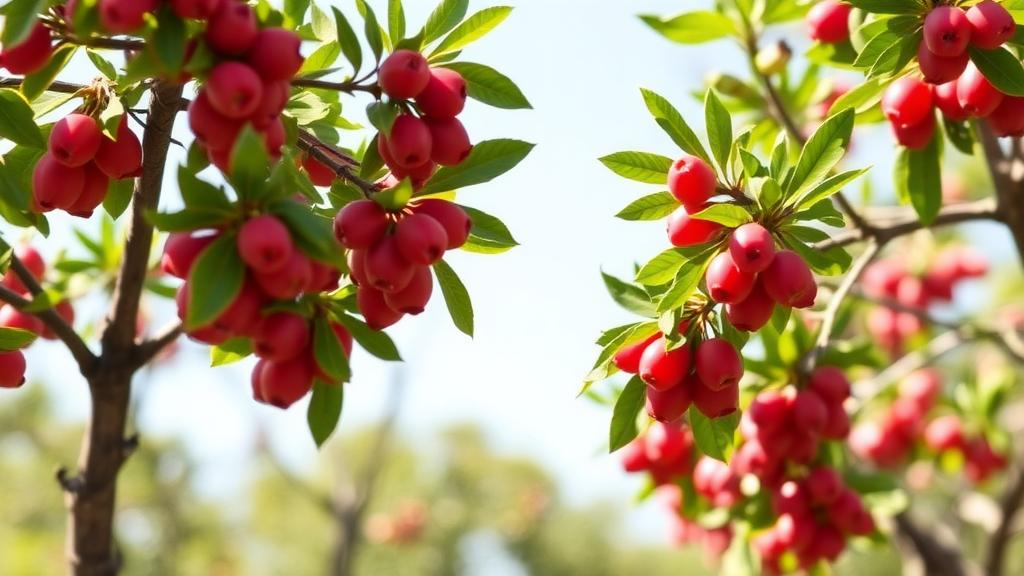
The research focused on the jujube tree, Ziziphus jujuba, a species domesticated in China more than 7,000 years ago and now cultivated across Asia, the Middle East, and increasingly in other arid and semi-arid regions. Often called the Chinese date, jujube is prized for its sweet, nutrient-rich fruit and its remarkable tolerance of drought and poor soils. The team, led by first authors Kun Feng, Jiaqing Cai, and Xinyue Liu under the supervision of corresponding authors Xiaoteng Cai, Zhiguo Liu, and Mengjun Liu, selected two of the most commercially important cultivars, Jinsixiaozao and Dongzao, both six years old and in full fruiting production. These cultivars represent the backbone of the Chinese jujube industry, making the findings directly relevant to one of the world’s oldest fruit crops.
The scale of the chemical analysis sets this study apart from earlier work. Rather than tracking a handful of familiar nutrients, the researchers measured the concentrations of 32 different mineral elements across three distinct organs of the trees: the mature fruits, the leaves, and the pruned branches removed during winter pruning. This element-by-element inventory spanned the full spectrum of plant nutrition, from the macroelements that plants need in large quantities, such as nitrogen, phosphorus, potassium, calcium, and magnesium, through the essential microelements like iron, manganese, zinc, copper, and boron, to non-essential elements that plants absorb incidentally from the soil. By sampling the same set of elements in the surrounding soil, the team could also ask a question of enormous practical importance for orchard management: does what the soil contains actually predict what ends up inside the tree?
The answer to that last question turned out to be a resounding no, and it is perhaps the most consequential finding of the entire investigation. The correlation between mineral element concentrations in the jujube trees and those in the soil was not statistically significant. In other words, knowing how much of a given element is present in the soil tells an orchard manager remarkably little about how much of that element the tree will actually take up and accumulate in its tissues. This decoupling between soil supply and plant content suggests that jujube trees exercise a high degree of physiological control over their mineral nutrition, actively regulating uptake through root transporters, mycorrhizal partnerships, and internal remobilization rather than passively mirroring the chemical composition of their substrate. For a discipline that has long used soil testing as the primary guide for fertilization decisions in orchards, this result is a genuine wake-up call.
Equally striking was the behavior of phosphorus. In the classical understanding derived from herbaceous plants, phosphorus is a headline nutrient, essential for ATP production, nucleic acid synthesis, and membrane function, and typically taken up in substantial quantities relative to other elements. The jujube trees, however, displayed notably low phosphorus uptake, a pattern that departs markedly from what the herbaceous model would predict. This is not merely an academic curiosity. Phosphorus fertilization is expensive, and mined phosphate rock is a finite global resource that has prompted warnings of a potential phosphate crisis in the scientific literature. If perennial fruit trees like jujube can achieve normal growth and fruiting with far lower phosphorus uptake than conventional models suggest, then standard fertilization recommendations built on annual-crop data may be systematically over-applying phosphorus in jujube orchards, wasting money and contributing to nutrient runoff and water pollution.
The study also revealed a clear hierarchy in where the tree parks its mineral wealth. Total mineral element content was highest in the leaves, intermediate in the branches, and lowest in the fruits. This distribution makes physiological sense when one considers the roles of each organ: leaves are the photosynthetic engines of the tree, packed with the nitrogen, magnesium, and iron needed to build chlorophyll and the enzymatic machinery of carbon fixation, while fruits are primarily storage organs for sugars and organic acids, with a comparatively dilute mineral complement. But the finding has practical implications beyond physiology. Because leaves and branches, not fruits, are the dominant reservoirs of mineral elements, the common orchard practice of removing pruned branches and fallen leaves from the field represents a substantial annual export of nutrients from the orchard ecosystem. The authors explicitly highlight that their results provide guidance for the practice of returning pruned branches and leaves to the field, a form of nutrient recycling that could reduce fertilizer dependence and improve soil health over the long term.
Cultivar identity mattered too, but in a selective and revealing way. The two jujube cultivars, Jinsixiaozao and Dongzao, differed considerably in their macroelement contents, meaning that the big-ticket nutrients like nitrogen, phosphorus, potassium, calcium, and magnesium varied substantially between the varieties. In contrast, the differences in microelement and non-essential element contents between the two cultivars were small. This pattern suggests that the genetic control over macronutrient accumulation is relatively loose or variable between cultivars, perhaps reflecting deliberate selection for different fruit quality traits during breeding, while the machinery governing trace element uptake is more tightly conserved across the species. For breeders and growers, this implies that cultivar-specific fertilization strategies may be necessary for macronutrients, whereas a single micronutrient management approach could plausibly serve multiple varieties.
The internal coordination among organs added another layer of insight. The researchers observed significant correlations among mineral element contents in the different organs of the same tree, with the strongest and most significant relationship appearing between the leaves and the branches. This coupling makes sense for a deciduous perennial: branches serve as the conduits and storage depots that supply the flush of new leaves each spring, and the two organs are locked into a shared developmental program. A tree that accumulates more of a given element in its branches tends to accumulate more of it in its leaves as well, reflecting either common uptake at the roots or active remobilization between the two tissues. Such organ-level correlations provide a window into the integrated nutrient economy of the whole tree, something that studies of isolated organs or annual plants simply cannot capture.
Why does all of this matter beyond the jujube orchard? The broader lesson is that plant mineral nutrition theory, as currently formulated, carries a systematic bias inherited from its herbaceous origins. Woody plants differ from annuals in root architecture, in the presence of large perennial storage organs, in the phenology of nutrient demand that stretches across multiple seasons, and in their reliance on stored reserves remobilized from branches and roots during spring growth. Recent work on other fruit trees, including studies of nutrient storage and remobilization in almond, nutrient uptake in grapevines, and nitrogen distribution in pear, has hinted at these differences, but the new jujube study provides an unusually complete element-by-element dataset for a single species, covering 32 elements across three organs and two cultivars simultaneously. It adds substantial weight to the argument that perennial fruit trees deserve their own theoretical framework rather than being treated as slow-growing versions of annual crops.
The practical roadmap emerging from this research is twofold. First, fertilization in jujube orchards should be recalibrated to reflect the tree’s actual uptake patterns, with particular attention to avoiding unnecessary phosphorus application and to recognizing that soil tests alone are an unreliable predictor of tree nutrient status. Second, the significant mineral reservoir held in leaves and branches argues strongly for adopting branch and leaf return practices, closing the nutrient loop within the orchard rather than exporting it with every pruning season. As global agriculture confronts finite phosphate reserves, rising fertilizer costs, and the environmental costs of nutrient runoff, studies like this one demonstrate that sometimes the most valuable innovations come not from new technology but from carefully measuring, element by element, what ancient trees have been doing all along.
Subject of Research: Mineral element uptake patterns in jujube trees and their relationship to soil nutrient supply
Article Title: The uptake features of mineral elements in jujube trees and the relationship with soil supply
Article References: The uptake features of mineral elements in jujube trees and the relationship with soil supply. (n.d.). https://doi.org/10.1007/s11104-026-09172-5
Image Credits: AI Generated
DOI: 10.1007/s11104-026-09172-5
Keywords: jujube, mineral elements, plant nutrition, phosphorus uptake, soil supply, perennial fruit trees, macroelements, microelements, woody plants, nutrient recycling, orchard management, Ziziphus jujuba
News Source: Alan Morgan. (October 13, 2026). Jujube Trees Break the Rules of Plant Mineral Nutrition, Study Finds. Scienmag.