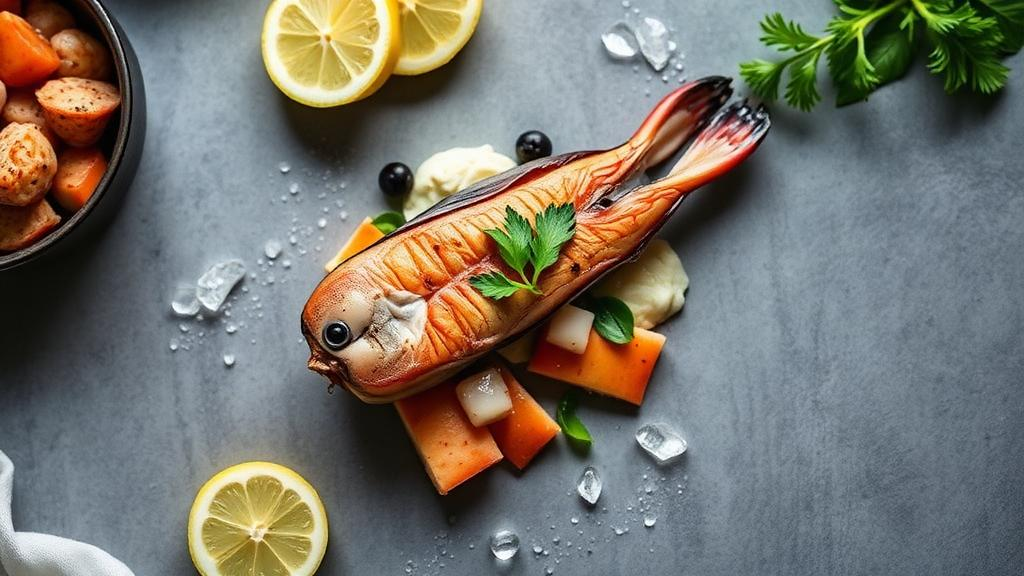
A hundred years of recipes printed in one of Britain’s best-known domestic magazines have revealed a striking transformation in the nation’s relationship with fish, according to new peer-reviewed research from the University of Exeter. By combing through selected issues of British Good Housekeeping, first published in 1922, Dr Ruth Thurstan assembled a dataset of 1,192 fish and shellfish recipes spanning the entire century from 1923 to the present day. Her analysis, published in the journal People and Nature under the title “Declines in the diversity of fish represented in British domestic recipes over the past 100 years,” shows that a once-diverse culinary repertoire has contracted dramatically, leaving today’s readers with a diet dominated by what researchers and industry observers have come to call the “big five”: cod, haddock, tuna, salmon and prawns. These five groups now account for roughly 80 percent of all seafood eaten in the United Kingdom, a concentration that the study suggests was neither inevitable nor driven simply by conservative British tastes.
The research is notable for its methodological ingenuity. Recipes are not consumption data, and Thurstan is careful to acknowledge this limitation. What recipes capture instead is a cultural signal: the species that domestic cooks were expected to recognise, purchase and prepare at a given moment in time. Because magazines such as Good Housekeeping served as a trusted intermediary between the food trade and the household kitchen, their recipe columns function as a longitudinal archive of what the food system was making available and what editors believed readers would want to cook. Tracking the frequency and identity of species across a century of issues therefore offers something rare in marine historical ecology: a continuous, dated record of shifting food culture that can be compared against documented changes in fisheries, trade and retail.
The century of data resolves into three broad phases. Before the 1970s, the recipes presented a genuinely diverse mix of species, with no single group dominating the pages. Flatfish, herring and oysters were particularly prominent, and the recipes themselves emphasised domestic skills, economy and the preparation of whole fish. This was an era in which cooks were assumed to know how to bone, fillet and stuff, and in which making the most of an affordable ingredient was part of the appeal. The species appearing in these pages reflected the variety of the catches landing in British ports, and the magazine’s guidance mirrored a food system still largely oriented toward domestic supply.
The 1970s emerge from the analysis as a decisive turning point. During that decade, the diversity of fish species represented in published recipes declined markedly, while the focus narrowed toward the big five. The timing is significant, because it coincides with well-documented structural changes in the British seafood system: catches in UK waters declined, imports increased, and supermarkets, frozen foods and standardised products rose to prominence on the high street. Each of these shifts pushed in the same direction, rewarding species that could be caught in bulk, frozen, transported and sold as uniform fillets, and marginalising those that required local handling, quick sale or specialist preparation. The recipe pages, Thurstan argues, absorbed and transmitted these changes to home cooks.
From the 1980s to the present, the big five appeared in well over half of the magazine’s seafood recipes, while other species declined, though they were never lost entirely. The character of the recipes also changed. Aspirational dishes, valued for the status and price of their ingredients, and convenience-focused products became increasingly prominent, replacing the older emphasis on thrift and whole-fish preparation. Thurstan stresses that this was not simply a matter of species disappearing from the market. Herring, oysters and lobster can all still be bought in Britain today. The narrowing, she says, reflects a genuine contraction in what readers were being shown and encouraged to cook, at least within the pages of this magazine, rather than an absolute loss of availability.
“For decades, British cooks have turned to published recipes for inspiration about what to put on the dinner table,” Thurstan explained. “I wondered whether these everyday sources could tell us how our relationship with fish has changed over time.” Her conclusion is that the shift did not happen by accident, nor because British tastes are naturally conservative. Instead, it reflects decades of interacting changes in fish supply, trade and supply chains, which shaped what domestic cooks came to see as familiar and desirable to eat. In other words, the modern British seafood plate is a product of infrastructure and economics as much as of preference, and the same forces that narrowed it could, in principle, widen it again.
“Recipes are not a direct measure of consumption or preference, but they show what people were expected to recognise, access, and want to cook at a given time,” Thurstan said. “This makes them a valuable window into how food cultures change.” That framing carries a practical implication: because current diets are not fixed or inevitable, but are shaped by supply, price, history and culture, interventions that alter any of those factors could reshape what Britons eat from the sea. Thurstan notes that today the UK exports most of the diverse fish caught in its waters while importing most of the narrow range of fish its population actually eats, a paradox that sits uneasily with goals of healthier and more sustainable seafood consumption. Understanding the historical mix of factors that produced this pattern, she argues, will be a key ingredient in changing it.
Beyond the headline trend, the archive offers vivid glimpses of British culinary life across the decades. The 1920s and 1930s brought readers oyster soup and halibut steaks cooked in milk. The 1940s, when rationing was in force during the Second World War, featured fish pasties and jellied herrings, and even recipes issued by the Ministry of Food explicitly encouraging the consumption of fish and alternative protein sources, including one for curried whale meat, a detail that underscores how thoroughly official policy once promoted seafood variety in wartime. The 1970s produced such period curiosities as tuna soured cream quiche, herring snips and salmon trout in aspic. By the 2020s, the aspirational register had shifted again, with dishes such as golden hasselback salmon, Gochujang sticky cod and miso prawn skewers reflecting globalised flavours applied, tellingly, to a familiar handful of species.
The study was funded by the European Research Council under the European Union’s Horizon 2020 research and innovation programme through a grant to the SEACHANGE project, an initiative dedicated to understanding long-term human interactions with marine environments. Its publication in People and Nature, an interdisciplinary journal spanning ecology and society, fits the paper’s central claim: that the diversity of what people eat is an ecological question with cultural roots. For marine conservation, the findings suggest that restoring varied seafood consumption in Britain would require more than simply telling consumers to diversify. It would mean addressing the supply chains, retail structures and culinary knowledge that a century of magazine pages show were built up, and that narrowed the nation’s seafood imagination along the way.
For now, the 1,192 recipes stand as a century-long record of a food culture in motion. They show a Britain that once cooked flatfish, herring and oysters with confidence and thrift, and that now, for all its miso glazes and gochujang marinades, reaches overwhelmingly for cod, haddock, tuna, salmon and prawns. The lesson Thurstan draws is ultimately an optimistic one: if the narrowing of the British seafood palate was produced by decades of interacting changes in supply, trade and culture, then those same levers remain available. Food cultures change, her century of evidence shows, and they can change again.
Subject of Research: Historical analysis of a century of British magazine recipes documenting the decline in diversity of seafood species represented in UK domestic cooking
Article Title: 100-year magazine study reveals ‘narrowing’ of UK seafood recipes
Article References: 100-year magazine study reveals ‘narrowing’ of UK seafood recipes. (n.d.). Original publication
Image Credits: AI Generated
DOI: Not provided
Keywords: seafood, food history, UK fisheries, recipes, Good Housekeeping, marine conservation, food culture, University of Exeter, People and Nature, dietary diversity, fish supply chains, sustainability
News Source: Daisy Hatcher. (October 13, 2026). Century of magazine recipes traces UK’s narrowing seafood palate. Scienmag.