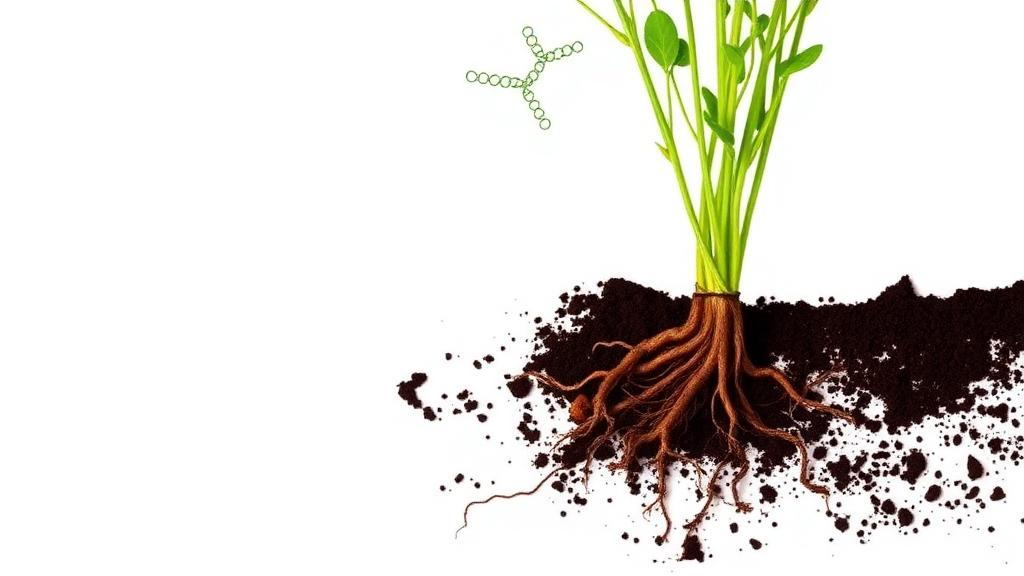
A soil-dwelling bacterium recovered from the roots of licorice plants may hold a surprising weapon against one of medicine’s most stubborn adversaries: methicillin-resistant Staphylococcus aureus, better known as MRSA. In a study published in Molecular Biology Reports, researchers at Al-Azhar University in Cairo report that the liquid broth in which this Bacillus strain grew—known as a cell-free supernatant—can kill MRSA cells, dismantle established biofilms by more than 90 percent, and switch off key genes that the pathogen needs to build those protective communities in the first place. The work, led by Noha Mohamed Taha Abbas with colleagues Omnia Karem Mahmoud Riad and Salwa Selim Afifi, offers a preliminary but compelling case that bacterial metabolites from ordinary soil could inspire the next generation of anti-biofilm therapies.
The team isolated the bacterium from licorice roots and identified it through 16S rRNA sequence analysis, the standard molecular barcode for bacteria. The strain, deposited in a local culture collection as Bacillus sp. CCASU-C91 and with sequence data filed in the NCBI repository under accession number OR455848, was first characterized for its antibiotic susceptibility profile, which showed sensitivity to several different drug classes. That baseline mattered: the researchers wanted to confirm they were working with a well-behaved laboratory organism before turning its secreted chemistry loose on clinical pathogens. The MRSA isolates used as targets were obtained from a hospital bacteriology laboratory, de-identified and anonymized, with ten distinct strains carrying GenBank accession numbers from PP693430 through PP693439.
At the heart of the study is a simple but powerful idea. Bacteria secrete an enormous repertoire of secondary metabolites—fatty acids, phenolic compounds, enzymes, and peptides—into their surroundings as chemical tools for competing with rival microbes. By growing Bacillus sp. CCASU-C91 in culture and then removing the bacterial cells by centrifugation and filtration, the researchers obtained a cell-free supernatant, or CFS, containing only those secreted molecules. This approach sidesteps the need to purify individual compounds at the screening stage and captures the combined activity of the entire metabolic cocktail, much as the bacterium would deploy it in nature.
To understand what that cocktail contained, the team ran the supernatant through gas chromatography–mass spectrometry, or GC-MS, a technique that separates volatile compounds and identifies them by their mass fingerprints. The analysis revealed a chemically diverse mixture, including fatty acids, phenolic compounds, and sesquiterpenes. Each of these classes has documented biological activity. Fatty acids such as hexadecanoic acid have been reported to interfere with quorum sensing, the chemical communication bacteria use to coordinate biofilm construction. Phenolic compounds contribute antioxidant and antimicrobial effects, while sesquiterpenes such as nerolidol have shown multi-faceted pharmacological properties in prior studies. The authors are careful not to attribute the observed activity to any single molecule; rather, the supernatant’s potency likely reflects the interplay of many constituents.
The antibacterial results were striking. The Bacillus CFS inhibited the growth of MRSA with minimum inhibitory concentrations ranging from 62.5 to 250 micrograms per milliliter across the tested strains, indicating meaningful variation in susceptibility among clinical isolates. Time-kill experiments added a dynamic dimension: when the supernatant was applied at twice the minimum inhibitory concentration, it killed more than half of the MRSA strains within four hours. Rapid killing is clinically desirable because it reduces the window in which surviving bacteria can adapt and regrow, and it suggests that the supernatant’s active compounds act quickly on essential cellular targets rather than merely slowing growth.
But the study’s most consequential findings concern biofilms—the slimy, self-produced matrices of polysaccharides, proteins, and DNA that bacteria build to shield themselves from antibiotics and immune attack. Biofilms are a major reason MRSA infections become chronic or recurrent, particularly on wounds, implants, and catheters, where they can tolerate antibiotic concentrations hundreds of times higher than planktonic, free-floating cells require. The researchers found that the CFS not only prevented new biofilms from forming but also attacked biofilms that had already established themselves, reducing preformed biofilm biomass by more than 90 percent. Dispersing mature biofilms is far harder than blocking their formation, so a natural extract capable of both activities is noteworthy.
To probe the mechanism, the team turned to quantitative real-time PCR and measured how the supernatant affected the expression of genes central to Staphylococcus aureus biofilm architecture. At half the minimum inhibitory concentration, the CFS significantly reduced the expression of icaA and icaD, genes encoding components of the machinery that synthesizes polysaccharide intercellular adhesin, the sticky sugar-based glue that holds staphylococcal biofilms together. It also suppressed ebps, which encodes an elastin-binding protein that helps MRSA anchor itself to host tissue components. Downregulating these genes means the supernatant does not simply kill bacteria after the fact; it interferes with the genetic program that allows them to stick together and to surfaces in the first place. This anti-virulence strategy is attracting growing interest because it exerts weaker selective pressure for resistance than conventional killing antibiotics do.
Beyond its antimicrobial punch, the supernatant displayed antioxidant and anti-inflammatory potential in vitro. In concentration-dependent assays, the CFS scavenged free radicals and inhibited protein denaturation, a laboratory proxy for anti-inflammatory activity, although in both cases its potency fell short of the reference standards used for comparison. The antioxidant capacity is plausibly linked to the phenolic compounds detected by GC-MS, since plant- and microbe-derived phenolics are well-known radical scavengers. The authors frame these activities as a potential bonus for wound applications, where excessive reactive oxygen species and inflammation impede healing, though they emphasize that these are preliminary in vitro observations rather than proof of therapeutic benefit.
Safety is where many natural antimicrobials stumble, so the team tested cytotoxicity directly. Using human skin fibroblasts—the connective tissue cells that populate wounds—they applied an MTT assay, which measures metabolic activity as a proxy for cell viability. The supernatant showed an IC50 value of 1029 plus or minus 20.2 micrograms per milliliter, meaning the concentration needed to harm half of the human cells was several-fold higher than the levels that inhibited MRSA growth and biofilms. That margin between toxicity to pathogen and toxicity to host cells is a critical early indicator of selectivity, and it supports the case for advancing the extract toward more demanding tests. Still, the authors are explicit that these findings are preliminary and that the supernatant’s complexity makes it difficult to know which compounds drive which effects, or how they would behave in the far messier environment of a living infection.
The study arrives amid intensifying concern about antimicrobial resistance, which has rendered some MRSA infections difficult to treat with existing drugs and renewed interest in soil bacteria as a source of novel chemistry. Bacillus species have a long track record here: they produce lipopeptides, bacteriocins, and enzymes that disrupt rival microbes, and related work has shown Bacillus-derived compounds promoting Staphylococcus aureus decolonization on skin and dispersing multispecies biofilms. What distinguishes the Egyptian team’s contribution is the combination of antibacterial killing, biofilm prevention, biofilm disruption, gene-level suppression of adhesion machinery, antioxidant activity, and a measured safety margin in human cells—all documented within a single in vitro framework. The next steps will require identifying and purifying the active constituents, testing synergy among them, and evaluating efficacy in animal models of biofilm-associated infection. If those efforts succeed, a humble bacterium pulled from licorice roots may eventually contribute to therapies for the antibiotic-resistant infections that modern medicine struggles most to defeat.
Subject of Research: Antibiofilm and antioxidant activity of cell-free supernatants from soil-derived Bacillus sp. against MRSA
Article Title: In Vitro evaluation of cell-free supernatants from soil-derived Bacillus sp. for antibiofilm and antioxidant activities
Article References: Abbas, N. M. T., Karem Mahmoud Riad, O., & Afifi, S. S. (2026). In Vitro evaluation of cell-free supernatants from soil-derived Bacillus sp. for antibiofilm and antioxidant activities. Molecular Biology Reports, 53(1), Article 1717. https://doi.org/10.1007/s11033-026-12843-2
Image Credits: AI Generated
DOI: 10.1007/s11033-026-12843-2
Keywords: MRSA, Bacillus, biofilm, cell-free supernatant, antimicrobial resistance, antioxidant, GC-MS, icaA, icaD, ebps, 16S rRNA, cytotoxicity
News Source: Morgan Morrow. (October 12, 2026). Soil Bacterium From Licorice Roots Strips MRSA Biofilms and Silences Their Genes. Scienmag.