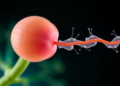
Credit: Photo: Jan-Peter Kasper/FSU Jena
(Jena, Germany) Perhaps you have come across the titles 'Men are from Mars, women are from Venus' or 'Why men don't listen and women can't read maps': just two of the many books and articles — some enlightening or amusing and others irritating — that theorise about fundamental differences between men and women.
Inflammatory diseases occur more frequently in women than in men
One difference between the sexes that should definitely be taken seriously, however, has been of increasing interest to doctors and pharmacists for a number of years. This is the difference between the sexes as regards susceptibility to certain diseases. "We know, for example, that inflammatory diseases such as asthma, psoriasis or rheumatoid arthritis occur much more frequently in women than in men," says Prof. Oliver Werz of the Friedrich Schiller University Jena. The german pharmacist and his team, together with colleagues from Italy, Denmark and Sweden, have uncovered a significant cause for these sex differences at the molecular level. In two high-profile publications in the 'Journal of Clinical Investigation' and 'Scientific Reports', they show how the male sex hormone testosterone interferes with the biosynthesis of inflammatory substances, and additionally reduces the effectiveness of anti-inflammatory drugs. (DOI: 10.1172/JCI92885 and DOI: 10.1038/s41598-017-03696-8).
To this end, the researchers comprehensively analysed and compared inflamematory processes in diverse animal models, but also in isolated immune cells from the blood of male and female human donors. This was made possible by a cell system developed in Prof. Werz's laboratory, in which the biochemical processes can be observed with high precision through time-resolved microscopy. "We investigated the formation of inflammatory substances, such as leukotrienes and prostaglandins, and looked at whether the effect of anti-inflammatory drugs differs in male and female cells," explains Werz.
Testosterone can protect against inflammatory reactions
As expected, the effect of the drugs under investigation was significantly stronger in the female samples than in the male samples – after all, the inflammatory process is much more pronounced in women. "However, these differences are completely abolished by the administration of testosterone," says Dr Simona Pace, first author of both papers. Previous studies – including work by Prof. Werz's team in Jena – have already shown that testosterone can protect against inflammatory reactions. "However, now we have been able to throw light on the molecular mode of action and show that testosterone also influences the therapeutic effect of drugs," notes the postdoc from the Department for Pharmaceutical and Medical Chemistry of the University of Jena.
The researchers found, firstly, that the sex hormone directly interferes with leukotriene biosynthesis by blocking the necessary interaction between the "5-Lipoxygenase" and "FLAP" proteins. Secondly, they were able to prove that the reduced leukotriene synthesis leads to increased amounts of prostaglandins, which further promote inflammatory reactions. This means that testosterone plays a key role in the inflammatory process and in modulating the immune response.
With this work, the researchers have once again provided specific evidence supporting the need for gender-specific medicine. "Anti-inflammatory substances that are suitable for women may have only a limited effect in men, and the opposite might also be true," concludes Prof. Werz. Treatment using a single product from the medicine cabinet could therefore lead to very different levels of success. This is a fact that should clearly be considered much more carefully in future in developing new drugs — especially for treating inflammatory diseases. In future, this could even lead to separate 'his' and 'hers' medicine cabinets.
###
Original publications:
Pace S et al.: Androgen-mediated sex bias in the efficiency of leukotriene biosynthesis inhibitors, Journal of Clinical Investigation 2017, DOI: 10.1172/JCI92885
Pace S et al.: Sex differences in prostaglandin biosynthesis in neutrophils during acute inflammation, Scientific Reports 2017, Jun 19;7(1):3759. DOI: 10.1038/s41598-017-03696-8
Contact:
Dr Simona Pace, Prof. Dr Oliver Werz
Institute of Pharmacy of Friedrich Schiller University Jena
Philosophenweg 14, 07743 Jena, Germany
Tel.: 49-0-3641 / 949816 or 949801
Email: [email protected], [email protected]
Media Contact
Axel Burchardt
[email protected]
0049-364-193-1031
http://www.uni-jena.de
Original Source
http://www.uni-jena.de/en/Research+News/FM170726_Geschlechtermedizin_en.html http://dx.doi.org/10.1038/s41598-017-03696-8