Nail lichen planus has long been one of dermatology’s quiet problems: a chronic inflammatory disorder that affects roughly one in ten patients with lichen planus, yet has never been the subject of a standardized treatment guideline, an approved therapy, or even a validated way to measure whether a treatment works. A new systematic review published in the Archives of Dermatological Research now offers the most comprehensive picture to date of how this condition is actually treated, and the findings suggest that the field’s reliance on corticosteroids may be due for a serious rethink.
The review, led by Fiona S. Gruzmark and colleagues at the University of Illinois College of Medicine in Chicago, was registered with PROSPERO and conducted according to PRISMA guidelines. The team searched PubMed, Embase, and Scopus from database inception through November 2025, ultimately including 37 studies covering 269 patients. Because the evidence base consists almost entirely of case reports and case series, with no controlled trials identified, the authors emphasize that their synthesis maps the landscape of current practice rather than ranking therapies with statistical confidence. Still, the patterns that emerge are striking enough to question the status quo.
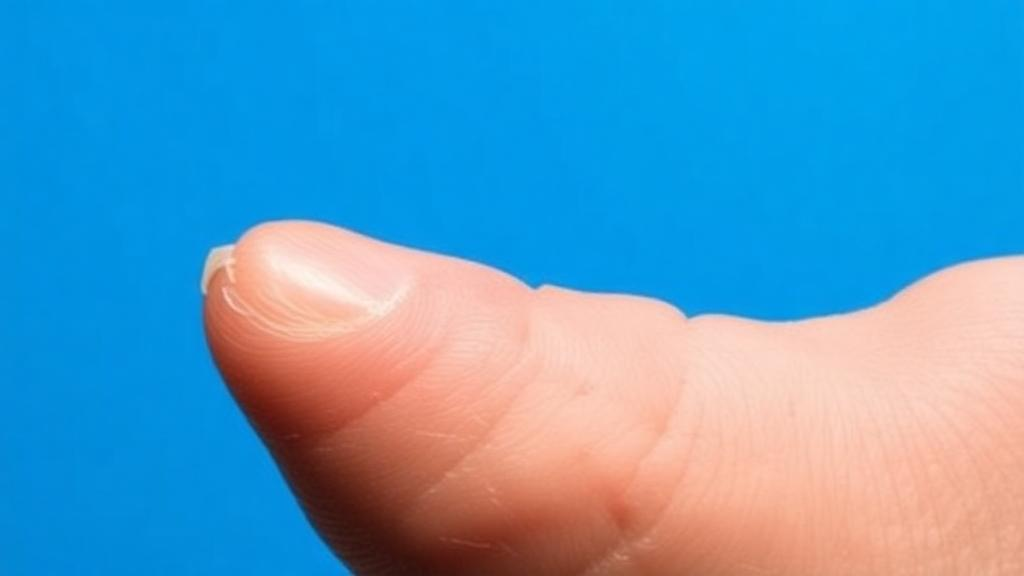
The clinical stakes are higher than many readers might expect. When lichen planus involves the nail matrix, the structure where the nail plate is generated, it can produce longitudinal ridging, thinning and fragmentation of the nail plate, a red lunula, and dorsal pterygium, a scarring process in which the proximal nail fold fuses to the nail bed. Nail bed involvement produces onycholysis, subungual hyperkeratosis, and splinter hemorrhages. In severe cases the damage is permanent, resulting in irreversible nail loss and significant impairment in quality of life. Histopathologically, the disease shows sawtooth acanthosis of the nail epithelium and a lymphocytic infiltrate at the dermoepidermal junction, hallmarks of a lichenoid tissue reaction.
The underlying immunology is increasingly well characterized. The pathogenesis involves abnormal Toll-like receptor signaling, accumulation of plasmacytoid dendritic cells, and destruction of keratinocytes by autoreactive CD8-positive T lymphocytes. Recent work has also implicated Death-Associated Protein Kinase 1, which mediates keratinocyte apoptosis and counteracts necroptosis and inflammatory gene regulation. Diagnosis rests on clinical examination, with nail biopsy used for confirmation; a longitudinal biopsy targeting the most involved area shows a 96.30 percent concordance between clinical and histopathologic localization, and taking two specimens may increase diagnostic yield. The procedure carries a reported risk of permanent nail dystrophy or scarring in roughly 28 to 29 percent of patients, underscoring why better noninvasive outcome measures are needed.
Against that backdrop, the review’s treatment data are revealing. Intralesional corticosteroids were the most frequently used therapy, accounting for 34.2 percent of treated patients, followed by systemic corticosteroids at 18.6 percent, steroid-sparing immunomodulatory agents at 16.7 percent, combination therapies at 8.9 percent, Janus kinase inhibitors at 5.2 percent, oral retinoids at 3.4 percent, topical corticosteroids at 2.2 percent, and laser therapy at 0.4 percent. Ten percent of participants received no treatment at all. The current expert consensus, last updated in 2020, recommends intralesional triamcinolone acetonide as first-line therapy, with systemic corticosteroids reserved for more aggressive disease.
Yet when the authors tabulated outcomes, the hierarchy of efficacy looked very different from the hierarchy of use. Only 1.1 percent of patients treated with intralesional steroids achieved complete recovery, and 27.2 percent showed partial improvement. Systemic steroids fared somewhat better, with 62.0 percent achieving complete improvement and 34.0 percent partial improvement. By contrast, patients receiving Janus kinase inhibitors showed 35.7 percent complete and 64.3 percent partial improvement, and those on oral retinoids showed 21.1 percent complete and 68.4 percent partial improvement. Among the steroid-sparing immunomodulatory agents, 6.7 percent achieved complete and 57.8 percent partial improvement, with the complete recoveries occurring in patients treated with mycophenolate mofetil and chloroquine. Low-dose naltrexone, a novel addition to the armamentarium, produced partial improvement in 57.1 percent of treated patients.
The mechanistic rationale for the JAK inhibitors is particularly compelling. In lichen planus, interferon-gamma primes keratinocytes and increases their susceptibility to cytotoxic CD8-positive T cell attack through upregulation of MHC class I molecules, a process dependent on JAK2 and STAT1 signaling. By blocking the JAK-STAT pathway, agents such as baricitinib, ruxolitinib, tofacitinib, abrocitinib, and upadacitinib interrupt this interferon-driven inflammatory cascade, reducing T cell-mediated cytotoxicity against nail matrix keratinocytes. Work in oral lichen planus further suggests these drugs prevent cytotoxic T cell migration and enhance mucosal barrier integrity through increased expression of tight junction proteins. Notably, no adverse events were reported among JAK inhibitor-treated patients in the review, although the authors caution that follow-up durations were limited and that the class carries an FDA boxed warning for serious infections, malignancy, major cardiovascular events, and thrombosis, risks particularly relevant to the middle-aged and older adults who most often develop the disease.
Oral retinoids such as alitretinoin and acitretin, which modulate epithelial differentiation through nuclear retinoid receptors, achieved the highest partial response rate of any drug class but come with a heavier toxicity burden. Reported adverse events included headache, elevated liver enzymes, acute diverticulitis, cheilitis, facial flushing, xerosis, and mucocutaneous dryness. Retinoids are contraindicated in children and adolescents because of the risk of premature epiphyseal closure, require mandatory contraception in women of childbearing potential due to teratogenicity, and demand caution in elderly patients. Corticosteroid-related adverse events were also documented, including pain, subungual hematoma, hypopigmentation, and atrophy with intralesional injections; one case of Nicolau syndrome, localized tissue ischemia at the injection site; and weight gain, transient cushingoid features, mood changes, and gastrointestinal symptoms with systemic use. Cyclosporine produced hypertension in two patients.
Among the newer alternatives, low-dose naltrexone stands out for its unusual pharmacology. At doses of around 3 milligrams daily, the opioid receptor antagonist paradoxically increases endogenous opioid synthesis and exerts anti-inflammatory effects through antagonism of Toll-like receptor 4, a pathway with elevated signaling in lichen planus. In a retrospective case series cited in the review, four of seven biopsy-proven nail lichen planus patients achieved a clinical response with no adverse events, and the drug has shown benefit across a range of inflammatory dermatoses including psoriasis, hidradenitis suppurativa, and dermatomyositis. However, disease reactivation was observed after elective discontinuation, and the authors stop short of endorsing it given the small sample sizes reported so far.
The review’s limitations are candidly acknowledged and considerable. The search strategy used only American English drug names, potentially missing studies indexed under British equivalents, and only English-language publications were included, introducing language bias. Publication and outcome reporting bias may have inflated apparent efficacy. Most critically, 81.1 percent of included studies were case reports or case series, no controlled studies were identified, and the absence of a validated scoring system made cross-study comparison nearly impossible, with many studies reporting vague categories like clinical or moderate improvement. One study applied the Nail Lichen Planus Severity Index, a promising but not yet formally validated tool that incorporates irreversible damage and extent of nail unit involvement. The authors conclude that a re-evaluation of current management is warranted, and that larger, well-designed controlled studies with validated outcome measures are the essential next step for a disease that can quietly destroy nails permanently.
Subject of Research: Therapeutic management of nail lichen planus
Article Title: Therapeutic management of nail lichen planus: a systematic review
Article References: Gruzmark, F. S., Ramir, J., Aggarwal, I., & Haber, R. (2026). Therapeutic management of nail lichen planus: a systematic review. Archives of Dermatological Research, 318(1), Article 422. https://doi.org/10.1007/s00403-026-04838-7
Image Credits: AI Generated
DOI: 10.1007/s00403-026-04838-7
Keywords: nail lichen planus, systematic review, JAK inhibitors, corticosteroids, oral retinoids, low-dose naltrexone, immunomodulatory therapy, nail matrix, dermatology, triamcinolone, PRISMA, treatment outcomes
News Source: Ophelia Keating. (October 11, 2026). JAK Inhibitors Emerge as Promising Option in First Systematic Review of Nail Lichen Planus Treatments. Scienmag.