A team of neuroscientists and nanomaterials researchers has engineered a drug delivery system that pairs ultrathin graphene oxide nanosheets with neuropeptide Y, an endogenous modulator of neuronal transmission, and used it to selectively dampen fear memory circuits in the living brain. Reporting in Advanced Science, the group shows that when this non-covalent complex is injected into the lateral amygdala of rats, it suppresses glutamatergic signaling exclusively through neuropeptide Y receptors, blocking the pathological synaptic potentiation that underlies traumatic fear memories while leaving anxiety-related behaviors and general locomotor activity untouched. The work, published on 9 October 2026, represents one of the clearest demonstrations to date that a nanomaterial-based carrier can target specific neuronal pathways in vivo rather than acting diffusely across brain tissue.
The choice of neuropeptide Y was deliberate. The 36-amino-acid peptide is a well-characterized brake on excitatory neurotransmission, toning down glutamate release at presynaptic terminals, and it has been proposed as a candidate therapeutic for anxiety disorders and post-traumatic stress disorder. The problem has always been delivery: peptides are fragile, diffuse poorly, and act promiscuously unless they can be steered to the right cells. The researchers turned to medical-grade graphene oxide, a two-dimensional carbon nanomaterial whose large surface area and versatile surface chemistry allow high loading of bioactive molecules. Crucially, they used small, thin nanosheets with lateral dimensions below one micrometer, a variant previously shown to be biocompatible with nervous tissue in vitro and in vivo and even degradable by immune cells after administration.
Building the complex was chemically simple but rigorously characterized. The team adjusted the pH of the nanosheet suspension to neutrality, added neuropeptide Y, and tested several mass ratios before settling on 10:4, the highest peptide load that remained colloidally stable. Unbound peptide was removed by repeated ultracentrifugation through 100-kilodalton cutoff filters, and quantification confirmed that essentially all of the starting nanosheet material was recovered with the peptide retained on its surface. Scanning electron microscopy showed that 95 percent of the sheets measured below 328 nanometers across, with a mean near 121 nanometers, while atomic force microscopy revealed thicknesses of only one to two nanometers, corresponding to single or double layers. X-ray photoemission spectroscopy detected the nitrogen signature of the peptide on the sheet surface, and X-ray diffraction showed the characteristic interlayer spacing of graphene oxide shifting as the peptide intercalated between sheets.
Perhaps the most striking materials result was stability. Dynamic light scattering and zeta potential measurements showed particles of roughly 200 nanometers with a strongly negative surface charge of about minus 50 millivolts, values that remained constant for more than 60 days. High-performance liquid chromatography found no detectable peptide detachment over 42 days of storage at room temperature, and even after two years, forced-detachment assays showed no measurable loss of peptide loading. The complex was also confirmed to be free of endotoxin contamination, a critical requirement for any material destined for the brain.
With the platform validated, the team moved to electrophysiology. In dissociated hippocampal cultures, a standard testing ground for vectorized delivery systems, they recorded excitatory postsynaptic currents from individual pyramidal neurons using patch-clamp pipettes while isolating glutamatergic events with a GABA receptor blocker. Applying either free neuropeptide Y or the nanosheet complex for five minutes produced a reversible depression of synaptic activity: normalized event frequencies fell to roughly half of baseline in both cases, and amplitudes dropped significantly, with washout restoring activity toward control levels. When the researchers repeated the experiment in the presence of selective antagonists for the Y1 and Y2 neuropeptide Y receptors, the depression vanished entirely, confirming that the complexed peptide was still acting through its native receptors and not through any intrinsic effect of the graphene oxide itself.
The next question was whether the complex could block synaptic plasticity, the cellular substrate of fear memory. In dissociated amygdala cultures, which express both Y1 and Y2 receptors, the team induced chemical long-term potentiation by briefly flooding the cells with glutamate while depolarizing the membrane. Untreated neurons responded with a robust, lasting increase in excitatory synaptic strength, with amplitudes rising to about 1.6 times baseline. When free neuropeptide Y or the nanosheet complex was applied before and during the induction protocol, that potentiation was completely prevented, with amplitudes remaining statistically indistinguishable from pre-induction baselines. The implication was clear: the peptide, whether free or riding on a nanosheet, could shut down the very form of synaptic strengthening that locks traumatic memories into amygdala circuits.
The in vivo experiments provided the conceptual centerpiece. Neuroanatomists distinguish two output pathways from the lateral amygdala: one projecting to the ventrolateral periaqueductal gray, which drives defensive fear responses, and another to the ventromedial hypothalamus, which regulates anxiety. Using a fluorescent retrograde tracer injected into each target region, the researchers confirmed that only the fear pathway, the projection to the periaqueductal gray, expresses the Y1 receptor, while the anxiety pathway lacks it. This differential receptor expression offered a molecular handle for selective pharmacology: a ligand for Y1 receptors should silence fear circuits while sparing anxiety circuits.
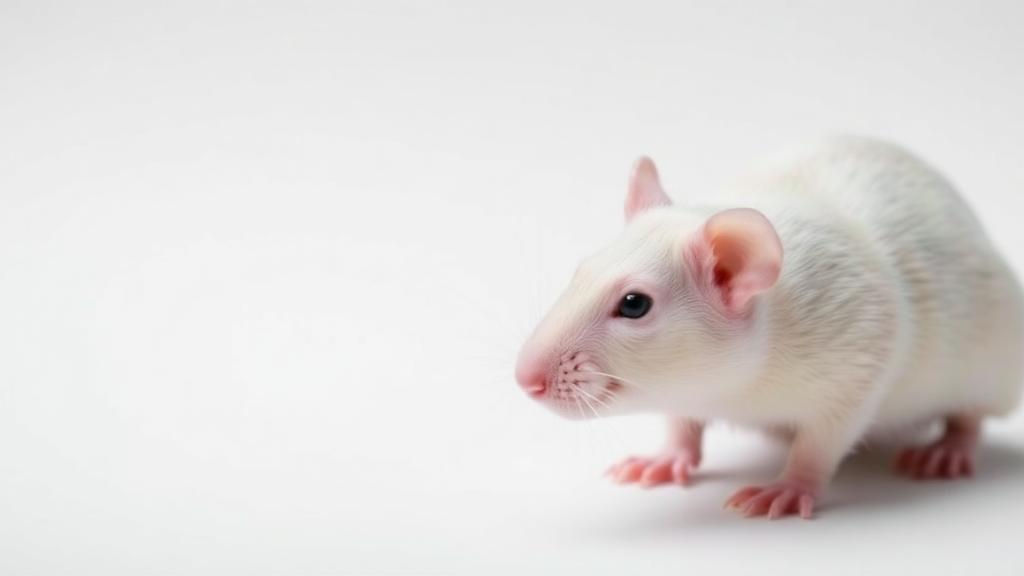
To test this, the team used a rat model of post-traumatic stress disorder in which exposure to a cat-worn collar, a predator odor, triggers lasting fear and anxiety behaviors. Rats exposed to the odor showed a marked increase in head-out defensive scanning when re-exposed to the context eight days later, a hallmark of consolidated aversive memory. Injecting either free neuropeptide Y or the nanosheet complex directly into the lateral amygdala abolished this defensive response, while rats given saline remained fearful. Yet on the elevated plus maze, a standard test of anxiety, all odor-exposed groups, including those treated with the complex, still showed heightened anxiety-like behavior, spending less time on the open arms. Open field testing confirmed no changes in locomotion, ruling out motor impairment as a confound. The specificity was further reinforced by control experiments: blocking Y1 receptors with the antagonist BIBO 3304, or substituting a scrambled peptide sequence on the nanosheets, eliminated the fear-memory effect entirely.
The authors argue that these results consolidate a picture in which stress-related behaviors are carried by anatomically and neurochemically distinct pathways that can be pharmacologically separated. Because the nanosheet complex lost the intrinsic glutamate-modulating activity that pristine graphene oxide displays on its own, and because its effects vanished in the presence of receptor antagonists, the team concludes that the peptide remains largely associated with the nanosheet during its biological action, whether by being presented to receptors or released locally. The current experiments cannot fully discriminate between those two mechanisms, a limitation the authors acknowledge openly.
The therapeutic horizon is nonetheless considerable. Intracranial injection, as used here, is not a practical route for patients, but the researchers suggest that complexing peptides to graphene oxide might improve crossing of biological barriers and preserve peptide bioavailability through less invasive routes such as intravenous or intranasal administration. The versatile surface chemistry of graphene oxide also opens the door to multifunctional carriers loaded with several molecules at once, potentially enabling combined therapeutic and diagnostic platforms aimed at precise targets in the central nervous system. For a field where targeted drug delivery to defined neural circuits has remained an aspiration more than an achievement, a flat carbon nanosheet quietly ferrying a neuropeptide to exactly the right synapses is a result worth watching.
Subject of Research: Graphene oxide nanosheet delivery of neuropeptide Y to selectively inhibit fear memory circuits in the amygdala
Article Title: Neuropeptide Y—Graphene Oxide Complexes Inhibit Amygdala NPY‐Receptor Expressing Glutamatergic Pathways and Selectively Remove Aversive Memory In Vivo
Article References: Pati, E., Franceschi Biagioni, A., Casani, R., Arellano, L. M., Battisti, T., Garcia‐Ortega, G., Lozano, N., Bianco, A., Kostarelos, K., Ballerini, L., & Cellot, G. (2026). Neuropeptide Y—Graphene Oxide Complexes Inhibit Amygdala NPY‐Receptor Expressing Glutamatergic Pathways and Selectively Remove Aversive Memory In Vivo. Advanced Science, 13(56), Article e76608. https://doi.org/10.1002/advs.76608
Image Credits: AI Generated
DOI: 10.1002/advs.76608
Keywords: graphene oxide, neuropeptide Y, drug delivery, amygdala, fear memory, PTSD, synaptic plasticity, long-term potentiation, nanomedicine, glutamatergic transmission, Y1 receptor, neuroscience
News Source: Neil Sanderson. (October 10, 2026). Graphene Oxide Nanosheets Deliver Neuropeptide Y to Erase Fear Memories in Rats. Scienmag.