• HOME
  • NEWS
  • EXPLORE
    • CAREER
      • Companies
      • Jobs
    • EVENTS
    • iGEM
      • News
      • Team
    • PHOTOS
    • VIDEO
    • WIKI
  • BLOG
  • COMMUNITY
    • FACEBOOK
    • INSTAGRAM
    • TWITTER
Saturday, February 7, 2026
BIOENGINEER.ORG
No Result
View All Result
  • Login
  • HOME
  • NEWS
  • EXPLORE
    • CAREER
      • Companies
      • Jobs
        • Lecturer
        • PhD Studentship
        • Postdoc
        • Research Assistant
    • EVENTS
    • iGEM
      • News
      • Team
    • PHOTOS
    • VIDEO
    • WIKI
  • BLOG
  • COMMUNITY
    • FACEBOOK
    • INSTAGRAM
    • TWITTER
  • HOME
  • NEWS
  • EXPLORE
    • CAREER
      • Companies
      • Jobs
        • Lecturer
        • PhD Studentship
        • Postdoc
        • Research Assistant
    • EVENTS
    • iGEM
      • News
      • Team
    • PHOTOS
    • VIDEO
    • WIKI
  • BLOG
  • COMMUNITY
    • FACEBOOK
    • INSTAGRAM
    • TWITTER
No Result
View All Result
Bioengineer.org
No Result
View All Result
Home NEWS Science News Biology

Zebrafish study reveals clues to healing spinal cord injuries

Bioengineer by Bioengineer
July 25, 2017
in Biology
Reading Time: 2 mins read
0
Share on FacebookShare on TwitterShare on LinkedinShare on RedditShare on Telegram

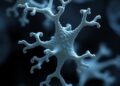
Credit: University of Edinburgh

Fresh insights into how zebrafish repair their nerve connections could hold clues to new therapies for people with spinal cord injuries.

Researchers have pinpointed key molecules that prompt damaged nerve fibres in the fish to regenerate themselves.

The findings could pave the way for treatments that help restore vital connections between the brain and muscles of the body that are lost after spinal cord injury.

For people and other mammals, damage to the spinal cord is permanent and results in irreversible paralysis.

Zebrafish have the remarkable ability to regain full movement within four weeks of injury to their spinal cord.

Studies have shown that they are able to restore damaged connections and nerve cells in the spinal cord.

Scientists at the University of Edinburgh's Centre for Neuroregeneration have pinpointed a key mechanism that helps the nerve connections to regrow.

They found that after injury, wound-healing cells called fibroblasts move into the site of damage.

These fibroblasts produce a molecule called collagen 12, which changes the structure of the support matrix that surrounds nerve fibres.

This enables the damaged fibres to grow back across the wound site and restore the lost connections.

The team found that fibroblasts are instructed to make collagen 12 by a chemical signal called wnt.

Understanding these signals could hold clues for therapies to help heal the spinal cord after injury, the researchers say.

The study, published in the journal Nature Communications, was funded by the Biotechnology and Biological Science Research Council. The German research funding organisation, DFG, also supported the research.

Dr Thomas Becker, of the University of Edinburgh's Centre for Neuroregeneration, said: "In people and other mammals, the matrix in the injury site blocks nerves from growing back after an injury. We have now pinpointed the signals that remove this roadblock in zebrafish, so that nerve cells can repair connections that are lost after damage to the spinal cord."

"We next plan to check whether triggering these signals in other animals can help them to repair nerve connections damaged by spinal cord injuries."

###

Media Contact

Jen Middleton
[email protected]
44-131-650-6514
@edinunimedia

http://www.ed.ac.uk

Related Journal Article

http://dx.doi.org/10.1038/s41467-017-00143-0
Share12Tweet8Share2ShareShareShare2

Related Posts

Florida Cane Toad: Complex Spread and Selective Evolution

Florida Cane Toad: Complex Spread and Selective Evolution

February 7, 2026
New Study Uncovers Mechanism Behind Burn Pit Particulate Matter–Induced Lung Inflammation

New Study Uncovers Mechanism Behind Burn Pit Particulate Matter–Induced Lung Inflammation

February 6, 2026

DeepBlastoid: Advancing Automated and Efficient Evaluation of Human Blastoids with Deep Learning

February 6, 2026

Navigating the Gut: The Role of Formic Acid in the Microbiome

February 6, 2026
Please login to join discussion

POPULAR NEWS

  • Robotic Ureteral Reconstruction: A Novel Approach

    Robotic Ureteral Reconstruction: A Novel Approach

    82 shares
    Share 33 Tweet 21
  • Digital Privacy: Health Data Control in Incarceration

    63 shares
    Share 25 Tweet 16
  • Study Reveals Lipid Accumulation in ME/CFS Cells

    57 shares
    Share 23 Tweet 14
  • Breakthrough in RNA Research Accelerates Medical Innovations Timeline

    53 shares
    Share 21 Tweet 13

About

We bring you the latest biotechnology news from best research centers and universities around the world. Check our website.

Follow us

Recent News

Digital Health Perspectives from Baltic Sea Experts

Florida Cane Toad: Complex Spread and Selective Evolution

Exploring Decision-Making in Dementia Caregivers’ Mobility

Subscribe to Blog via Email

Enter your email address to subscribe to this blog and receive notifications of new posts by email.

Join 73 other subscribers
  • Contact Us

Bioengineer.org © Copyright 2023 All Rights Reserved.

Welcome Back!

Login to your account below

Forgotten Password?

Retrieve your password

Please enter your username or email address to reset your password.

Log In
No Result
View All Result
  • Homepages
    • Home Page 1
    • Home Page 2
  • News
  • National
  • Business
  • Health
  • Lifestyle
  • Science

Bioengineer.org © Copyright 2023 All Rights Reserved.