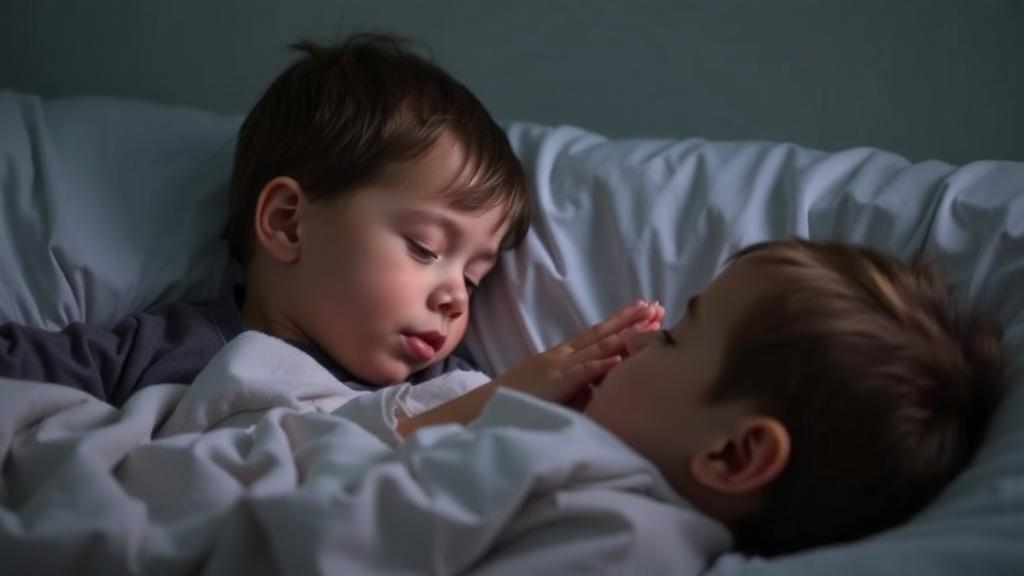
For millions of children worldwide, a night of sleep is anything but restful. Snoring, gasping, and restless tossing are often dismissed as harmless quirks of childhood, but a growing body of research suggests they may signal something far more consequential. A new study from Taiwan, published in BMC Pediatrics, has uncovered the first direct evidence that allergic rhinitis—the sneezing, congestion, and itchy eyes triggered by allergens such as dust mites and pollen—is linked to impaired arousal regulation in children with sleep-disordered breathing. The finding could reshape how pediatricians think about the intersection of allergies and sleep, and it arrives with a striking implication: treating a child’s runny nose may be an essential part of treating their sleep disorder.
Sleep-disordered breathing, or SDB, encompasses a spectrum of conditions in which airflow during sleep is partially or completely obstructed. At the milder end lies habitual snoring, where the soft tissues of the upper airway vibrate noisily but breathing remains largely intact. At the severe end sits obstructive sleep apnea, or OSA, in which the airway collapses repeatedly, causing pauses in breathing, drops in blood oxygen, and abrupt micro-awakenings that fragment sleep into shards. Children with OSA often appear exhausted during the day, struggle with attention and learning, and in some cases develop behavioral problems that mimic attention-deficit hyperactivity disorder. The condition is far from rare, and its prevalence is believed to be rising alongside childhood obesity.
Allergic rhinitis, meanwhile, is one of the most common chronic conditions of childhood. It inflames the nasal mucosa, produces congestion and postnasal drip, and has long been associated with poor sleep quality in both children and adults. Previous studies have established that children with allergic rhinitis are more likely to snore and more likely to be diagnosed with sleep-disordered breathing. What remained murky was precisely how the allergy affects the architecture of sleep itself—particularly the delicate machinery of arousals, the brief awakenings that the sleeping brain deploys in response to internal disturbances. The new research, led by Tzu-Yuan Kang and Wan-Yu Lai of China Medical University Hospital in Taichung, set out to illuminate that relationship with the help of polysomnography, the gold-standard technique for measuring sleep.
Polysomnography is an elaborate overnight recording in which electrodes track brain waves, eye movements, muscle tone, heart rhythm, airflow, and blood oxygen. From these signals, sleep technicians can identify every respiratory event, every limb movement, and every arousal, and can compute indices that quantify how frequently each occurs per hour of sleep. The respiratory arousal index, or RAI, counts the awakenings triggered specifically by breathing disturbances, while the spontaneous arousal index captures awakenings with no identifiable trigger, and the periodic limb movement arousal index tallies those caused by involuntary leg jerks. Together, these measures offer a granular portrait of how fragmented a child’s sleep truly is.
The Taiwanese team conducted a retrospective analysis of polysomnography data collected between 2009 and 2020 at a tertiary hospital, focusing on children under twelve years of age who had been evaluated for sleep-disordered breathing. The participants were sorted into four groups according to their polysomnographic findings and clinical diagnoses, distinguishing children with obstructive sleep apnea from those with simple snoring, and accounting for whether allergic rhinitis was present. In total, 643 children were included in the analysis. The researchers then applied multivariable regression models to tease apart the independent contributions of allergy, obesity, age, sex, asthma, and other comorbidities to the various arousal indices.
The results were unambiguous. Children with obstructive sleep apnea who also suffered from allergic rhinitis exhibited significantly more respiratory events and a significantly higher respiratory arousal index than their counterparts without the allergy, with both differences reaching statistical significance at P less than 0.001. In other words, the combination of a blocked, inflamed nose and an already compromised airway produced measurably more fragmented sleep than either condition alone. This finding aligns with the mechanistic intuition that nasal inflammation narrows the upper airway, increases negative pressure during inspiration, and thereby lowers the threshold at which each breathing effort triggers a cortical awakening.
But the study also produced a genuinely surprising result. Using multivariable negative binomial regression—a statistical approach suited to count data such as arousal counts—the team found that allergic rhinitis was independently associated with a lower periodic limb movement arousal rate, with an adjusted incidence rate ratio of 0.393 and a 95 percent confidence interval spanning 0.183 to 0.848. This association held even after the researchers adjusted for comorbid asthma and OSA status. The finding, reported at P equal to 0.017, suggests that allergic rhinitis does not simply amplify every form of sleep disruption; rather, it appears to reshape the pattern of arousals in a selective way, boosting respiratory-driven awakenings while somehow dampening those driven by limb movements. The authors describe this as the first evidence of a significant link between allergic rhinitis and impaired arousal regulation in pediatric sleep-disordered breathing.
The regression analysis also mapped the broader landscape of factors that drive respiratory arousals in children. Older age was associated with a modestly lower respiratory arousal rate, with an adjusted incidence rate ratio of 0.914 at P equal to 0.011, hinting that the airways of older children may be more resilient to collapse. Male sex emerged as a risk factor, with a ratio of 1.643 at P equal to 0.006, consistent with the well-documented male predominance in sleep apnea. Higher body mass index carried a ratio of 1.048 per unit at P equal to 0.018, underscoring the metabolic dimension of the disease. Most dramatically, the presence of obstructive sleep apnea itself carried a ratio of 12.382 at P less than 0.0001, confirming that a formal apnea diagnosis is by far the strongest predictor of respiratory-driven sleep fragmentation. Enuresis, or bedwetting, was also independently associated with higher respiratory arousal rates, with a ratio of 2.065 at P equal to 0.029—a connection that may reflect the way sleep fragmentation disrupts the hormonal regulation of nighttime urine production.
The clinical implications of the study are considerable. The authors argue that their findings underscore the necessity of screening for sleep disturbances in children with allergic rhinitis, a population that pediatricians frequently encounter but whose sleep problems may go unexamined. A child brought in for chronic sneezing and congestion may, in fact, be harboring significant sleep fragmentation that affects cognition, mood, growth, and cardiovascular health. Conversely, the results suggest that managing comorbid allergic rhinitis is a critical component of pediatric sleep disorder therapy. For a child undergoing evaluation or treatment for snoring or obstructive sleep apnea, leaving the underlying allergy untreated may undermine the effectiveness of interventions ranging from nasal surgery to adenotonsillectomy, the most common surgical treatment for pediatric OSA.
The study is not without limitations inherent to its design. As a retrospective, single-center analysis, it relied on children who had already been referred for sleep evaluation, which may limit generalizability to the broader population of allergic children who snore. The authors also note that the manuscript was prepared with assistance from the generative AI tool Gemini to improve grammatical accuracy and readability, with the authors reviewing and editing the content and taking full responsibility for it. The research was supported by the Holistic Health care Foundation of China Medical University Hospital, and the ethics review board of the hospital approved the study with a waiver of informed consent given its retrospective nature. Even so, the work opens a compelling new window onto the physiology of childhood sleep. It suggests that the brain’s arousal system, far from being a passive victim of airway obstruction, is dynamically modulated by allergic inflammation—and that the humble stuffy nose may hold more power over a child’s sleeping brain than anyone had previously measured.
Subject of Research: The association between allergic rhinitis and polysomnographic arousal indices in children with sleep-disordered breathing
Article Title: Association of allergic rhinitis with polysomnographic arousal indices in children with sleep-disordered breathing
Article References: Kang, T.-Y., Wei, C.-C., Hang, L.-W., Li, Y.-H., Yen, H.-R., Wang, J.-Y., Lin, C.-H., & Lai, W.-Y. (2026). Association of allergic rhinitis with polysomnographic arousal indices in children with sleep-disordered breathing. BMC Pediatrics. https://doi.org/10.1186/s12887-026-07684-8
Image Credits: AI Generated
DOI: 10.1186/s12887-026-07684-8
Keywords: allergic rhinitis, sleep-disordered breathing, obstructive sleep apnea, polysomnography, arousal index, pediatrics, snoring, respiratory arousal index, sleep architecture, asthma, enuresis, children's sleep
News Source: Ophelia Keating. (October 10, 2026). Stuffy Noses, Restless Nights: Allergic Rhinitis Disrupts Sleep Arousal in Children with Breathing Disorders. Scienmag.