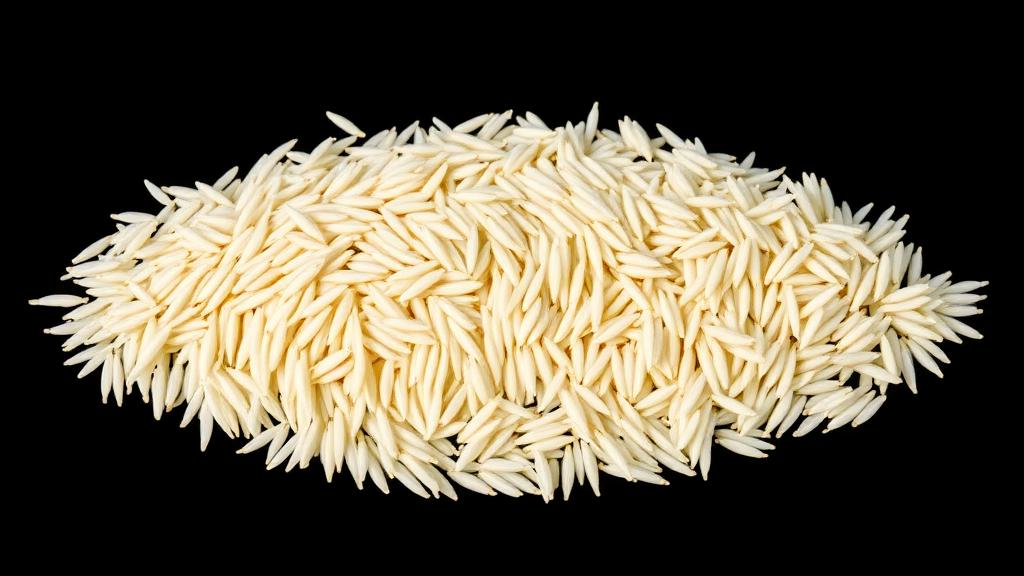
Rice feeds more than half of the world’s population, yet telling one variety of rice grain from another has long been a stubbornly manual task. Inspectors in mills and seed facilities rely on subtle differences in grain shape, color, and surface texture—features that human eyes can distinguish only after years of training and that vary with fatigue and lighting conditions. A new study published in Cluster Computing by Yusuf Alaca, Berkay Emin, Yeliz Karaca, Akif Akgül, and Hakan Duran demonstrates that a carefully engineered combination of deep learning and classical machine learning can perform this discrimination automatically, with accuracy figures that approach the practical ceiling for a five-class problem. The work, conducted across Hitit University, UMass Chan Medical School, and Erciyes University, focuses on five rice varieties cultivated in Türkiye: Osmancık97, İskender, Rekor, Yatkın, and Gala.
The research addresses a genuine agricultural bottleneck. Image-based inspection has emerged as one of the most promising nondestructive techniques in modern agriculture because it merges image analysis with machine learning to achieve rapid, automatic evaluation of grain quality. Rather than destroying samples through chemical testing or relying on slow manual sorting, a camera and an algorithm can assess morphological, color-related, and textural traits simultaneously. The Turkish team positioned their work within this tradition but pushed it further by asking a specific technical question: which deep learning backbone, and which downstream classifier, best suits the fine-grained problem of rice variety identification? The answer, they found, depends on how the components are paired.
At the heart of the study are two convolutional neural network architectures that have become workhorses of efficient computer vision: MobileNetV2 and Xception. MobileNetV2, introduced by Sandler and colleagues in 2018, is built around inverted residual blocks and linear bottlenecks, a design that keeps computational cost low while preserving representational power—qualities that make it attractive for deployment on modest hardware in mills or field stations. Xception, proposed by François Chollet in 2017, takes a different route, replacing standard convolutions with depthwise separable convolutions that factorize a single filtering operation into a spatial filter followed by a channel-wise mixing step. Both architectures were originally trained on massive general-purpose image datasets, and the researchers exploited this through transfer learning, reusing the learned visual features as a starting point for rice grain recognition rather than training a network from scratch.
Transfer learning matters here for a practical reason. A from-scratch convolutional network typically requires hundreds of thousands of labeled images to reach high performance, whereas a pretrained backbone can adapt to a new domain with far fewer examples because its early layers already encode general visual primitives such as edges, textures, and curvature. Rice grains, photographed against controlled backgrounds, present exactly the kind of texture-and-shape discrimination problem that these pretrained features transfer to well. The study also employed a region proposal-based methodology, meaning the pipeline first localizes grain regions within images before classification, a step that matters when grains appear in clusters or when the system must both find and identify the object of interest rather than merely label an already-cropped photograph.
The researchers did not stop at the neural networks’ own predictions. Instead, they treated the deep models as feature extractors and fed their representations into a battery of classical machine learning classifiers: Support Vector Machine (SVM), eXtreme Gradient Boosting (XGBOOST), K-Nearest Neighbors (KNN), and Random Forest (RF). This hybrid strategy reflects a well-established insight in applied machine learning—deep networks excel at learning hierarchical features from raw pixels, while classical classifiers such as SVMs, which separate classes by maximizing the margin between them, can be remarkably effective at drawing decision boundaries in a well-constructed feature space. Random Forests aggregate many decorrelated decision trees to reduce variance, XGBoost builds trees sequentially to correct residual errors, and KNN classifies each sample by majority vote among its nearest neighbors in feature space. Each brings different inductive biases, and the study evaluated them all systematically.
The headline result is striking in its clarity. Evaluated end to end, MobileNetV2 achieved the highest accuracy of 0.9343, with both deep models reaching high levels of accuracy and sensitivity across the five rice varieties. But the best performance came from the hybrid configuration: pairing MobileNetV2 features with an SVM classifier pushed overall accuracy to 0.9556. In a five-class classification problem, where random guessing yields roughly 20 percent accuracy and where varieties can differ only marginally in aspect ratio or surface texture, an accuracy above 95 percent represents performance close to the practical limits imposed by image quality and inter-variety similarity. The finding that a linear-margin classifier on deep features outperforms the networks’ own softmax heads is consistent with a broader pattern in the literature: when features are rich and well-separated, simpler classifiers often generalize better and are less prone to overfitting on modest datasets.
Evaluation rigor was a central concern of the work. The team assessed performance through a comprehensive set of metrics—accuracy, precision, specificity, sensitivity, and F1 score—rather than relying on accuracy alone. This matters because accuracy can be misleading when class distributions are imbalanced or when the costs of different errors differ. Sensitivity, for instance, measures how reliably the system correctly identifies grains of a given variety, while specificity captures how well it avoids false alarms for that variety. Precision and the F1 score, the harmonic mean of precision and recall, round out the picture of how the pipeline behaves per class. The study also examined computational efficiency, an essential consideration for any system intended to run in real time on the kind of hardware available in agricultural processing facilities rather than in data centers.
The implications extend beyond Turkish rice. The authors frame the work as a significant advancement toward automated plant recognition and classification systems in agriculture and related domains, with direct contributions to quality control and efficiency in the agricultural sector. Automated variety verification has concrete commercial value: seed certification programs depend on varietal purity, adulteration of premium rice with cheaper varieties is a documented fraud problem, and mill operators need to route different varieties to different processing lines. A camera-based system running a MobileNetV2-SVM pipeline could perform these checks continuously, nondestructively, and at a throughput no human inspector can match. The study builds on a growing body of research, including earlier work by Koklu and colleagues on rice variety classification with deep learning and studies applying transfer learning to rice adulteration quantification, consolidating a trend toward vision-based grain analytics.
Technically, the work also illustrates a broader shift in how machine learning is deployed in agriculture. Rather than chasing ever-larger models, the field is converging on efficient architectures paired with lightweight classical classifiers—a combination that balances accuracy, interpretability of the decision stage, and deployability. The use of standard open-source tooling, including Python, Keras, OpenCV, NumPy, and scikit-learn, means the pipeline is reproducible by other research groups and adaptable to other crops. The authors acknowledge the Digital Transformation Laboratory at Hitit University for laboratory facilities and technical support, and note that the data will be made available on request, supporting further validation by the community.
There remain, of course, the usual caveats that accompany laboratory-scale machine learning studies. Real-world deployment will require testing under variable lighting, grain orientation, moisture conditions, and camera hardware, and the system’s performance on varieties beyond the five studied remains to be established. Yet the core demonstration stands: that transfer learning from general-purpose vision models, combined with a region proposal stage and a judiciously chosen classical classifier, can discriminate closely related rice varieties with better than 95 percent accuracy. As food systems face mounting pressure from population growth and climate volatility, tools that make quality control faster, cheaper, and more consistent are not merely conveniences—they are becoming part of the infrastructure of food security. This study offers a concrete, well-validated template for building them.
Subject of Research: Deep learning-based classification and localization of rice grain variety images
Article Title: Classification and localization of diverse rice-grain images utilizing a region proposal-based transfer learning methodology
Article References: Alaca, Y., Emin, B., Karaca, Y., Akgül, A., & Duran, H. (2026). Classification and localization of diverse rice-grain images utilizing a region proposal-based transfer learning methodology. Cluster Computing, 29(13), Article 734. https://doi.org/10.1007/s10586-026-06536-5
Image Credits: AI Generated
DOI: 10.1007/s10586-026-06536-5
Keywords: deep learning, transfer learning, rice varieties, MobileNetV2, Xception, support vector machine, image classification, computer vision, agriculture, quality control, machine learning, grain inspection
News Source: Alan Morgan. (October 10, 2026). Deep Learning Learns to Tell Rice Varieties Apart, One Grain at a Time. Scienmag.