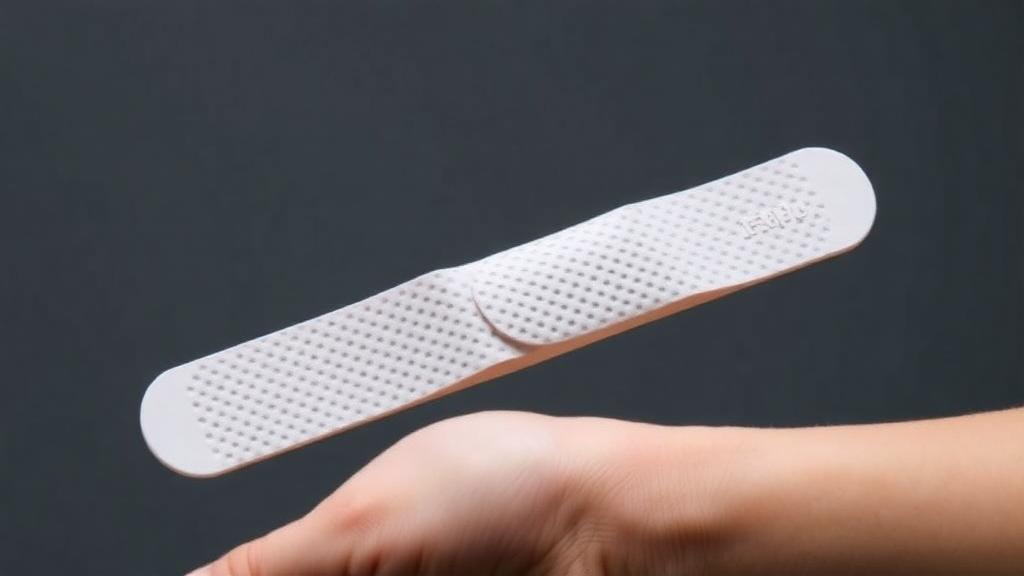
A review published in the Journal of Materials Science argues that one of the most overlooked numbers in medicine—the pH of a wound—may hold the key to treating chronic wounds that refuse to heal. The paper, authored by Devanshi Rattan, Devesh Kumar, Ankit Awasthi, Thakur Gurjeet Singh, and Mohit Kumar of Chitkara College of Pharmacy at Chitkara University in India, synthesizes a rapidly growing body of work on pH-responsive biomaterials: engineered materials that detect the acidity of their surroundings and respond by changing their charge, swelling behavior, solubility, permeability, degradation rate, or drug-release profile. The authors contend that by coupling these material-level responses to the biology of the wound microenvironment, researchers can build a mechanistic framework for precision wound management.
Wound healing is a dynamic and highly coordinated process involving inflammatory responses, extracellular matrix remodeling, cellular signaling, oxidative stress, and microbial activity. Healthy skin maintains an acidic surface pH, typically around 4 to 6, which supports barrier function and limits the growth of harmful microbes. When skin is injured, the wound environment shifts, and in chronic wounds—such as diabetic foot ulcers, venous leg ulcers, and pressure sores—the pH is frequently dysregulated, often drifting toward alkaline values. A recent prospective multicenter cohort study cited in the review found progressive acidification of wounds as they healed and persistently higher pH in chronic non-healing wounds, underscoring pH as a clinically meaningful biomarker rather than a passive chemical detail.
The consequences of altered wound pH ripple through nearly every stage of repair. Elevated pH promotes bacterial colonization and biofilm formation, the slimy microbial communities that shield pathogens from antibiotics and immune cells. It also modulates the activity of matrix metalloproteinases, enzymes that degrade the extracellular matrix; in chronic wounds, an imbalance between these enzymes and their natural inhibitors, the tissue inhibitors of metalloproteinases, leads to excessive destruction of newly formed tissue. Altered pH further influences reactive oxygen species generation, inflammatory signaling pathways, the migration of keratinocytes and fibroblasts, angiogenesis, and the assembly of collagen and other matrix components. In short, the review argues, pH is not merely a symptom of a troubled wound—it is an active driver of healing failure.
At the molecular level, pH responsiveness in polymers arises from protonation and deprotonation reactions. Weak acid groups, such as the carboxyl groups in polyacrylic acid and alginate, shed protons and become negatively charged as pH rises, while weak base groups, such as the amine groups in chitosan, poly(N,N-dimethylaminoethyl methacrylate), and polyhistidine, gain protons and become positively charged as pH falls. The review is careful to distinguish these ionization processes from their downstream physicochemical consequences: changes in charge density alter electrostatic repulsion within the polymer network, driving swelling or collapse; changes in ionization state alter solubility, permeability, and degradation kinetics; and all of these together govern when and how fast a loaded drug is released. Sulfonamide-containing polymers, for example, undergo sharp solubility transitions near physiological pH, a property that has been exploited for on-demand delivery.
Translating this chemistry into clinical tools, researchers have built pH-responsive systems across an impressive range of formats. Hydrogels—water-swollen polymer networks—are the workhorse platform, with formulations based on natural polymers such as chitosan, alginate, hyaluronic acid, and gelatin, often cross-linked through dynamic Schiff base bonds that form and break depending on acidity. Nanoparticles, nanofibers, microspheres, injectable systems, microneedle arrays, and multifunctional wound dressings round out the arsenal. In one cited example, a pH-responsive calcium alginate hydrogel laden with protamine nanoparticles and hyaluronan oligosaccharides promoted diabetic wound healing by enhancing both angiogenesis and antibacterial activity. In another, a chitosan and protocatechualdehyde hydrogel formed via Schiff base chemistry delivered antioxidant and antibacterial effects precisely where the wound environment triggered it.
Some of the most striking recent work combines pH responsiveness with other therapeutic modalities. The review highlights dual- and multi-responsive hydrogels that react simultaneously to pH, reactive oxygen species, glucose, temperature, or near-infrared light. A near-infrared and pH dual-responsive chitosan hydrogel containing epigallocatechin gallate and hollow copper sulfide nanoparticles was reported to reprogram ROS dynamics for infected wound healing, while a triple-responsive supramolecular hydrogel with a synergistic photothermal effect regulated inflammatory signaling to remodel the diabetic wound microenvironment. These systems embody the concept of microenvironment-feedback regulation: the material senses pathological conditions and releases its therapeutic payload only when and where it is needed, reducing off-target exposure and drug waste.
The review also surveys an emerging convergence between responsive biomaterials and diagnostics. Optical and electrochemical biosensing, wearable monitoring devices, and intelligent therapeutic approaches are being integrated directly into dressings. Carbon quantum dot-entrapped hydrogels with sensitive pH response and photodynamic antibacterial properties have been developed for visual, intelligent wound monitoring, allowing clinicians to read wound status by color change. Dual-responsive surface-enhanced Raman scattering nanoprobes have been used for real-time imaging of pH and ROS dynamics during healing. Electrochemical immunosensing platforms can now measure matrix metalloproteinases MMP-2 and MMP-9 directly from chronic wound exudates without labels, and hyaluronic acid hydrogel-based biosensors paired with artificial intelligence are being explored for continuous monitoring of chronic wound healing. Wireless, closed-loop smart bandages with integrated sensors and stimulators, described in Nature Biotechnology, point toward a future in which the dressing both diagnoses and treats.
The clinical stakes are enormous. Chronic wounds affect millions of patients worldwide and impose a substantial burden on health systems, particularly among people with diabetes, vascular disease, and immobility. Conventional dressings are largely passive, delivering drugs at fixed rates regardless of the wound’s state. pH-responsive platforms promise something fundamentally different: dressings that act as closed-loop therapeutic agents, releasing antimicrobials when bacterial alkalization signals infection, scavenging excess reactive oxygen species when oxidative stress spikes, and modulating protease activity when matrix destruction runs out of control. Because the trigger is the wound’s own chemistry, the same material can behave differently in a healing wound versus a stalled one, matching therapy to need.
The authors are candid about the obstacles standing between laboratory promise and clinical reality. Response specificity remains a challenge, since pH changes in wounds are gradual and can overlap with other chemical shifts, making it difficult to design materials that respond only within the desired window. Stability in the harsh, enzyme-rich, and microbe-laden wound fluid is another concern, as is biosafety, particularly for cationic polymers and nanoparticle components whose long-term toxicity profiles require careful evaluation. Scalability of manufacturing—especially for microfluidically synthesized particles and precisely engineered multilayer systems—and the cost and regulatory hurdles of clinical translation add further friction. The review also notes that wound pH depends on factors such as wound size and measurement technique, complicating the standardization needed for regulatory approval.
What emerges from the analysis is a call for rational, mechanism-driven design rather than trial-and-error formulation. By integrating wound microenvironmental biology—cellular crosstalk, inflammatory pathways, redox balance, protease dynamics, and biofilm behavior—with the molecular physics of ionizable polymers, the authors propose a framework for developing next-generation pH-responsive platforms for precision wound management and tissue regeneration. If that framework succeeds, the humble bandage could evolve from a passive covering into an active, sensing, self-regulating therapeutic system—one that reads the chemistry of the wound beneath it and responds in real time, bringing a genuinely intelligent layer to one of medicine’s oldest challenges.
Subject of Research: pH-responsive biomaterials for wound healing and their molecular mechanisms
Article Title: pH-responsive biomaterials for wound healing: molecular mechanisms, therapeutic applications, and future perspectives
Article References: Rattan, D., Kumar, D., Awasthi, A., Singh, T. G., & Kumar, M. (2026). pH-responsive biomaterials for wound healing: molecular mechanisms, therapeutic applications, and future perspectives. Journal of Materials Science. https://doi.org/10.1007/s10853-026-13780-y
Image Credits: AI Generated
DOI: 10.1007/s10853-026-13780-y
Keywords: pH-responsive biomaterials, wound healing, chronic wounds, hydrogels, drug delivery, chitosan, alginate, hyaluronic acid, biofilms, reactive oxygen species, smart dressings, biosensors
News Source: Denise Maddox. (October 10, 2026). Smart Bandages That Sense Wound Acidity Could Transform Chronic Wound Care. Scienmag.