
Credit: Steven Park
Just as parents are not the root of all their children's problems, a single gene mutation can't be blamed for complex brain disorders like autism, according to a Keck School of Medicine of USC neuroscientist.
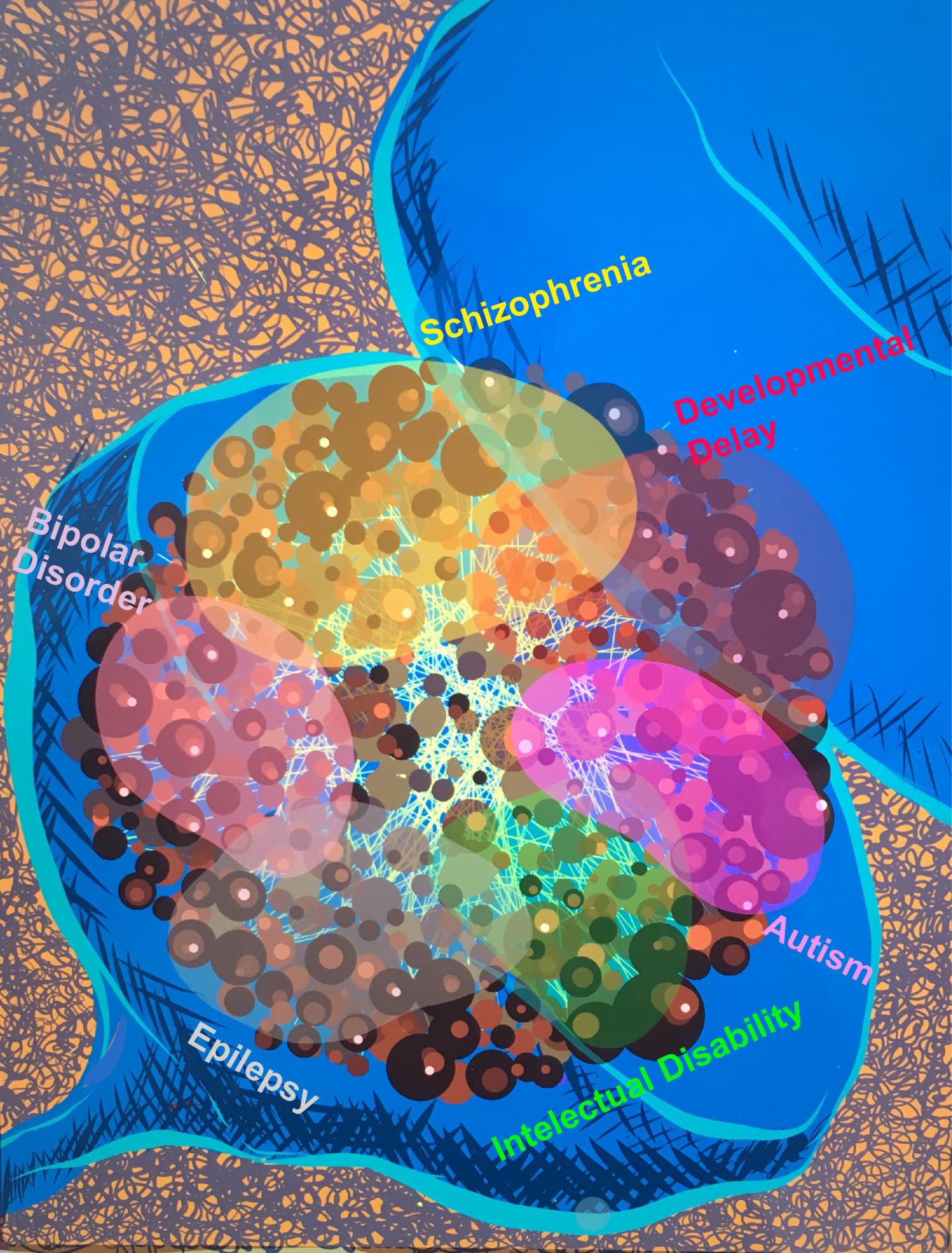
To help researchers see the big picture, Marcelo P. Coba created the first map that highlights the brain's network of protein associations. It's a first step to developing treatment drugs that operate more like rifles than shotguns.
"The drugs we have now are not working for these brain disorders," said Coba, senior author of a new study and an assistant professor of psychiatry at the Zilkha Neurogenetic Institute at the Keck School of Medicine.
"Scientists have not developed a new drug target for complex brain diseases in nearly 60 years. The protein map software my colleagues and I created can help researchers create new therapies that hone in on problem pathways."
The study was published in late June in Nature Neuroscience. Coba and his colleagues isolated 2,876 protein interactions and figured out where in the brain the protein networks lived, how they communicated and at what age in development those pathways became activated.
Researchers stuffed all that information into a software platform that enables users to visualize disease risk factors throughout the brain's protein networks.
Taking off the blinders
Many current studies scan patients' genetics to identify problem genes they label as "risk factors" for developing a disorder.
"The problem is that there is a collection of risk factors contributing to brain disorders," Coba said. "A single risk factor might explain a very low percentage of the population — perhaps 2 percent of those who have the disease."
Coba used an analogy. If all flights at a Texas airport were grounded, flight schedules and airports across the country would be affected. A disruption in one location cannot be sustained in that region because the flights are connected in a network of airports, he said.
Similarly, genes produce proteins that interact in a protein network. If a gene is mutated, the protein's connections may experience delays or disruptions. The disorganized protein-to-protein connections from point A to B to C might be the bedrock of brain disorders such as autism, bipolar disorder and schizophrenia, Coba said.
###
The new software platform is available at http://neurocomplex.usc.edu/.
The study was supported by $420,000 from the National Institute of Child Health and Human Development (MH104603-01), the National Institutes of Health (MH108728) and the Simons Foundation Autism Research Initiative (248429 and 345034). Seventy percent of research funding originated from the federal government.
ABOUT THE KECK SCHOOL OF MEDICINE OF USC
Founded in 1885, the Keck School of Medicine of USC is among the nation's leaders in innovative patient care, scientific discovery, education, and community service. It is part of Keck Medicine of USC, the University of Southern California's medical enterprise, one of only two university-owned academic medical centers in the Los Angeles area. This includes the Keck Medical Center of USC, composed of the Keck Hospital of USC and the USC Norris Cancer Hospital. The two world-class, USC-owned hospitals are staffed by more than 500 physicians who are faculty at the Keck School. The school today has approximately 1,650 full-time faculty members and voluntary faculty of more than 2,400 physicians. These faculty direct the education of approximately 700 medical students and 1,000 students pursuing graduate and post-graduate degrees. The school trains more than 900 resident physicians in more than 50 specialty or subspecialty programs and is the largest educator of physicians practicing in Southern California. Together, the school's faculty and residents serve more than 1.5 million patients each year at Keck Hospital of USC and USC Norris Cancer Hospital, as well as USC-affiliated hospitals Children's Hospital Los Angeles and Los Angeles County + USC Medical Center. Keck School faculty also conduct research and teach at several research centers and institutes, including the USC Norris Comprehensive Cancer Center, the Zilkha Neurogenetic Institute, the Eli and Edythe Broad Center for Stem Cell Research and Regenerative Medicine at USC, the USC Cardiovascular Thoracic Institute, the USC Roski Eye Institute and the USC Institute of Urology.
In 2016, U.S. News & World Report ranked Keck School of Medicine among the Top 40 medical schools in the country.
For more information, go to keck.usc.edu.
Media Contact
Zen Vuong
[email protected]
213-300-1381
@USC