When a hip or knee replacement becomes painful and swollen, one of the most feared explanations is a periprosthetic joint infection, a bacterial colonization of the tissue and metal surrounding an artificial joint. These infections are now recognized as the leading cause of revision surgery in joint registries, and distinguishing an infected implant from a mechanically failing but sterile one is one of the most consequential decisions an orthopedic team can make. The stakes are high in both directions: missing an infection condemns a patient to prolonged antimicrobial therapy, impaired mobility, and repeated operations, while overtreating a sterile joint exposes the patient to unnecessary broad-spectrum antibiotics and their collateral damage. A new study published in the Journal of Bone and Joint Infection by Elizabeth Morreel, Paul Savelkoul, and Inge van Loo of Maastricht University Medical Centre suggests that a rapid molecular technique can deliver clinically meaningful answers in a matter of hours, potentially reshaping how clinicians approach this diagnostic dilemma.
The core problem with the current gold standard, conventional microbiological culture, is time. In acute infections, aerobic and facultative anaerobic organisms often appear within 24 to 48 hours, but final results can still take several days and, in some cases, up to a week. Chronic infections are worse still: slow-growing and anaerobic organisms, including the notorious Cutibacterium acnes, may require incubation periods of up to two weeks before laboratories can confidently call a culture negative. During that interval, surgeons must operate with incomplete information, and physicians frequently resort to empirical broad-spectrum antibiotics that may later prove unnecessary. Culture also has a second, subtler weakness: bacteria that have been suppressed by recent antibiotic exposure, or that are present in very low abundance within a biofilm on the implant surface, may simply fail to grow at all.
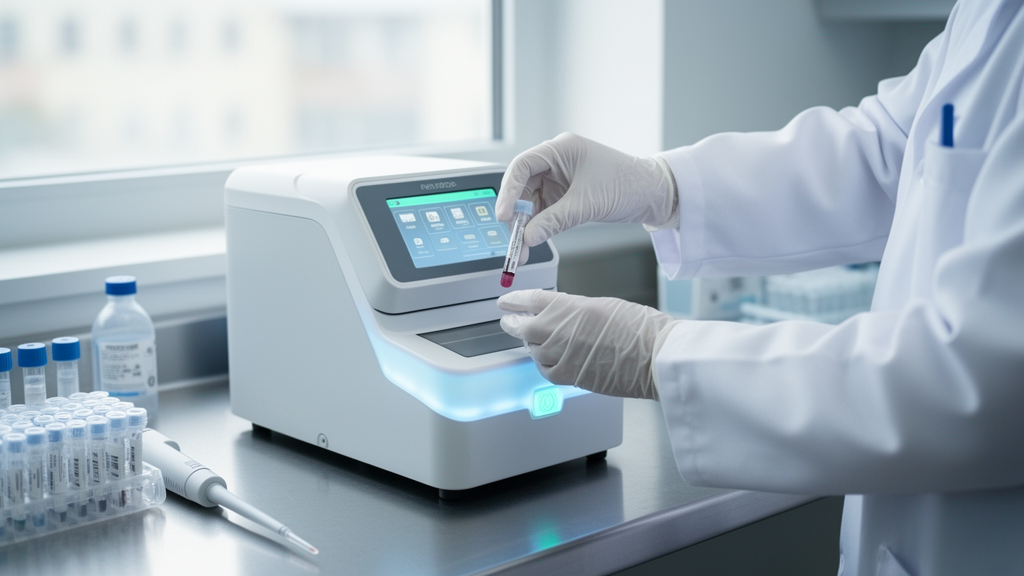
Molecular diagnostics offer a way around the growth bottleneck. By detecting pathogen-specific DNA or RNA directly in clinical specimens, these methods bypass the need for viable, replicating organisms. The Maastricht team evaluated a commercial platform called Molecular Culture, a PCR-based assay built on a technique known as IS-pro, which targets the 16S-23S ribosomal intergenic spacer region of bacteria. This stretch of DNA displays species-specific length and sequence polymorphisms, allowing the assay to identify bacteria by the size and fluorescent signature of the amplified fragments. Two parallel PCRs, each labeled with phylum-specific fluorophores, cover the major bacterial phyla relevant to human infection, and the resulting amplicons are analyzed on a fragment analyzer against a dedicated database. Crucially, the manufacturer claims results within approximately four hours, and the assay can also flag polymicrobial infections, something single-target tests often miss.
The specimen of choice was sonication fluid, obtained by placing the removed implant in a sterile bath and subjecting it to ultrasonic waves for one minute. This procedure dislodges the biofilm clinging to the prosthetic surface into the surrounding fluid, providing a sample that both represents the microbial ecology of the implant and is available in generous volume. The researchers retrospectively analyzed 203 sonication fluid samples from 172 patients who underwent hip or knee revision arthroplasty between 2019 and 2023. Patients were classified as infected or not infected according to the European Bone and Joint Infection Society criteria, with a multidisciplinary team of microbiologists and orthopedic surgeons adjudicating the ambiguous cases. Only 16 patients, or 9.3 percent, had received antibiotics in the two weeks before surgery, a detail that would prove important in interpreting the results.
Measured strictly against culture as the reference standard, the molecular assay showed moderate analytical performance. Positive percentage agreement came in at 68.1 percent, with a 95 percent confidence interval of 59.9 to 75.3, while negative percentage agreement was 84.6 percent (95 percent CI, 73.9 to 91.4). Of the 138 culture-positive samples, the molecular method identified the identical pathogen in 94 cases. In 34 samples it returned a negative result despite a positive culture, and in 24 of those the culture bacterial load had been low, defined as growth in two or fewer enriched media. The assay also detected non-corresponding organisms in ten samples, which counted as analytical false positives. On the surface, these numbers might seem underwhelming for a test hoping to challenge the gold standard.
But the study’s most interesting insight lies in what happened when the analytical comparison was replaced by a clinical one. In routine practice, culture results are never interpreted in isolation; clinicians weigh prior culture results, findings from periprosthetic tissue and synovial fluid, blood work, and antibiotic history. When the researchers folded all of this clinical context into their analysis, the picture changed dramatically. At the patient level, positive percentage agreement rose to 73.2 percent (95 percent CI, 64.9 to 80.2) and negative percentage agreement climbed to 95.6 percent (95 percent CI, 85.2 to 98.8). Several findings initially scored as analytical errors were reclassified as clinically relevant detections, including 11 additional pathogens for which supporting evidence of true infection existed. In four of these cases, recent antibiotic exposure plausibly explained why culture had come up empty while the molecular test succeeded.
That 95.6 percent clinically adjusted negative agreement may be the study’s most clinically valuable number. In the real world, one of the hardest tasks is excluding low-grade infection in a patient with a painful, possibly aseptic implant failure. Because culture-based exclusion can take up to 14 days, patients are often kept on empirical broad-spectrum antibiotics until the laboratory finally rules infection out. A test that can exclude infection within roughly four to six hours of sample processing offers a route to earlier discontinuation of unnecessary antimicrobials, shorter hospital stays, and reduced costs. The authors argue that this rapid rule-out capability is precisely where the assay’s value is greatest, particularly for slow-growing organisms such as Cutibacterium species and for patients whose prior antibiotic exposure has blunted culture sensitivity, since organisms like streptococci are especially susceptible to antibiotics and prone to producing culture-negative infections.
The study is candid about limitations. The assay reports some organisms only as predefined equivalence sets, so it cannot always distinguish between closely related genera, and the authors note that differentiating Klebsiella from Enterobacter, for example, matters clinically because empirical therapy would differ. The method also provides no antimicrobial susceptibility data, meaning culture remains indispensable for targeted therapy. False negatives occurred without a consistent pattern, suggesting that technical factors such as the small sample volumes used for DNA extraction, prolonged storage, and pre-analytical handling may have degraded specimen quality. Interpretation of low-level signals remains tricky for organisms that can be either pathogens or contaminants, and while a threshold of more than 10,000 relative fluorescence units was applied for Cutibacterium species, no uniform cut-offs exist for many other organisms. The authors also disclose that one co-author is an indirect shareholder of the assay’s manufacturer, a detail readers should weigh alongside the funding structure, which came from a Dutch Research Council grant with no role in study design or analysis.
Positioned within the broader landscape of molecular diagnostics, the platform occupies a pragmatic middle ground. Targeted multiplex PCR panels deliver speed but are constrained by their predefined target lists, potentially missing organisms such as coagulase-negative staphylococci and Cutibacterium acnes. Sequencing-based approaches, including 16S ribosomal RNA PCR and next-generation sequencing, can detect organisms that culture and targeted panels miss, but they demand bioinformatic processing, specialized expertise, and longer workflows that limit routine implementation. The IS-pro approach combines a panbacterial reach with a rapid turnaround and a workflow that requires no complex bioinformatics, and it has already been validated for synovial fluid and tissue specimens, opening the door to application across the full range of samples used in joint infection diagnostics. The authors suggest that early integration into the diagnostic pathway, rather than reserving molecular testing as a rescue method after culture fails, could maximize antimicrobial stewardship benefits, and they point to sample pooling and higher-throughput testing as routes to better cost-effectiveness.
For the growing population of joint replacement recipients worldwide, the message is cautiously optimistic. A rapid, culture-independent test that reliably excludes infection within hours, particularly in patients whose antibiotic exposure has compromised conventional diagnostics, could spare many patients weeks of uncertainty and unnecessary therapy. At the same time, the study reinforces that molecular results demand interpretation within clinical context, alongside multiple specimen types and conventional culture, rather than as a standalone verdict. As comparative studies against sequencing-based methods accumulate, the role of rapid molecular culture in the diagnostic algorithm for periprosthetic joint infection is likely to be defined not by replacing the gold standard, but by complementing it at the moment when speed matters most.
Subject of Research: Rapid molecular culture diagnostics for periprosthetic joint infection
Article Title: Rapid molecular culture versus conventional culture for periprosthetic joint infection: diagnostic performance and clinical relevance
Article References: Rapid molecular culture versus conventional culture for periprosthetic joint infection: diagnostic performance and clinical relevance. (n.d.). https://doi.org/10.5194/jbji-11-453-2026
Image Credits: AI Generated
Keywords: periprosthetic joint infection, molecular diagnostics, PCR, sonication fluid, joint arthroplasty, conventional culture, antimicrobial stewardship, biofilm, Cutibacterium acnes, revision surgery, IS-pro, diagnostic accuracy
News Source: Ophelia Keating. (October 9, 2026). Rapid PCR Test Delivers Joint Infection Answers in Hours Instead of Weeks. Scienmag.