Phage therapy has emerged as one of the most closely watched alternatives to conventional antibiotics as drug-resistant bacteria continue to spread across hospitals worldwide. The idea is elegant: deploy viruses that infect and kill specific bacterial pathogens while leaving the patient’s own cells untouched. Yet the human immune system does not always cooperate. New research published in PLOS Biology reveals that the precise molecular targets of phage-directed antibodies can determine whether bacteriophage treatment succeeds or fails, and that two structural proteins in particular may be responsible for much of the therapeutic disappointment.
A team led by Heng Xue, Xinfeng Li, Guibo Rao, and Hang Yang, working with colleagues including Krystyna Dąbrowska of the Polish Academy of Sciences, focused on AbP20, a podovirus that infects Acinetobacter baumannii, a pathogen notorious for its resistance to last-resort antibiotics. Using a mouse infection model, the researchers asked a deceptively simple question: when the body produces antibodies against a therapeutic phage, which of those antibodies actually matter for treatment outcome? The answer, they found, is far from uniform across the viral particle.
The experimental design began with repeated intraperitoneal administration of AbP20, given once daily for seven consecutive days. This dosing regimen induced a robust phage-specific antibody response in the animals, and those antibodies measurably impaired phage therapy. Rather than treating the antibody response as a single entity, however, the team dissected it at the level of individual viral structural proteins, using a genome-guided antigen screening strategy to determine which components of the virion provoked the most therapeutically damaging immune reactions.
The screening results pointed decisively to two proteins: the nozzle and the fiber. Antibodies elicited by these two structural components, rather than those directed against the portal, the capsid, or the adaptor proteins, emerged as the dominant drivers of phage therapy failure in the mouse model. This specificity is significant because it suggests that the immunological vulnerability of a therapeutic phage is not distributed evenly across its architecture but concentrated in the machinery the virus uses to recognize and penetrate its bacterial host.
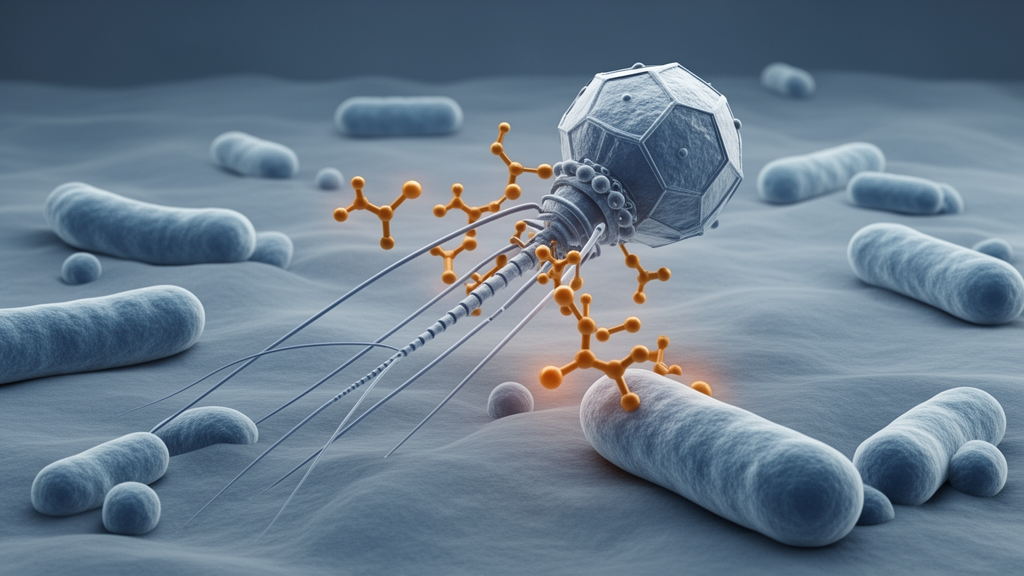
The mechanistic follow-up experiments clarified why these two proteins matter so much. Fiber-specific antibodies were found to block bacterial adsorption, the initial step in which the phage attaches to receptors on the surface of Acinetobacter baumannii. Without attachment, the infection cycle cannot begin. Nozzle-specific antibodies, by contrast, acted at a later stage, blocking genomic injection, the moment when the phage delivers its DNA into the bacterial cell. In other words, the two antibody populations sabotage the phage at two distinct and sequential checkpoints of the infection process, one preventing docking and the other preventing entry.
But neutralization inside the dish was only half of the story. The researchers discovered that both fiber-specific and nozzle-specific antibodies also promoted the formation of large phage aggregates in circulation. These antibody-mediated aggregates potentiated phagocytosis by macrophages, the scavenger cells of the immune system, and notably this enhancement occurred through an Fc receptor-independent pathway. That detail is mechanistically important: it implies that the immune clearance of antibody-coated phages does not rely on the classical Fc-mediated uptake route, pointing instead to an alternative mechanism by which macrophages recognize and engulf aggregated viral particles.
The dual action of these antibodies, blocking infection on one hand and accelerating immune clearance on the other, constitutes a synergistic assault on therapeutic efficacy. A phage that cannot attach to or inject into its target bacterium is already crippled, and the same antibodies simultaneously shorten the window of time the phage survives in the body by hastening its removal. The study’s authors describe this as a dual synergistic mechanism through which nozzle- and fiber-elicited neutralizing antibodies impair phage therapy, a framing that captures how the two effects compound rather than merely add together.
To probe whether escaping neutralization could rescue treatment, the team turned to an evolved AbP20 variant with improved neutralization escape capacity. The results were instructive but sobering. This variant exhibited antibody-accelerated phagocytosis and host immune clearance comparable to the parental phage, meaning that evolving away from antibody recognition did not spare it from the clearance arm of the immune response. Nevertheless, the variant partially rescued the therapeutic failure caused by neutralizing antibodies, indicating that the infection-blocking effect is the more decisive contributor to treatment loss, while immune clearance imposes a persistent background cost that escape mutations do not readily evade.
The broader implications for phage therapy development are considerable. Clinical phage programs typically monitor neutralizing antibody titers as a single aggregate measure, but this study suggests that the protein specificity of the antibody response is what ultimately shapes therapeutic outcomes. If antibodies against the portal, capsid, or adaptor proteins are comparatively benign while fiber- and nozzle-directed antibodies are the dominant saboteurs, then rational phage engineering, careful phage selection, or dosing strategies that minimize exposure of the receptor-binding apparatus to the immune system could meaningfully extend the viability of phage treatments in patients who mount strong antibody responses.
For a field racing to keep pace with antimicrobial resistance, the findings offer both a warning and a roadmap. The warning is that repeated phage dosing, a common feature of current treatment protocols, can provoke antibody responses that quietly dismantle therapeutic efficacy through mechanisms that standard efficacy testing may not capture. The roadmap lies in the molecular detail: by identifying the nozzle and fiber proteins as the principal immunological weak points of AbP20, the study provides a concrete framework for predicting which phages are most likely to fail under immune pressure and for designing next-generation therapeutics that either evade these antibodies or tolerate their presence well enough to complete the job.
Subject of Research: Antibody specificity in phage therapy failure against Acinetobacter baumannii
Article Title: Antibodies targeting phage fiber and nozzle proteins impair Acinetobacter baumannii phage therapy by blocking infection and promoting immune clearance
Article References: Xue, H., Li, X., Rao, G., Hu, F., Zhong, M., Miernikiewicz, P., Qiu, R., Cao, S., Dąbrowska, K., & Yang, H. (2026). Antibodies targeting phage fiber and nozzle proteins impair Acinetobacter baumannii phage therapy by blocking infection and promoting immune clearance. PLOS Biology, 24(9), e3004009. https://doi.org/10.1371/journal.pbio.3004009
Image Credits: AI Generated
DOI: 10.1371/journal.pbio.3004009
Keywords: phage therapy, Acinetobacter baumannii, antimicrobial resistance, neutralizing antibodies, fiber protein, nozzle protein, macrophage phagocytosis, podovirus, immune clearance, PLOS Biology, phage aggregates, Fc receptor-independent pathway
News Source: Kristina Jarvis. (October 9, 2026). Antibodies Against Phage Fiber and Nozzle Proteins Undermine Acinetobacter Phage Therapy. Scienmag.